(Credit: University of Exeter)
TAMPA — The ocean holds many secrets, but its latest revelation is shaking the foundations of marine science. Researchers have found that the twilight zone, a critical layer of the ocean, is surprisingly low in iron, triggering a cascade of effects that could influence global climate patterns.
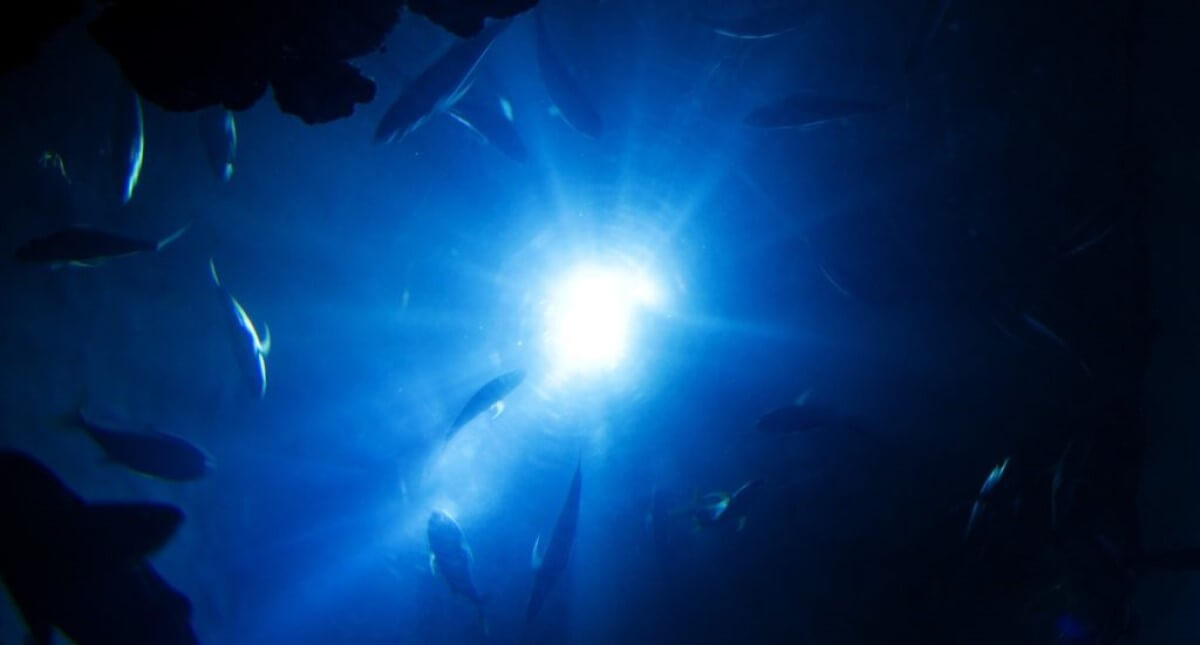
If you’re not familiar with it, the Pacific Ocean’s twilight zone is a world where darkness reigns, pressure crushes, and life itself seems to defy the odds. This mysterious realm begins 200 to 1,000 meters below the surface, where sunlight fades to black and extraordinary creatures roam.
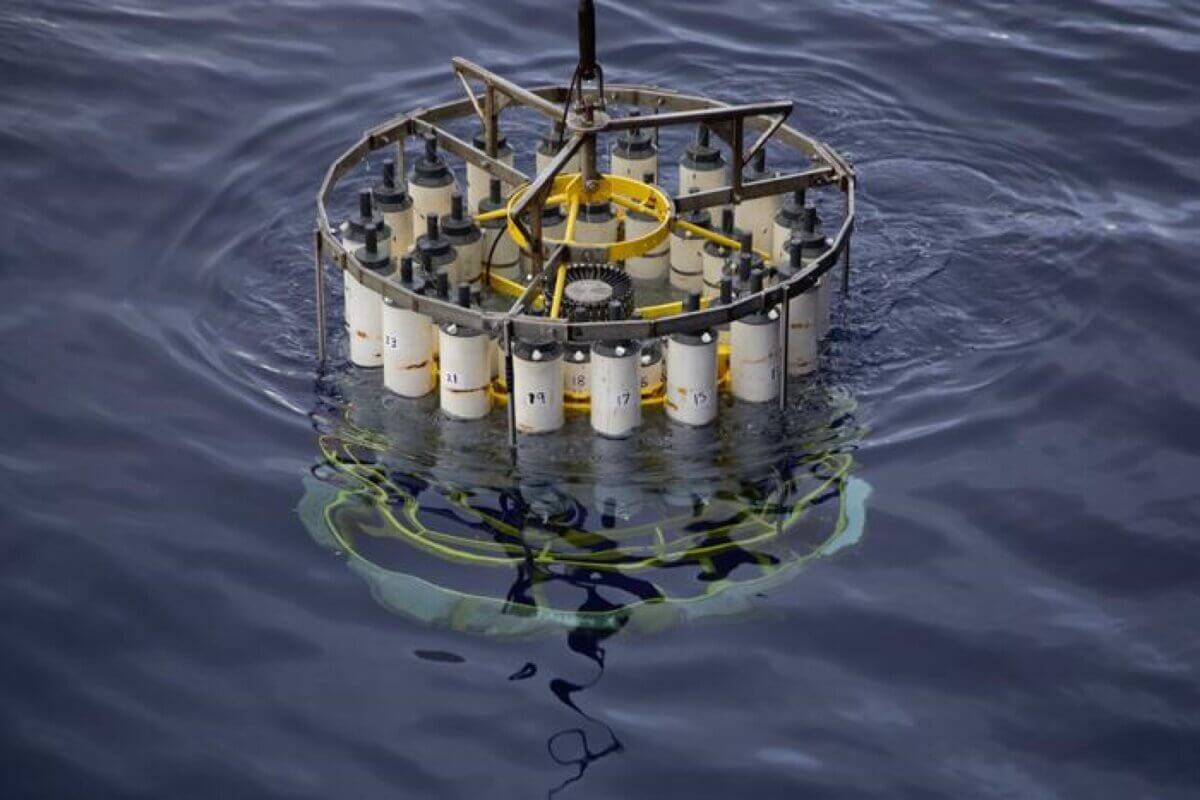
The study, led by scientists from Woods Hole Oceanographic Institution and the University of South Florida, analyzed seawater samples collected during an ambitious expedition from Alaska to Tahiti. Using cutting-edge techniques, they detected high concentrations of siderophores — molecular iron hunters produced by microbes — not only in iron-poor surface waters but also deep in the twilight zone.
“Unlike in surface waters, we did not expect to find siderophores in the ocean’s twilight zone,” says Tim Conway, associate professor of chemical oceanography at the USF College of Marine Science and co-author of the study, in a statement. “Our study shows that iron-deficiency is high for bacteria living in this region throughout much of the east Pacific Ocean, and that the bacteria use siderophores to increase their uptake of iron. This has a knock-on effect on the biological carbon pump, because these bacteria are responsible for the breakdown of organic matter as it sinks through the twilight zone.”
This discovery, published in Nature, could fundamentally alter our understanding of how carbon moves through the ocean. The twilight zone plays a crucial role in the ocean’s biological carbon pump — a natural process that helps regulate Earth’s climate by transferring carbon from the atmosphere to the deep sea. Microbes in this zone break down sinking organic matter, determining how much carbon is stored in the deep ocean versus returned to the atmosphere as carbon dioxide.
The presence of iron-starved microbes in the twilight zone suggests that this process might be less efficient than previously thought. Iron-deficient bacteria may process organic matter differently, potentially affecting the ocean’s capacity to absorb and store carbon dioxide from the atmosphere.
To confirm their findings, the team conducted experiments using isotope-labeled iron compounds, observing rapid uptake by twilight zone microbes — further evidence of their iron-hungry state. The researchers suggest that this iron deficiency might be a common feature in other ocean basins as well, expanding our understanding of where nutrient limitation occurs in the ocean.
“Understanding the organisms that facilitate carbon uptake in the ocean is important for understanding the impacts of climate change,” Conway explains. “When organic matter from the surface ocean descends to the deep ocean, it acts as a biological pump that removes carbon from the atmosphere and stores it in seawater and sediments. Measuring the rates and processes that influence this pump gives us insight into how and where the ocean stores carbon.”

This paradigm-shifting research opens up new questions about how climate change might affect iron availability in the twilight zone and, consequently, the ocean’s role in carbon storage. As ocean temperatures rise and circulation patterns shift, the balance of nutrients in these waters could be disrupted, with cascading effects on marine ecosystems and global climate.
“For a full picture of how nutrients shape marine biogeochemical cycles, future studies will need to take these findings into account,” concludes Daniel Repeta, senior scientist at Woods Hole Oceanographic Institution and co-author of the article. “In other words, experiments near the surface must expand to include the twilight zone.”
The discovery of iron deficiency in the ocean’s twilight zone presents new challenges for oceanographers and climate scientists. Future research will need to incorporate these findings into models of ocean nutrient cycles and carbon sequestration. Understanding the role of iron-limited microbes in the twilight zone may be crucial for accurately predicting the ocean’s response to climate change.
Paper Summary
Methodology
The researchers collected seawater samples from various depths across the eastern Pacific Ocean during a GEOTRACES expedition. They used advanced analytical techniques, including liquid chromatography-mass spectrometry, to detect and measure siderophores in the water samples. Additionally, they conducted experiments using isotope-labeled iron compounds to track how quickly microbes consumed added iron. This combination of chemical analysis and experimental manipulation allowed them to assess iron availability and microbial iron stress across different ocean regions and depths.
Key Results
The study found high concentrations of siderophores not only in surface waters but also in the twilight zone (200-400 meters deep) of the eastern Pacific Ocean. This indicates widespread iron deficiency among microbes in these regions, challenging previous assumptions about nutrient availability at these depths. The team also observed rapid uptake of added iron compounds in their experiments, further confirming the iron-stressed state of the microbial communities in the twilight zone.
Study Limitations
While the study provides compelling evidence for iron deficiency in the twilight zone, it primarily focused on the eastern Pacific Ocean. More research is needed to confirm if similar conditions exist in other ocean basins. Additionally, the study of siderophores in the ocean is still in its early stages, and researchers are still working to understand the full complexity of microbial iron acquisition strategies in different marine environments.
Discussion & Takeaways
This discovery challenges our previous understanding of what limits microbial activity in the ocean’s twilight zone. It suggests that iron availability might be an overlooked factor in shaping the efficiency of the ocean’s biological carbon pump. The findings have significant implications for how we model ocean carbon cycling and could impact predictions of the ocean’s future role in absorbing atmospheric carbon dioxide. Future research will need to investigate how climate change might alter iron dynamics in the twilight zone and what consequences this could have for global carbon cycles and climate regulation.
Funding & Disclosures
This research was funded by grants from the National Science Foundation and the Simons Foundation. The study was part of GEOTRACES, an international effort to provide high-quality data for the study of climate-driven changes in ocean biogeochemistry. The authors declared no competing interests, ensuring the integrity and independence of the study’s findings.


