(Credit: PositiveTravelArt/Shutterstock)
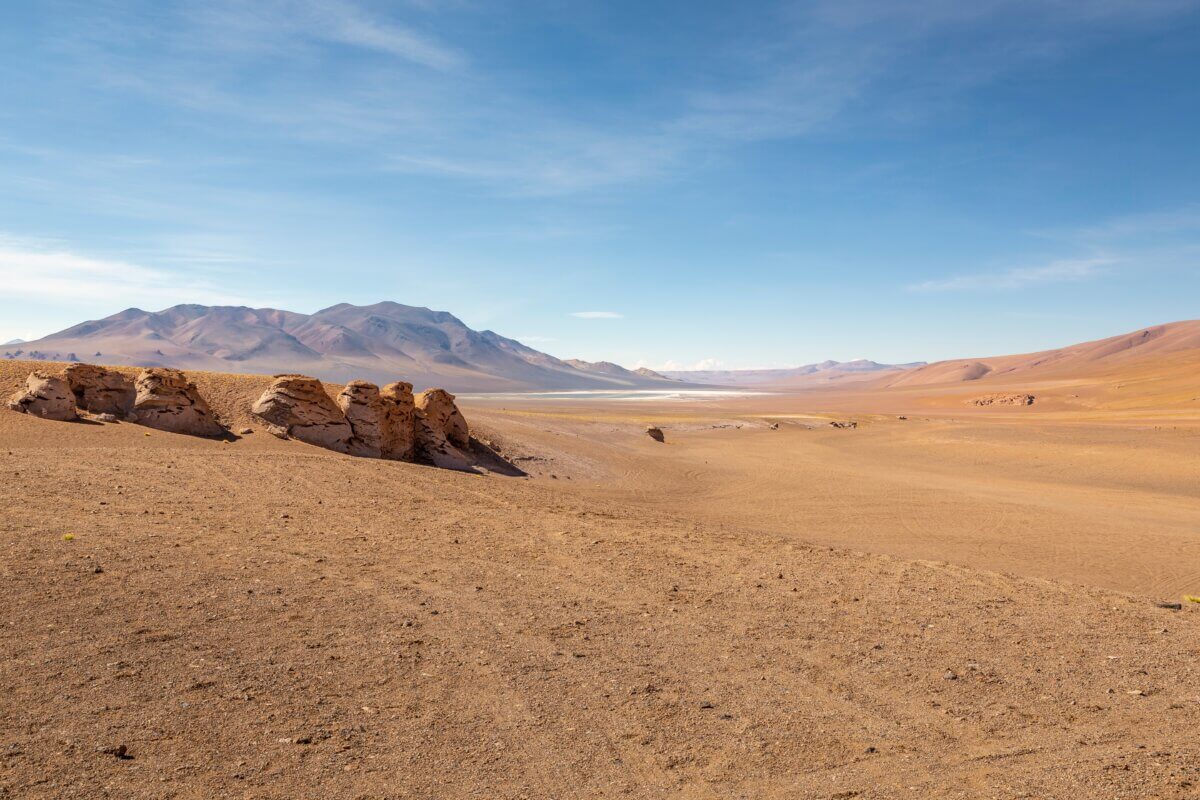
POTSDAM, Germany — In a remarkable discovery, researchers have found evidence of living microbes thriving in one of the most inhospitable environments on Earth – the Atacama Desert of Chile. This vast, arid landscape is often described as the driest place on the planet, making it seemingly impossible for any life to exist. Yet, the new study reveals a diverse microbial community actively colonizing this extreme wasteland.
The key to this breakthrough was a novel technique developed by an international team of scientists led by geomicrobiologist Dirk Wagner, Ph.D., from the GFZ German Research Centre for Geosciences. Their method allows researchers to separate the genetic material of living microbes from the fragments of dead cells, providing a clearer picture of the active microbial community.
“Microbes are the pioneers colonizing this kind of environment and preparing the ground for the next succession of life,” explains Dr. Wagner in a media release.
This newfound understanding could have implications far beyond the Atacama, as similar processes may occur in other extreme environments, such as areas affected by natural disasters or even on other planets.
The researchers, who published their research in the journal Applied and Environmental Microbiology, collected soil samples from the Atacama Desert, stretching from the Pacific coast to the foothills of the Andes mountains. By using their innovative separation technique, they were able to identify a diverse array of living and potentially active microbes, including Actinobacteria and Proteobacteria, in even the most arid regions.
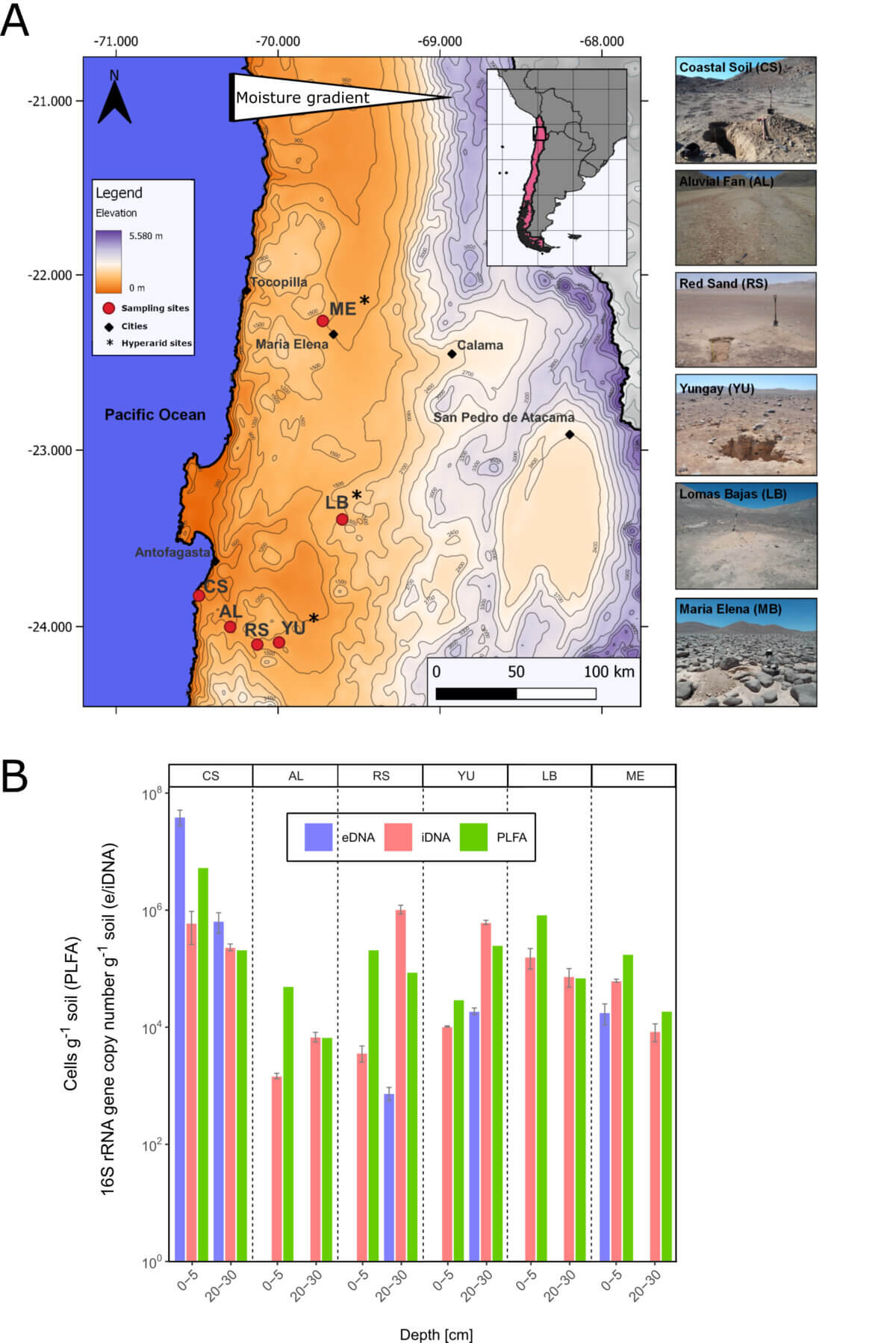
Interestingly, the team found that in the shallow soil samples (less than 5 centimeters deep), Chloroflexota bacteria dominated the group of living, intracellular DNA. This suggests that these microbes are the most active members of the community, constantly replenishing the pool of genetic material.
“If a community is really active, then a constant turnover is taking place, and that means the 2 pools should be more similar to each other,” Wagner notes.
The researchers plan to further investigate the active microbial processes in the Atacama Desert through metagenomic sequencing of the intracellular DNA. This approach, they believe, will provide deeper insights into the microbes thriving in this extreme environment, paving the way for a better understanding of life’s resilience in the most inhospitable corners of our planet.
Paper Summary
Methodology
The researchers aimed to understand the microbial communities in the extremely dry Atacama Desert. They collected soil samples at different locations across a moisture gradient, from the coastal areas to the driest parts inland. To separate living from dead microbial DNA, they used a unique method that isolated intracellular DNA (iDNA) from extracellular DNA (eDNA). This approach allowed them to focus on DNA from living cells, which was critical for studying which microbes are active and adapted to such harsh conditions.
Key Results
The study found that the Atacama Desert hosts diverse microbial communities, even in its driest regions. Microorganisms such as bacteria and archaea are not only present but also adapted to survive extreme conditions. Some microbes are “generalists,” able to live in various conditions, while “specialists” thrive in specific habitats. The coastal areas with more moisture had the highest diversity, while the arid inland sites were populated by microbes uniquely adapted to low water and nutrient conditions.
Study Limitations
This research faced challenges due to the desert’s low microbial biomass, which made it hard to extract enough DNA, especially from dead cells. Additionally, since traditional methods to detect active life, like RNA analysis, often fail in such low-biomass environments, this study couldn’t capture all aspects of microbial life. The unique method used may not perfectly distinguish between living and dead cells, as some DNA from dead cells might still be present in the iDNA samples.
Discussion & Takeaways
This study highlights the resilience of microbial life in extreme environments. The presence of both generalists and specialists indicates that microbes can survive by either adapting to a broad range of conditions or by specializing in particular niches. These findings are important as they reveal how life might persist in harsh places, providing insights relevant to other extreme environments, such as those on other planets.
Funding & Disclosures
This study was funded by multiple research grants to support its comprehensive examination of microbial communities in the Atacama Desert. Core funding was provided by the European Research Council (ERC) through the Advanced Grant “Habitability Of Martian Environments” (Grant No. 339231) awarded to Dirk Schulze-Makuch, which supported the foundational aspects, including sample collection and processing.
Additional financial backing was provided by the Helmholtz Research Program “Geosystem–The Changing Earth” for sequencing work conducted in Wagner’s laboratory. The research team included specialists across institutions in Germany, Chile, and the United States, who contributed through various forms of analysis and data interpretation. There were no reported conflicts of interest, and all researchers followed ethical standards for environmental sampling and data reporting.


The truth, however, begins with the BIG picture: (1) Any COMPLEX abstraction requires (a) A decision maker; (b) A decision; (c) A desired outcome. (2) Everybody knows that a seed can only be had from a FINISHED plant with leaves and blossoms that have been POLLINATED by a specific kind of BEES, and who’s FRUIT carry SAID SEED for the harvest. (3) It is also known that a banana seed CAANOT ‘BECOME’ a tomato, yet they still declare that the Amoeba (Now Bacteria???) ‘BECAME’ human…!!?