

(© golubovy - stock.adobe.com)
In A Nutshell
- Researchers surveyed 319 livestream shoppers and found that watching trustworthy, engaging streamers was associated with increased mindfulness rather than distraction
- Active information-seeking during streams, feeling recognized by streamers, and using streams as mental escape all contributed to heightened present-moment awareness
- The depth of engagement matters more than screen time duration: focused attention to interactive content differs fundamentally from passive scrolling
- Even commercial digital spaces may support mindfulness when built on transparency, real interaction, and authentic human connection
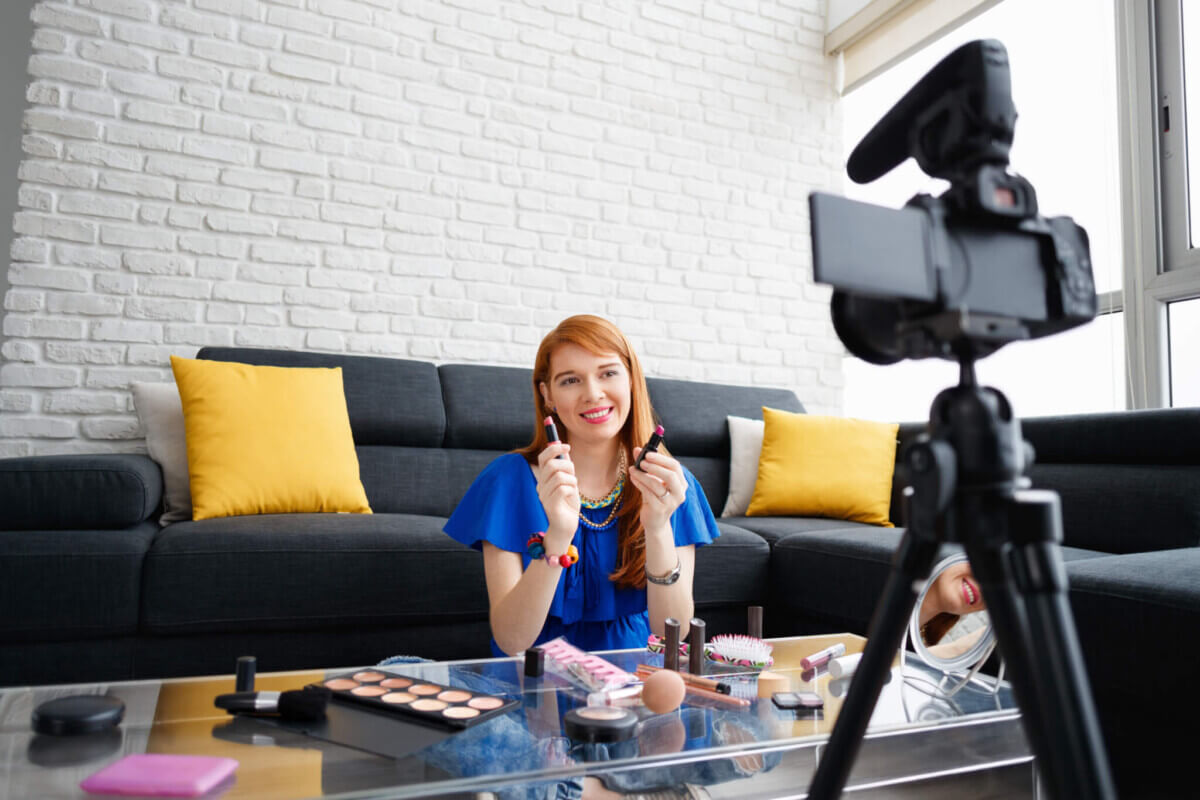
Watching someone sell beauty products on Instagram sounds like the opposite of mindfulness. Scrolling through social media while half-listening to an influencer hawk products seems like textbook distraction, the kind of fragmented attention that supposedly rots brains and destroys focus. But research published in the journal Acta Psychologica suggests that isn’t necessarily true, at least under certain conditions.
Scientists surveyed 319 regular livestream shoppers across three cities in Uzbekistan, recruited through Instagram, Telegram, and Facebook, who watch people sell everything from skincare to clothing. Instead of measuring how much they bought or how long they watched, researchers wanted to know what was happening inside their heads. Were they zoned out or actually paying attention? The results ran against common assumptions about online shopping. When streamers seemed trustworthy and engaging, viewers reported experiencing genuine mindfulness during shopping sessions: heightened attention, clear awareness, and sustained mental presence.
This contradicts nearly everything we assume about social media and shopping. Mindfulness usually means deliberate present-moment awareness, the kind psychologists study in meditation retreats, not while someone demonstrates concealer techniques. Yet under certain conditions, livestream commerce apparently creates exactly that kind of focused attention. The researchers described it as “a situational, technology-elicited state… where viewers remain consciously attuned to the product information and the cues provided by the streamer.”
What Makes Someone Worth Watching
The key turned out to be the person doing the selling. Researchers zeroed in on two qualities: did the streamer come across as trustworthy (honest, knowledgeable, reliable), and did they seem attractive in the broad sense (charismatic, engaging, worth watching)? Both mattered, but not just for making sales.
When viewers felt they could trust the streamer, something shifted. They dropped their guard enough to actually engage mentally rather than just passively watching. When the streamer held their attention through personality and presentation, viewers stopped multitasking and scrolling past. These qualities shaped whether viewers entered a focused mental state at all. The study didn’t track whether people actually bought anything, it measured psychological states, not purchasing behavior.
Trustworthy and engaging streamers were associated with three overlapping responses that all fed into mindfulness. Viewers started actively researching products, asking questions and comparing options. They felt recognized and valued when the streamer acknowledged them. And they used the experience to mentally escape from daily stress, but in a way that paradoxically increased rather than decreased their awareness.
When Shopping Creates Focused Attention
Consider the information-seeking behavior. During a typical livestream, someone might ask whether a product shade matches their skin tone, check an ingredient list for allergens, or scan comments from other viewers with similar concerns. Each action requires attention and decision-making, which keeps the mind engaged rather than wandering.
This active participation creates a feedback loop. Viewers can ask questions and get instant answers. They watch real-time demonstrations of how products actually look on real people, not polished promotional photos. The streamer might turn the product to show different angles, demonstrate application techniques, or answer specific questions about how it works with different skin types. All of this cognitive work anchors attention in the present moment.
A typical exchange might look like this: One viewer notices the streamer applying a particular product and immediately asks about its staying power in humid weather. The streamer responds, demonstrates how it blends, and mentions which primer works best underneath it. Another viewer chimes in with their own experience using that product. Suddenly three people are having a real conversation about something concrete, and everyone involved is paying full attention to that exchange.
Compare that to scrolling through static product photos while simultaneously checking email, listening to a podcast, and thinking about what to make for dinner. The mental state differs completely.
The Power of Being Noticed
The recognition aspect works differently but creates similar effects. When a streamer reads someone’s comment aloud or answers their question directly, that viewer experiences a jolt of social validation. The anonymous scrolling stops feeling anonymous. They become a participant rather than a passive consumer.
Livestreaming platforms enable this through real-time comments, emoji reactions, and sometimes digital gifts. When a streamer says “Great question, Sarah!” and spends 30 seconds answering Sarah’s specific concern, Sarah’s attention locks in. But even watching that exchange happen to someone else creates a sense of community. The possibility of being acknowledged next keeps viewers mentally present.
This taps into something fundamental about human psychology. People want to feel seen and heard. When that happens during a livestream, viewers invest more in the experience because they’ve become meaningful contributors to an unfolding conversation rather than anonymous faces in a crowd. Their minds can’t wander as easily when they might miss their name being called or an answer to their question.
The Escape Hatch That Brings You Back
The escapism finding represents the deepest paradox. Researchers asked whether watching helped viewers mentally step away from work pressures, family obligations, or other daily concerns. Many people assume escaping into entertainment means checking out mentally. But livestream viewers reported something different.
Rather than scrolling mindlessly while thinking about something else entirely, they became absorbed in the immediate experience. The streamer’s personality, the flowing comments section, the unfolding product demonstrations: it all created an immersive environment that captured full attention. This resembles the kind of absorption people describe when they get lost in a good book or movie, where they lose track of time and forget their usual worries.
By mentally stepping away from their stressors, viewers didn’t zone out. They tuned in more completely to what was happening on screen. The escape replaced scattered anxiety with focused engagement. Instead of worrying about tomorrow’s deadline while half-watching a stream, they became fully present in the virtual space of the demonstration.
What This Actually Means
These findings complicate our assumptions about screen time and digital shopping. Not all online experiences work the same way. The difference between passively scrolling through static content while half-paying attention and actively engaging with dynamic content that invites participation may be more significant than previously understood.
The study took place in Uzbekistan, where livestream shopping is newer than in places like China or South Korea. But the psychology appears to operate similarly across contexts. When people encounter credible sources in interactive environments that satisfy their needs for useful information, social connection, and mental escape, they may achieve focused awareness whether they’re technically shopping or just watching.
For anyone watching these streams, the depth of engagement appears to matter more than the duration of screen time. Thirty minutes of genuinely focused attention to something worthwhile may be more beneficial than three hours of fragmented scrolling. For the platforms and streamers creating this content, the lesson is equally clear. Building experiences around transparency, real interaction, and content that rewards attention could support sustained focus, not just algorithms designed to maximize watch time through cheap tricks.
Even commercial digital spaces may be able to support focused attention rather than scatter it. But only when they’re built on trust and genuine human connection instead of manipulation and manufactured urgency.
Paper Notes
Study Limitations
This research focused on viewers in three urban centers in Uzbekistan (Tashkent, Fergana, and Samarkand), which may not represent rural populations or other countries with different digital commerce norms. The study used a cross-sectional survey design, capturing viewer responses at a single point in time rather than tracking how relationships between streamer characteristics and mindfulness develop over repeated viewing. The researchers measured only two streamer characteristics (trustworthiness and attractiveness) and did not examine other potentially important factors like expertise, humor, or communication style. The study assessed psychological states through self-reported surveys rather than observing actual viewing behavior or purchase patterns.
Funding and Disclosures
This research received no external funding. The authors declared no conflicts of interest.
Publication Details
Authors: Madina Khudaykulova (School of Management, Huazhong University of Science and Technology, China), Yuanqiong He (School of Management, Huazhong University of Science and Technology, China), Bojan Obrenovic (Zagreb School of Economics and Management, Croatia; School of Business and Management, Q University, Kazakhstan), Akmal Khudaykulov (Weiser Center for Europe and Eurasia, University of Michigan, United States), Nurbanu Abueva (Institute of European Languages, Zhejiang Yuexiu University, China; Department of Media and Intercultural Communication, Turan University, Kazakhstan). | Journal: Acta Psychologica, Volume 264 (2026), Article 106367 | DOI: 10.1016/j.actpsy.2026.106367 | Received: March 18, 2025; Revised: December 28, 2025; Accepted: January 27, 2026; Published online: February 7, 2026


