
Not all meats are created equal when it comes to your health. (Credit: USDAgov, licensed under CC BY 2.0.)
MELBOURNE, Australia — We’ve all heard the warnings about superbugs, but a new study suggests we may be overlooking their most likely source: our dinner plates. Scientists are raising the alarm about antimicrobial resistance in food animals, warning that our current practices could be setting the stage for a global health catastrophe.
A recent review published in the International Journal of Food Science & Technology warns that the animals we eat could become the gateway for a devastating pandemic of antimicrobial resistance (AMR). This silent threat, brewing in farms across Southeast Asia, has the potential to render our most potent medicines useless and unleash a wave of untreatable infections.
“There is a big pandemic waiting to happen in the form of antimicrobial resistance,” says Professor Rajaraman Eri, a veterinarian and Associate Dean of Biosciences and Food Technology at RMIT University, in a media release. “We’re going to face a situation in the world where will run out of antibiotics. That means we will not be able to treat infections.”
The World Health Organization’s prognosis is equally grim, estimating that drug-resistant diseases could cause up to 10 million deaths each year by 2050. This looming crisis isn’t just a distant concern for Southeast Asia – it’s a global threat with far-reaching implications, including for countries like Australia that have strong ties to the region.
The review, co-authored by Eri along with microbiologist Dr. Charmaine Lloyd from RMIT University and public policy expert Dr. Pushpanathan Sundram from Thailand, sheds light on two interconnected issues plaguing the food animal industry in Southeast Asia: antimicrobial resistance and residue.
Southeast Asia, home to billions of farm animals, has become what the researchers call an “epicentre” of antimicrobial resistance in animals. The region’s livestock sector, dominated by smallholder farmers, is not just a cornerstone of food security and economic well-being – it’s also a potential breeding ground for superbugs.
“On the farm, the presence of antibiotics in food, soil, water run-off and animal waste can contribute to this resistance developing,” explains Dr. Lloyd. “The overuse and misuse of antimicrobial drugs, especially for growth promotion in healthy animals, have resulted in the increased rate of resistance.”
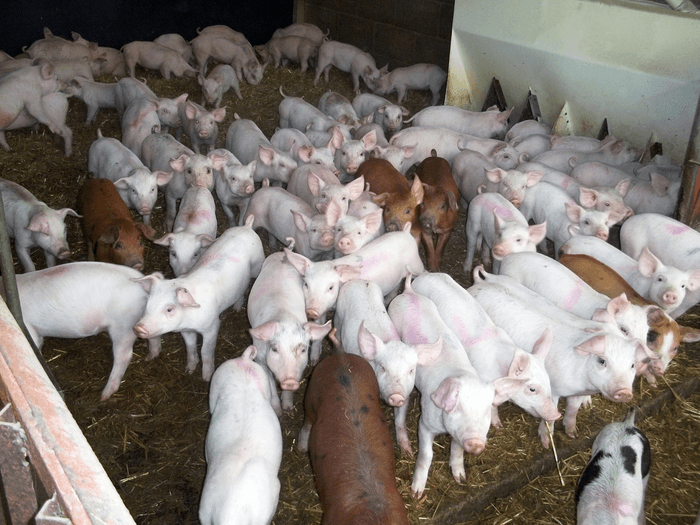
However, resistance is only part of the problem. The review also highlights the issue of residues – leftover traces of drugs and chemicals in animal products. These residues, while different from resistance, pose their own set of health risks to consumers.
“Veterinary drug residues commonly arise from overusing and improper use of antimicrobial agents, growth promoters and other veterinary drugs in animal husbandry practices,” Eri notes.
The researchers emphasize the critical need to differentiate between residue and resistance, as each requires distinct strategies to address. They call for a multifaceted approach, including improved surveillance, responsible antibiotic use, better farming practices, stronger regulations, and regional cooperation.
Central to their recommendations is the adoption of a “One Health” approach, which recognizes the interconnectedness of human, animal, and environmental health. This holistic perspective is crucial for developing effective solutions to combat both residue and resistance.
“Efforts in the region to regulate antimicrobial use are underway, but there’s growing concern over consuming products with antimicrobial residues, which can impact human health due to the presence of antibiotic-resistant microbiota and pathogens in hosts,” Dr. Sundram points out.
The review offers a stark reminder that in our globalized world, health threats know no borders. What happens on farms in Southeast Asia can have ripple effects across the globe, potentially compromising the efficacy of our most important medicines.
The authors conclude with a call to action for policymakers, farmers, and other stakeholders to implement comprehensive policies and practices to tackle these challenges. By addressing the twin issues of residue and resistance in food animals, Southeast Asian countries have the opportunity to not only safeguard public health and food security in their region but also contribute to global efforts in combating one of the most pressing health threats of our time.
As we’ve learned from recent history, preparedness is key. The time to act on antimicrobial resistance is now, before we find ourselves in the midst of another global health crisis – one that we’ve seen coming but failed to prevent.
Paper Summary
Methodology
This paper is a comprehensive review that synthesizes and analyzes existing research, government reports, and policy documents related to residue and resistance in food animals, with a specific focus on Southeast Asia. The authors examined data on livestock populations, antibiotic use in farming, and studies detecting residues and resistant bacteria in animal products. They also reviewed current policies and regulations in Southeast Asian countries, as well as international guidelines from organizations like the World Health Organization and the Food and Agriculture Organization.
The review process involved critically evaluating this information to identify key trends, challenges, and potential solutions. The authors then synthesized this information to provide a comprehensive overview of the issue and make evidence-based recommendations for policy and practice.
Key Results
Southeast Asia is a hotspot for antimicrobial resistance in animals, with billions of livestock at risk. There is widespread overuse and misuse of antibiotics in animal farming, often for non-therapeutic purposes like growth promotion. Both antibiotic residues and resistant bacteria have been detected in animal products, sometimes exceeding safety limits.
There are significant gaps in regulatory frameworks and enforcement across the region. Many countries lack robust surveillance and monitoring systems for tracking residues and resistance. There is growing recognition of the need for a One Health approach to address these interconnected issues.
The review also highlighted some positive initiatives, such as bans on certain antibiotics for growth promotion and the development of national action plans to combat antimicrobial resistance in some countries.
Study Limitations
The authors acknowledge several limitations to their review. There is limited data availability in many Southeast Asian countries regarding antibiotic use in farming and the prevalence of residues and resistant bacteria. The rapidly evolving nature of the situation may cause some information to become outdated quickly.
The diversity of Southeast Asian countries in terms of farming practices, regulations, and capacities makes generalizations challenging. The focus on published literature may not capture all ongoing initiatives or unpublished data.
Finally, the complexity of the interactions between residue, resistance, and various environmental and economic factors is not fully understood, adding another layer of difficulty to the analysis.
Discussion & Takeaways
The review emphasizes several critical points:
- Urgent action is needed to address the risks posed by residue and resistance in food animals to public health and the economy in Southeast Asia.
- A multifaceted approach combining regulatory, educational, and technical interventions is necessary.
- Regional cooperation is essential, given the interconnected nature of food systems and the movement of animals and products across borders.
- The One Health framework, recognizing the links between human, animal, and environmental health, is crucial for developing effective solutions.
- Policies need to balance public health concerns with the economic importance of livestock farming in the region.
- Ongoing research is needed to better understand the dynamics of residue and resistance and to develop innovative solutions.
The authors conclude that while the challenges are significant, there are opportunities for Southeast Asian countries to become leaders in addressing these global issues through strong policies and collaborative efforts.
Funding & Disclosures
The authors did not report any specific funding for this review article. They declared no conflicts of interest related to the study. This independence from external funding or conflicts of interest strengthens the credibility of the research, as it suggests the findings were not influenced by financial interests or biases from funding sources.


