
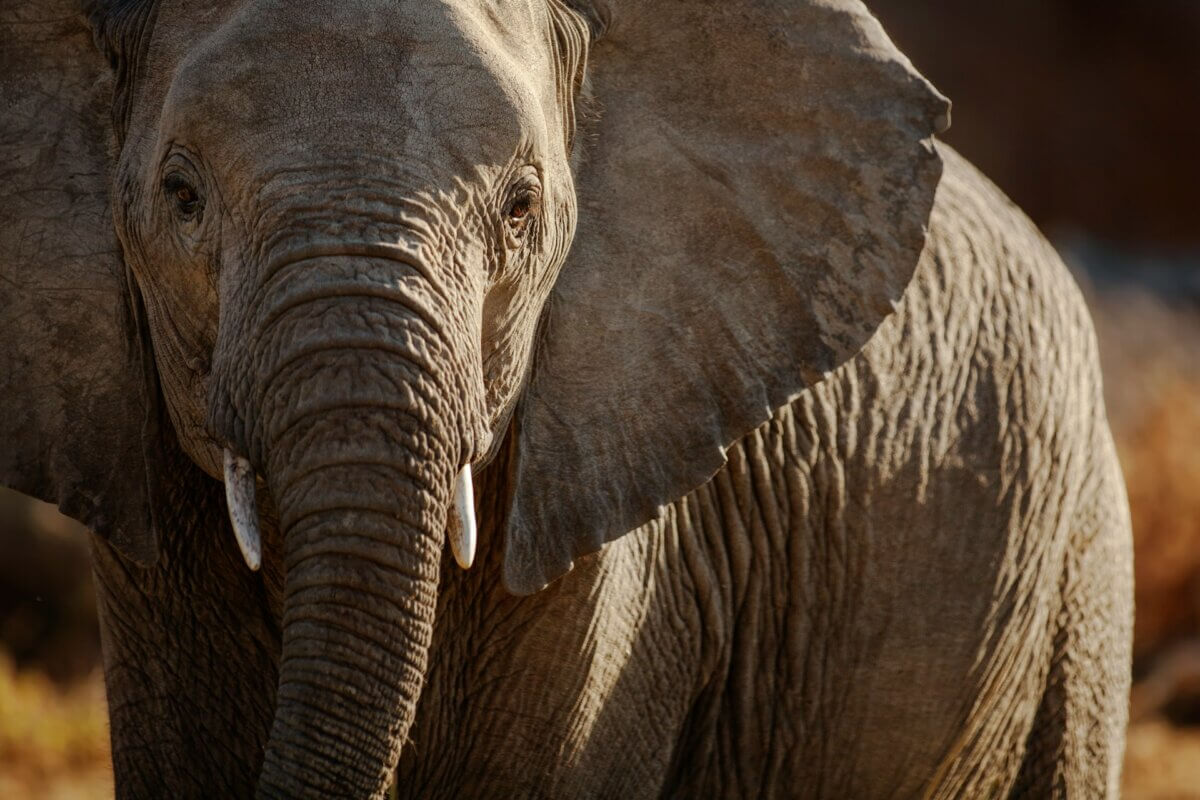
(Photo by Unsplash+ in collaboration with Getty Images)
STANFORD, Calif. — As the African sun dips below the horizon, painting the sky in hues of orange and purple, a group of bull elephants congregates at a dusty waterhole. Their massive forms cast long shadows across the parched earth as they quench their thirst after a long day’s journey. Suddenly, the air vibrates with an otherworldly sound: a deep, rumbling call that seems to emerge from the very ground itself. One by one, the elephants respond, their voices weaving together in an intricate, infrasonic tapestry. To the untrained ear, it might seem like nothing more than background noise in the symphony of the savanna. But to these gentle giants, it’s a clear and coordinated message: we’re leaving.
This remarkable vocal display, once thought to be the exclusive domain of female-led family groups, is now revealing a hidden depth to the social lives of male elephants.
The exciting study, published in the journal PeerJ, shows how male African elephants engage in sophisticated vocal coordination when leaving waterholes, challenging long-held beliefs about their social dynamics. This behavior, previously thought to exist only in tight-knit family groups led by matriarchs, demonstrates a level of cooperation and communication among male elephants that has surprised even seasoned researchers.
“We were astonished to find that male elephants, typically considered to have loose social ties, engage in such sophisticated vocal coordination to trigger action,” says study lead author Caitlin O’Connell-Rodwell, a research associate at Stanford University’s Center for Conservation Biology, in a statement. “These calls show us that there’s much more going on within their vocal communication than has previously been known.”
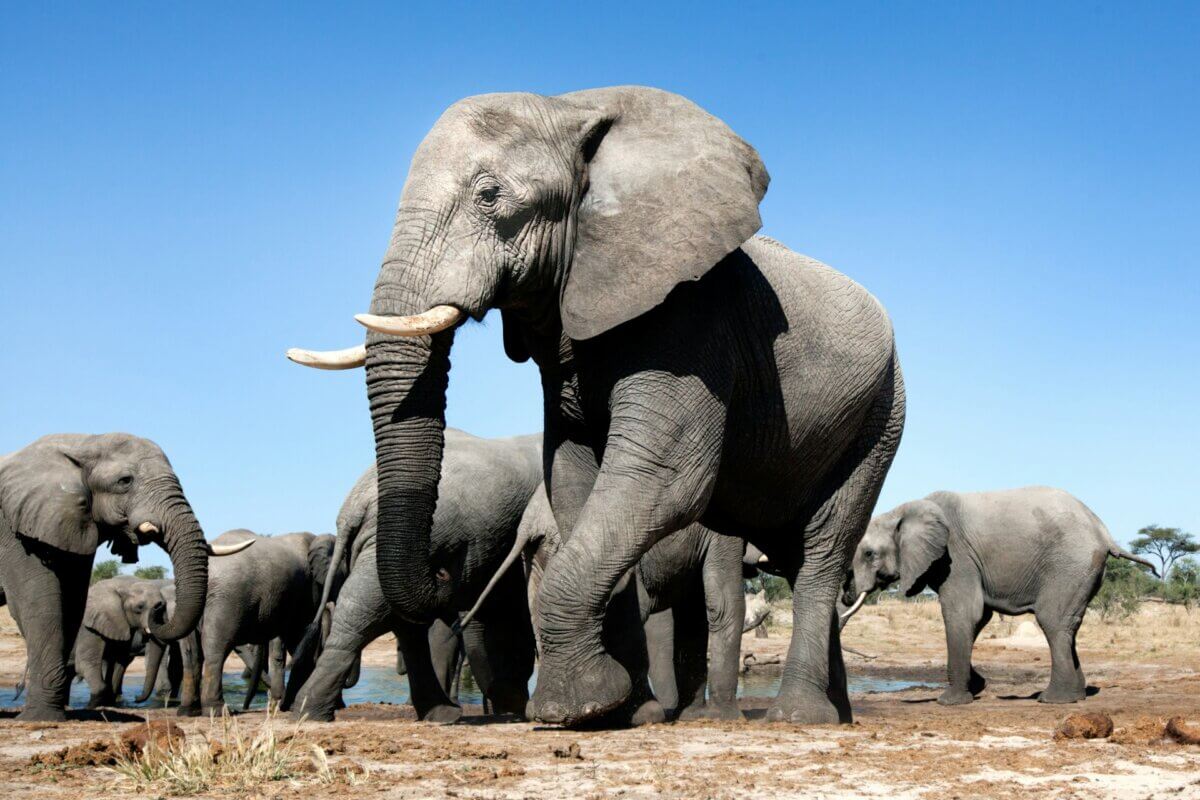
The study, conducted over several years at the Mushara waterhole in Etosha National Park, Namibia, focused on a specific vocalization called the “let’s go” rumble (LGR). This low-frequency call, often inaudible to human ears, serves as a signal for the group to depart from the waterhole. The behavior involves a series of synchronized vocalizations, creating a pattern reminiscent of a well-rehearsed musical ensemble.
Traditionally, male elephants have been viewed as solitary creatures or loose associates, coming together primarily for access to resources or mating opportunities. However, this new research suggests that some male elephants form much closer bonds than previously recognized, coordinating their movements and decision-making in ways reminiscent of family groups.
The study found that these coordinated departures were typically initiated by highly socially integrated individuals within the group. These “social butterflies” of the elephant world would start the process by emitting the first “let’s go” rumble, often while stepping away from the water, standing still, and flapping their ears. This initial call would then trigger a series of synchronized responses from other members of the group, creating a vocal “conversation” that ultimately resulted in the entire group leaving the area together.
O’Connell-Rodwell points to the unique pattern of these vocalizations: “It’s very synchronized and ritualized. When one goes high, the other goes low, and they have this vocal space where they’re coordinating.” This turn-taking behavior creates a harmonious sequence of calls, each elephant waiting for the preceding vocalization to nearly finish before adding its own voice to the chorus.
Intriguingly, the researchers discovered that it wasn’t always the most dominant male who initiated these departures. While in some cases the highest-ranking elephant did take the lead, in others, it was simply a well-connected individual within the social network who got the ball rolling. This suggests that in male elephant society, social savvy may be just as important as brute strength when it comes to leadership and group coordination.
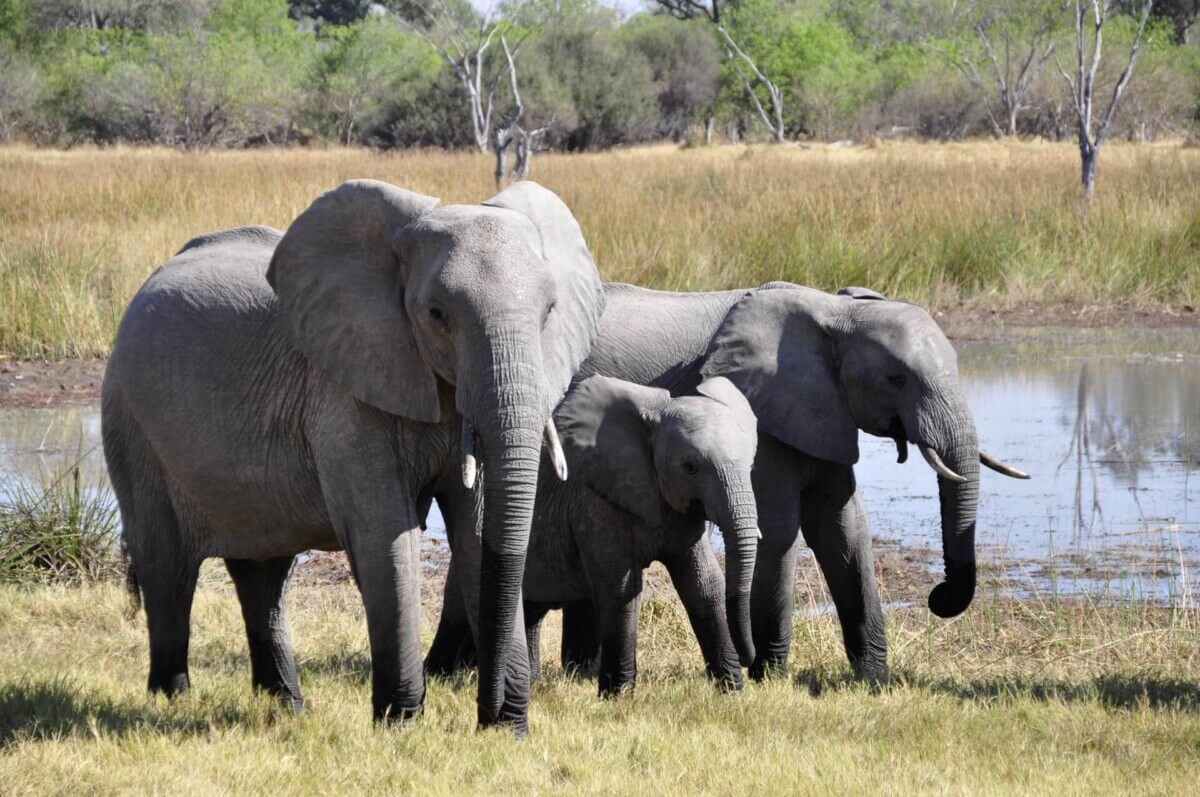
The implications of this discovery are significant. It suggests that male elephants, particularly older and more socially integrated individuals, may play crucial roles in maintaining social cohesion and passing on important ecological knowledge within all-male groups. This could have important ramifications for conservation efforts, highlighting the need to protect not just breeding herds, but also these often-overlooked bachelor groups.
“These individuals take on mentoring roles,” explains O’Connell-Rodwell. “They care about these young whippersnappers who are very needy and always wanting to be in physical contact. The older males are willing to take them under their wing, to guide them, share resources with them, and partake in their emotional ups and downs.”
The study also sheds new light on the complexity of elephant communication. O’Connell-Rodwell draws a fascinating parallel to human language, noting that the “let’s go” rumble functions as a verb in elephant communication. This observation, combined with a recent study showing that elephants use unique “names” for each other (functioning as nouns), hints at the possibility of a more complex linguistic structure in elephant vocalizations.
“In our paper, we show that elephants are using verbs in the form of this ‘let’s go’ rumble. If they are using noun-verb combinations together, that is syntax. That is language,” says O’Connell-Rodwell.
This research not only enhances our understanding of elephant behavior but also has practical implications for conservation and management of both wild and captive elephant populations. It highlights the importance of preserving social structures within elephant groups and suggests that the removal of socially integrated older males – for instance, through hunting – could have far-reaching consequences for elephant societies.
As we continue to unravel the mysteries of elephant communication and social behavior, one thing becomes increasingly clear: these magnificent creatures are far more complex and socially sophisticated than we ever imagined. The deep, resonant rumbles echoing across the African savanna are not just noise – they’re the building blocks of a rich, nuanced language that binds elephant societies together.
Paper Summary
Methodology
The researchers collected data during dry season months from 2005 to 2017 at the Mushara waterhole in Etosha National Park, Namibia. They used a combination of visual observations, video recordings, and sophisticated audio equipment, including buried microphones, to capture the elephants’ vocalizations and behaviors. Each elephant was individually identified based on unique physical characteristics, allowing the team to track specific animals over time. The researchers analyzed the structure and timing of the vocalizations, as well as which individuals initiated departures and participated in the vocal exchanges. They also used social network analysis to understand relationships and hierarchy among the males.
Results
The study documented seven distinct “let’s go” rumble events, involving a total of 19 individual male elephants. These events consisted of a series of coordinated vocalizations, with an average of about 7 vocal “bouts” per departure. The initiators of these departures were typically highly socially integrated individuals, though not always the most dominant. Importantly, the researchers found that elephants involved in these coordinated departures had significantly stronger social bonds with each other compared to those not participating in such events. The vocalizations followed a specific pattern, with each elephant waiting for the preceding call to nearly finish before adding their own voice, creating a harmonious, turn-taking sequence.
Limitations
The study was conducted at a single location with a relatively small sample size of events and individuals. While the findings are compelling, more research across different elephant populations and environments would be needed to determine how widespread this behavior is among male African elephants. Additionally, the study was limited to the dry season when elephants congregate at waterholes, and behaviors might differ in other seasons or contexts.
Discussion and Takeaways
This research challenges our understanding of male elephant social dynamics and highlights the importance of social bonds and communication in these intelligent animals. It suggests that male elephants may form more complex and cooperative social units than previously thought, with implications for both elephant behavior research and conservation strategies. The study also underscores the potential leadership roles of socially integrated individuals in male elephant groups, which could influence how we think about elephant social structures and decision-making processes. Furthermore, the research hints at the possibility of a more complex linguistic structure in elephant communication, with the “let’s go” rumble potentially functioning as a verb in combination with previously documented “name” vocalizations.
Funding and Disclosures
The study was supported by various organizations including the National Geographic Society, the U.S. Fish and Wildlife Service African Elephant Conservation Fund, and several university grants. Some of the authors are affiliated with Utopia Scientific, a non-profit organization focused on elephant research and conservation. While this connection is disclosed, the funders had no role in the study design, data collection and analysis, or decision to publish the findings.


