(© steheap - stock.adobe.com)
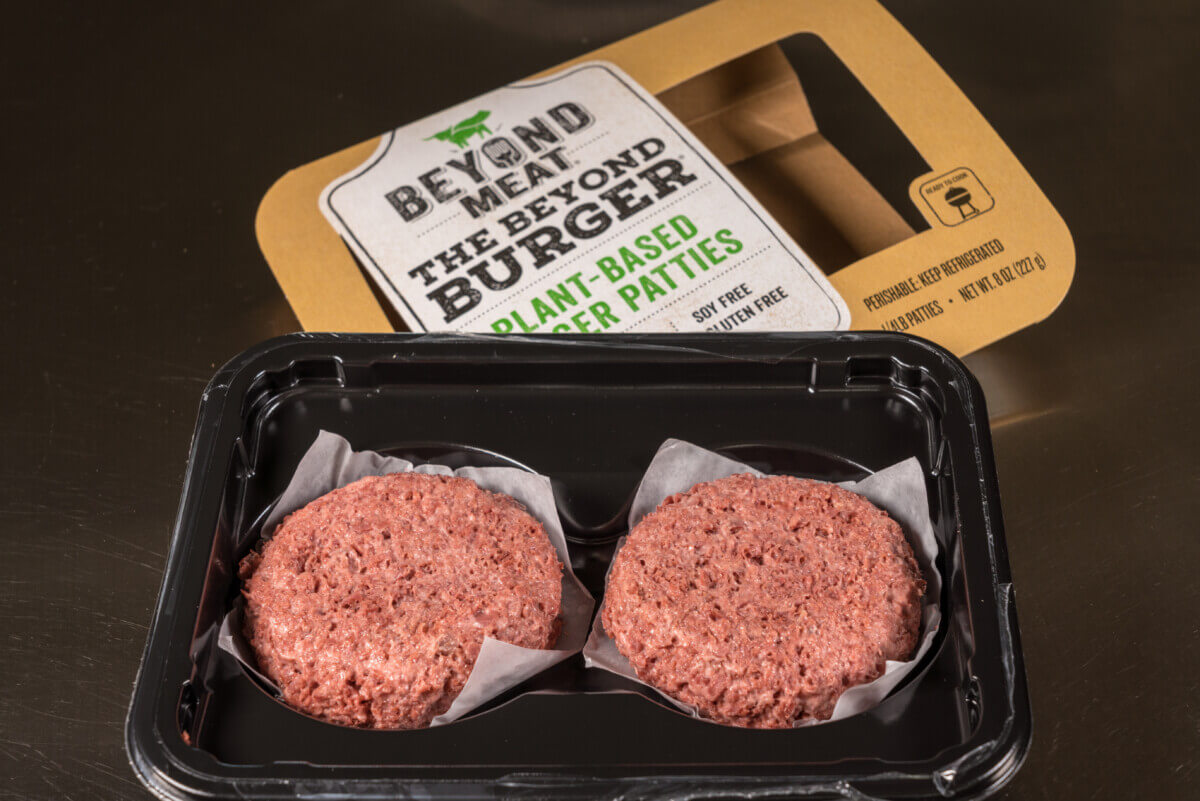
GOTHENBURG, Sweden — Meat alternatives like “impossible” burgers and other plant-based substitutes lack the nutritional value of the foods they’re replacing, according to researchers in Sweden. Their study found that meat substitutes contain proteins and nutrients which the human body can’t absorb — leaving customers with an iron deficiency.
Plant-based diets revolving around root vegetables, fruit, nuts, and beans have a reputation of being much more environmentally-friendly. Previous studies have also shown that vegetarian diets can have several health benefits, including lowering the risk of developing diabetes and heart disease. However, the team at Chalmers University of Technology say few studies have actually examined how eating textured plant proteins — common in meat substitutes — affects the human body.
Researchers analyzed 44 different meat alternatives available for purchase in Sweden. Most of these products consist of soy and pea protein, but they also include the fermented soy product tempeh and mycoproteins — proteins from fungi. Results show plant-based meat alternatives don’t measure up to the innate nutritional value of consuming animal protein.
“Among these products, we saw a wide variation in nutritional content and how sustainable they can be from a health perspective. In general, the estimated absorption of iron and zinc from the products was extremely low. This is because these meat substitutes contained high levels of phytates, antinutrients that inhibit the absorption of minerals in the body,” says lead study author Cecilia Mayer Labba in a university release.
Why do plant-based substitutes lack nutrition?
The team explains that phytates are natural substances within beans and cereals. They accumulate when food manufacturers extract proteins from these foods to create meat substitutes.
However, phytates form insoluble compounds with essential dietary minerals like non-heme iron and zinc when they enter the gastrointestinal tract — where mineral absorption takes place. This means the intestines can’t absorb these nutrients and reap their healthy benefits. Simply put, many meat alternatives become nutritionally empty foods.
“Both iron and zinc also accumulate in protein extraction. This is why high levels are listed among the product’s ingredients, but the minerals are bound to phytates and cannot be absorbed and used by the body,” says Mayer Labba.
Study authors add that iron deficiency is a widespread problem among women worldwide. In Europe alone, between 10 and 32 percent of all adult women don’t get enough iron in their diet. One in three teenage girls also have this problem.
This nutritional issue is particularly concerning for people who avoid red meat completely. These proteins are the main source of iron which the human body’s digestive tract can easily absorb.
“It is clear that when it comes to minerals in meat substitutes, the amount that is available for absorption by the body is a very important consideration. You cannot just look at the list of ingredients. Some of the products we studied are fortified with iron but it is still inhibited by phytates. We believe that making nutrition claims on only those nutrients that can be absorbed by the body could create incentives for the industry to improve those products,” says co-author Ann-Sofie Sandberg, Professor of Food and Nutrition Science at Chalmers.
Plant-based products have varying nutritional values
The team found that tempeh, made from fermented soybeans, differs from other meat substitutes when it comes to the amount of iron eaters are able to absorb. Researchers say this isn’t surprising since tempeh’s fermentation process uses microorganisms that break down phytates.
Mycoproteins also contained a high amount of zinc, without containing the absorption inhibitors or other meat substitutes. However, it’s still unclear how well human intestines break down the cell walls of mycoprotein and how well the body absorbs nutrients from these foods.
“Plant-based food is important for the transition to sustainable food production, and there is huge development potential for plant-based meat substitutes. The industry needs to think about the nutritional value of these products and to utilize and optimize known process techniques such as fermentation, but also develop new methods to increase the absorption of various important nutrients,” Mayer Labba concludes.
The team notes that most commercially-available plant-based protein products are based on protein coming from a cultivated plant, like soybeans. Manufacturers then subject the protein to high pressure and temperatures in order to restructure them into textured products — like plant-based burgers.
Results also show that a single meal containing 150 grams of meat substitutes contributes up to 60 percent of the daily recommended amount of salt.
The findings appear in the journal Nutrients.


I completely agree with Eric Jeffries comments. If you read the actual published science itself, you see that this editor was misleading and unthorough in his interpretation. One glaring statement by Chris Melore – the writer of this article – is that plant based meats left people with iron deficiencies. That is a complete lie. If you read the scientific publication itself you see that there was NO MEASUREMENT of any iron in any person at any time in this research. No participants had their blood work taken/analyzed for any iron levels at all. The discussion was all hypothetical and is not based on any fact. Also, the researchers did not actually measure any absorption of any nutrient. To quote the authors: “In general, the estimated absorption of iron and zinc from the products . . .”. The researchers used an estimated measurement rather than conduct an actual experiment.
This research is so full of “maybe science” it should never be used as fact which is what Chris did – a SEVERE misinterpretation.
I’d like to also make the point that the amount of iron one gets from one’s diet is not interchangeable with the amount of iron that one absorbs from a meat substitute. Meat is not the only great source of readily available iron – people don’t eat only-meat diets or only-meat-substitute diets. Although I am an N=1, I have been non-meat eating for 20 years. Not only have I never had an iron deficiency – I measure my bloodwork yearly – my iron level has consistently measured at the very high end of the range, far, far from a deficiency. The point I am making here is that one’s DIET AS A WHOLE is what determines an iron or protein deficiency, not whether or not one includes a meat substitute in their diet.
This research was also conducted in 2022 . . . not recent at all. And this is not the first time that SF Study Finds has published a severely misleading article. It once published an article – written yet again by Chris – that made a categorical claim regarding how bad carbohydrates are to eat as they spike one’s blood sugar. I looked up the research that he was referencing and the study he was reviewing did NOT use whole food carbohydrates normally consumed in one’s diet – like bread, pasta, whole starchy vegetables, etc. The research that Chris was referencing used 2 liters of sugar water directly pumped into the person’s veins and then measured the blood work to see how quickly the blood sugars spiked. The point of the research was to see how quickly the sugars hit the bloodwork. This was NOT a study on eating carbohydrates but that is how Chris Melnor presented it. He is a VERY POOR interpreter of scientific studies.
So I caution anyone against relying on this site to take their “research” seriously. Always read the study for yourself because this site cannot be trusted for accuracy.
You write: “Their study found that meat substitutes contain proteins and nutrients which the human body can’t absorb — leaving customers with an iron deficiency.”
Wrong. The study only addresses, absorption of zinc and iron, which bind to phylates. The study concluded nothing about protein, or any of the other nutrients in plant-based meat.
One might immediately question your motives in your report of the study. Doesn’t seem like simple sloppiness.