
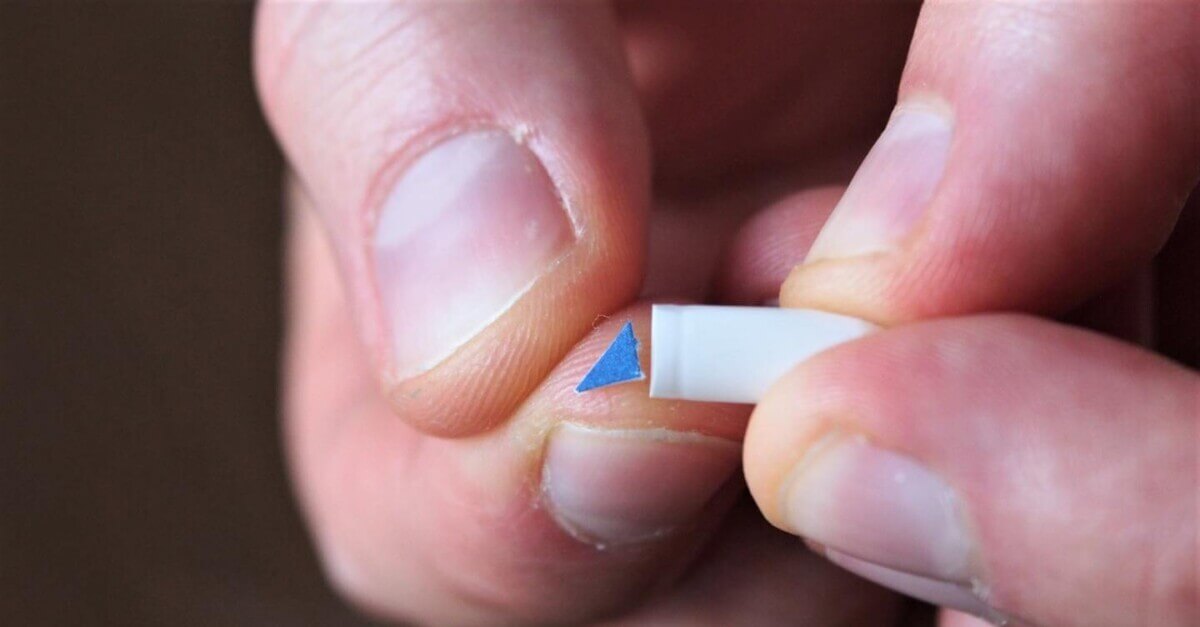
A microdose used in the study by Szigeti et al. (Credit: Self-blinding microdose study team (CC BY 4.0)
The use of psychedelic drugs is, to say the least, controversial. For those of us old enough to remember the heyday of psychedelics for recreation and “mystical” experiences, just the word recalls social divides. For millennials and younger adults not familiar with psychedelic recreational use history, Google LSD, magic mushrooms, and Woodstock.
Now, psychedelic drugs are being studied for their potential uses for relieving mental illness and for enhancing quality of life. A major part of that conversation is microdosing, or taking very small amounts of these drugs to test their benefits while limiting side-effects. Here’s what you need to know about the process.
Psychedelics are a class of psychoactive substances that induce complex behavioral, psychological, and physiological effects primarily through the activation of serotonin receptors – the sites in the brain where chemical messengers are active.
This discussion is primarily about microdosing psilocybin – the psychoactive substance in so-called magic mushrooms. The use of the drug has been rising in popularity over the last five years, especially in Colorado and Oregon, the only states in which it is legal. A few states have decriminalized it. On Reddit, one microdosing group has more than a quarter-million members.
Microdosing may work by affecting a person’s serotonin activity. Serotonin is a neurotransmitter (chemical messenger) that stabilizes mood and creates feelings of happiness. This affects a person’s mood, sleeping and eating habits, cognition, and even body temperature. Serotonin receptor activity is also associated with the effects of psychedelics, such as experiencing hallucinations.
What is microdosing?
Microdosing refers to regularly taking these drugs in amounts that are one-tenth to one-twentieth of a typical recreational dose. People report that they microdose to lessen mental health symptoms such as depression and stress, improve productivity, and ease pain.
However, research to date has not established whether microdosing is safe or effective. Though research is ongoing, scientists suspect that some of these substances may cause brain changes that boost the effectiveness of treatments for mental health disorders. During research studies, the drugs are always administered under medical supervision, usually in combination with treatments such as talk therapy.
Benefits of microdosing
Remember, these potential benefits have not been proven scientifically and are reported by independent users and participants in limited clinical trials.
Benefits associated with microdosing include:
- Better mood (reduced symptoms of anxiety and depression)
- Improved focus (less distractibility)
- Increased motivation and ambition
- Increased creativity
- Increased energy
- Greater comfort with socialization (including a sense of connection, empathy, and verbal fluency)
- Clarity of thought and problem-solving
- Improved sleep quality
- Reduced headache/migraine
Reduced sensitivity to trauma has also been reported, causing potential concern for a user not being aware of or responding to injury if it occurs. It’s also been reported that some users experience less dependence on tobacco and alcohol.
Potential risks of microdosing
The potential risks of microdosing are not fully understood, attributed to a lack of clinical trials on people. Commonly noted, though, is that continued microdosing (over several weeks or months) is associated with increased neurosis (feelings of fear, worry, and anxiety).
Adverse consequences are more likely for those with a history of psychosis or pre-existing risk factors for psychiatric disorders like bipolar or schizophrenia.
What are the side-effects?
Unregulated users commonly refer to side-effects of microdosing as “challenges.” Additional clinical trials in humans and reproducible studies are needed to determine both benefits and side-effects, short-term and long-term.
Perceived side effects of microdosing include:
- Sense of temperature dysregulation, too hot or too cold
- Digestive issues
- Appetite issues
- Tingling and numbing sensations
- Impaired focus
- Increased anxiety (alone or in social settings)
- Reduced mood (including feelings of depression)
- Feelings of disconnection (dissociation)
- Cognitive impairment (confusion)
- Migraine
- Excessive energy (restlessness, agitation)
- Drained energy (fatigue or brain fog)
- Increased dose tolerance over time
In supervised use of psilocybin, evidence so far suggests minimal negative health effects from supervised use of these substances. However, participants in these trials commonly report feeling fear, confusion, or anxiety and have had side-effects such as nausea, vomiting, headache, fatigue, and high blood pressure. Further, psychedelic and dissociative substances can cause serious negative side-effects when used outside of a clinical setting.
Additional research on the safety, efficacy, and mechanisms of action of psychedelic or dissociative substances is critical. However, there are multiple challenges to conducting this research.
Research structure
A person’s personality and expectations of the experience before taking a psychedelic drug — called the mindset or “set” — and the surrounding people and environment — called the “setting” — play a role in how they respond to it. Scientists are trying to establish the best clinical trial protocols for testing how these drugs work in people. They must assess the role of set and setting and the importance of the psychedelic or mystical experience that may accompany the use of the drugs.
They must also figure out how to measure and control placebo effects, which occur when a person’s expectations of how a drug will work influence their response to it. Since the effects of a psychedelic or dissociative drug are so distinctive, it is difficult to find another substance that mimics its effects in a controlled clinical trial.
Challenging experiences for participants
Some people who take these drugs have mind-altering experiences that may cause fear, anxiety, or paranoia. In one study of high-dose psilocybin effects in 18 adults, 94% reported a long-lasting and meaningful experience up to a year later, but 39% also reported extreme fear during the treatment session.
Mental health issues
There is some evidence that psychedelic drugs might bring about or trigger schizophrenia-like illnesses in people with predisposing factors, but little evidence that they cause long-term psychiatric problems for most people. As a precaution, participants with previously diagnosed psychosis or bipolar disorder, and sometimes other mental illnesses, are excluded from participation, but this may limit knowledge of the drugs’ real-world effects and safety.
How is the National Institute on Drug Abuse (NIDA) learning more about psychedelic and dissociative drugs as medicine?
- NIDA conducts and supports pre-clinical (laboratory) research to better understand how psychedelic and dissociative drugs affect cells and activity among different regions of the brain and how any brain changes affect people’s health, mood, and perception.
- NIDA also supports clinical research on these substances’ therapeutic potential, particularly for tobacco cessation and substance use disorders, as well as studies on their use and health effects in real-world settings.
- The Institute is also supporting research into substances that are chemically similar to psychedelic and dissociative drugs and that may have therapeutic effects but without side-effects like hallucinations, altered perception, physical discomfort, or other negative health effects.
Sources
- Psychedelic and Dissociative Drugs as Medicines | National Institute on Drug Abuse (NIDA) (nih.gov)
- Microdosing psychedelics: More questions than answers? An overview and suggestions for future research – PMC (nih.gov)
- Adverse effects of psychedelics: From anecdotes and misinformation to systematic science – PubMed (nih.gov)


