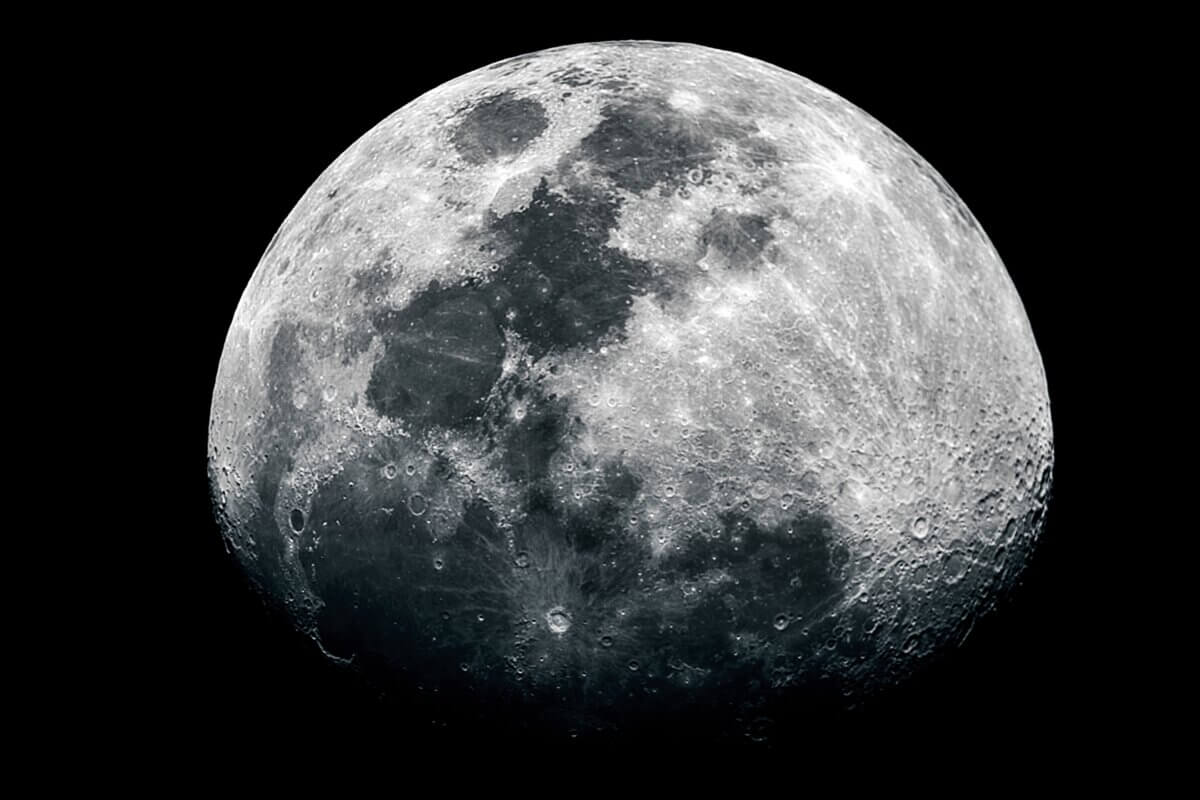
(Photo by Nicole Nie on Shutterstock)
CAMBRIDGE, Mass. — The face of the Moon, pockmarked and scarred, tells a tale of cosmic violence. But beneath this visible history lies an invisible story – the birth and sustenance of a gossamer-thin atmosphere. Scientists from MIT and the University of Chicago have now cracked the code of this lunar enigma, revealing a process of continuous destruction and creation that has shaped the Moon’s ethereal skies since its formation.
Imagine standing on the lunar surface, surrounded by a landscape of stark beauty and desolation. Above you, invisible to the naked eye, dance atoms of potassium and rubidium, part of an atmosphere so sparse it’s technically called an “exosphere.” But how did these atoms get there, and what keeps them aloft in the Moon’s weak gravity?
The answer, it turns out, lies in the constant rain of tiny space rocks bombarding the lunar surface. These micrometeorites, no larger than grains of sand, strike the Moon at speeds faster than bullets, vaporizing themselves and bits of lunar soil on impact. This process, known as “impact vaporization,” has been transforming the face of the Moon and feeding its whisper-thin atmosphere for 4.5 billion years.
“We give a definitive answer that meteorite impact vaporization is the dominant process that creates the lunar atmosphere,” says the study’s lead author, Nicole Nie, an assistant professor in MIT’s Department of Earth, Atmospheric, and Planetary Sciences. “The moon is close to 4.5 billion years old, and through that time the surface has been continuously bombarded by meteorites. We show that eventually, a thin atmosphere reaches a steady state because it’s being continuously replenished by small impacts all over the moon.”
This revelation, published in Science Advances, challenges previous assumptions about the Moon’s exosphere. While scientists have long suspected that both micrometeorite impacts and solar wind played roles in shaping the lunar atmosphere, the relative importance of these processes remained unclear. Now, thanks to the painstaking analysis of lunar soil samples brought back by Apollo astronauts, we know that impact vaporization accounts for at least 70% of the Moon’s atmospheric atoms, with solar wind responsible for the remainder.
To reach this conclusion, Nie and her colleagues turned to an unlikely pair of elements: potassium and rubidium. Both are easily vaporized by impacts and solar wind, making them ideal tracers for atmospheric processes. By measuring the ratios of different isotopes of these elements in lunar soil samples, the team was able to reconstruct a 4.5-billion-year record of the Moon’s atmospheric history.
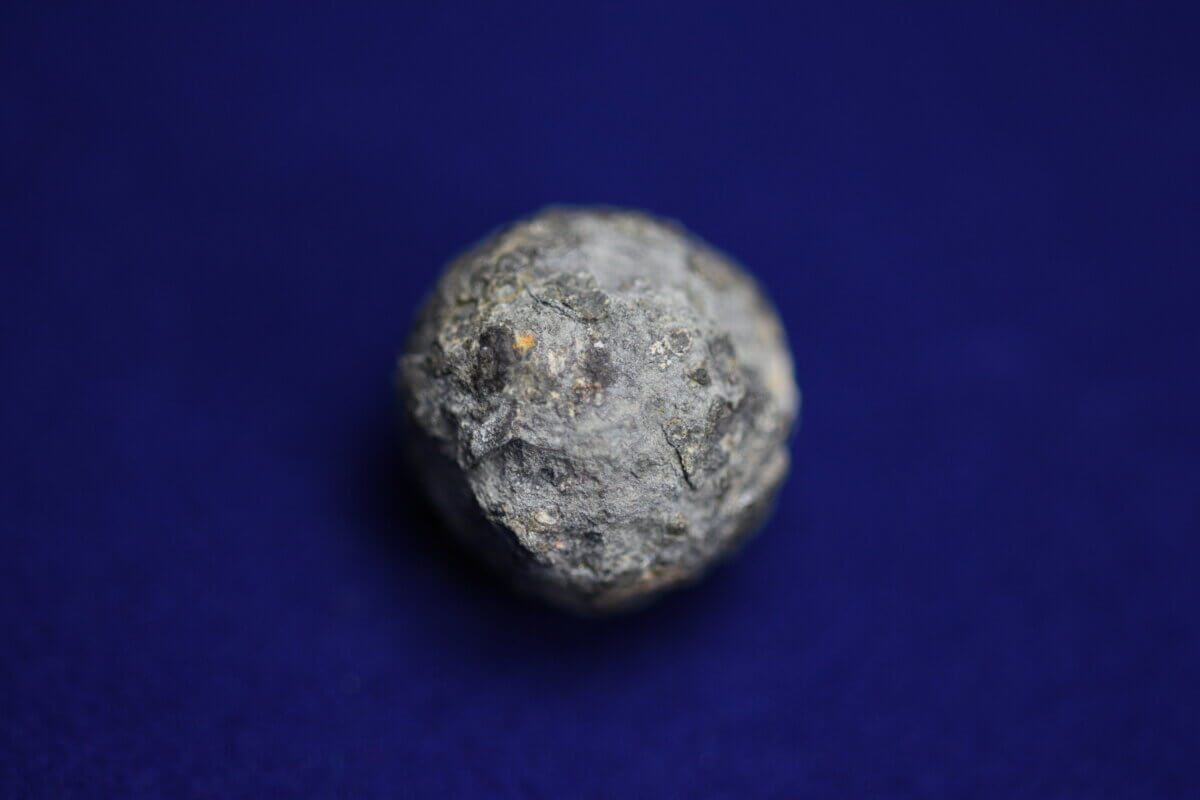
The key to their discovery lay in the way different processes affect these isotopes. Micrometeorite impacts and solar wind sputtering leave distinct isotopic fingerprints in the lunar soil. By carefully analyzing these patterns, the researchers were able to determine the dominant force shaping the Moon’s atmosphere over time.
This finding has implications far beyond our celestial neighbor. Understanding how airless bodies like the Moon maintain their tenuous atmospheres can help us interpret observations of similar environments throughout the solar system, from Mercury to distant asteroids. It may even inform our search for potentially habitable worlds beyond our cosmic backyard.
Moreover, this research demonstrates the enduring value of the Apollo missions. Decades after astronauts scooped up handfuls of moon dust, those samples continue to reveal new secrets about our nearest neighbor. As Nie puts it, “Without these Apollo samples, we would not be able to get precise data and measure quantitatively to understand things in more detail. It’s important for us to bring samples back from the moon and other planetary bodies, so we can draw clearer pictures of the solar system’s formation and evolution.”
It seems that the gentle rain of micrometeorites plays a more crucial role than we ever imagined. With each tiny impact, these space particles help write the ongoing story of the Moon’s atmosphere – a tale billions of years in the making, now finally coming to light thanks to the patient work of scientists and the enduring legacy of the Apollo program.
Paper Summary
Methodology
The researchers analyzed 10 lunar soil samples collected during NASA’s Apollo missions. Each sample, weighing about 100 milligrams, was crushed into a fine powder and dissolved in acids to isolate potassium and rubidium. These solutions were then analyzed using a mass spectrometer to measure the ratios of different isotopes of both elements. By comparing the isotopic compositions of the soil samples to those of lunar rocks not exposed to space weathering, they could determine how much fractionation had occurred due to atmospheric loss processes.
Results
The study found that lunar soils contained mostly heavy isotopes of both potassium and rubidium. The specific ratios of heavy to light isotopes for both elements matched theoretical predictions for a scenario where micrometeorite impacts are the dominant source of atoms in the lunar atmosphere. The results indicated that impact vaporization contributes at least 70% of the atoms in the lunar atmosphere, with solar wind sputtering accounting for the remaining 30% or less.
Limitations
While the study provides compelling evidence for the importance of micrometeorite impacts, there are some limitations to consider. The analysis relies on samples from a limited number of locations on the Moon, and may not be representative of the entire lunar surface. Additionally, the study focuses on long-term average conditions and may not capture short-term variations in atmospheric processes.
Discussion and Takeaways
This research challenges previous assumptions about the Moon’s exosphere and highlights the importance of micrometeorite impacts in maintaining this tenuous atmosphere. The findings have implications for our understanding of space weathering processes on airless bodies throughout the solar system. The study also demonstrates the ongoing scientific value of Apollo-era samples and underscores the importance of sample return missions for planetary science.
Funding and Disclosures
The study was supported, in part, by NASA and the National Science Foundation. The authors declared no competing interests.


