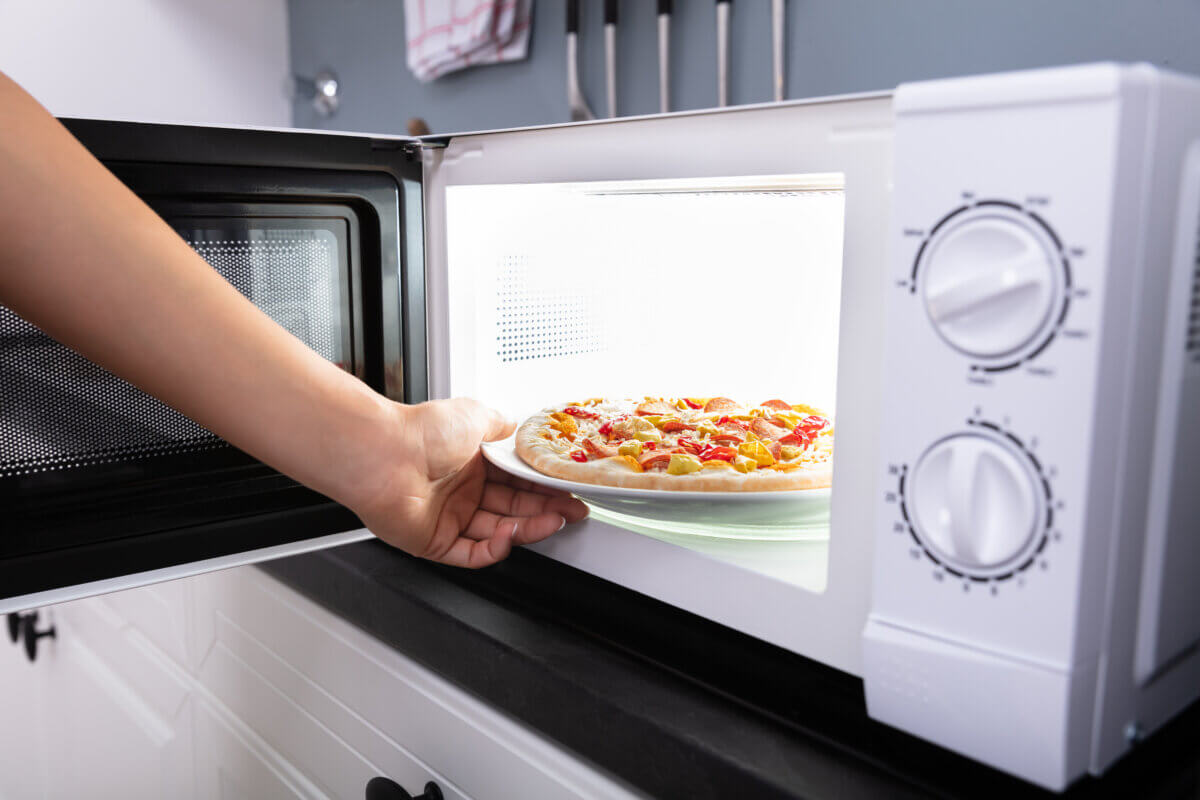
(Credit: Andrey_Popov/Shutterstock)
Extremophiles are organisms that don’t just survive but thrive in the harshest environments, including inside scorching hydrothermal vents, the cold of Antarctica, and your microwave oven.
There has been a long-held belief that the irradiation of microwaving food kills germs in the appliance and the food sitting inside. A team of researchers at the University of Valencia in Spain put that belief to the test. Their findings, recently published in Frontiers in Microbiology, reveal that more than 100 different bacteria inhabit microwave ovens.
The team, led by microbiologist Manuel Porcar, swabbed the interior surfaces and the rotary platters of 30 microwave ovens from home kitchens, communal areas at worksites, and industrial settings. The material they collected was swabbed onto lab dishes. All the lab dishes showed significant bacterial growth. Many of the bacterial strains were those found on human skin, but some were bacteria known to cause food-born illnesses.
The researchers also found that the bacteria that can cause food-borne illnesses are those routinely found on other kitchen surfaces or appliances and urged people not to be excessively alarmed. They recommend cleaning your home microwave oven with the same regularity that other kitchen surfaces should be cleaned.
For a few dollars, you can buy cute items from the nation’s largest retailers to clean your microwave. Take your pick — little penguins, volcanos, or “Steaming Sally,” a petite blond figurine with hands on hips and arms akimbo. They all work by spewing steam. However, you would be wasting your money!
Steam can loosen grime, but remember what we said about extremophiles, some bacteria survive in extreme conditions and are undaunted by steam.
To get rid of bacteria in your microwave oven, you can use these methods:
Method 1: Vinegar and Water
- Mix vinegar and water in equal parts in a microwave-safe bowl.
- Microwave the mixture for 5-10 minutes until it steams up.
- Let it cool down in the microwave.
- Wipe down the interior with a damp cloth.
Method 2: Lemon and Water
- Slice a lemon in half and squeeze the juice into a microwave-safe bowl filled with 1 cup of water. Add the lemon halves to the bowl.
- Microwave the bowl for 3-5 minutes until it steams.
- Let it sit for a few minutes.
- Wipe down the interior with a damp cloth.
The acidity of the lemon acts as a disinfectant.
Method 3: Dish Soap and Water
- Add several drops of dish soap to a bowl of water.
- Microwave the bowl for 2 minutes.
- Let it sit for a couple of minutes.
- Wipe down the interior with a sponge or cloth.
Any of these methods should keep your microwave oven clean enough for safety from food-borne bacteria.


