
Young woman tries to kill a mosquito on her cheek (© chaoss - stock.adobe.com)
SANTA BARBARA — For over a century, researchers have been unraveling the mystery of how mosquitoes find their human targets. We’ve long known about their ability to detect carbon dioxide from our breath, pick up on our body odors, and use visual cues to locate us. But now, a team led by researchers at the University of California-Santa Barbara has added a crucial piece to this sensory puzzle: infrared detection.
The study reveals that Aedes aegypti mosquitoes, the primary carriers of dengue, Zika, and yellow fever, can detect the infrared radiation emitted by warm human bodies from up to 70 centimeters away.
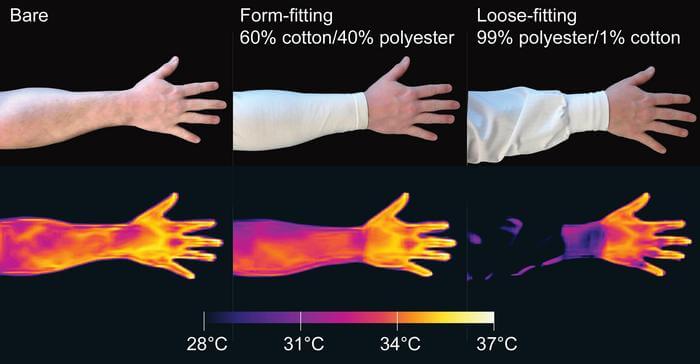
This discovery challenges long-held beliefs about how mosquitoes locate their prey. While we know that these insects use a combination of carbon dioxide detection, smell, and visual cues to find humans, the role of heat in their hunting strategy was thought to be limited to very close range. The new research shows that heat detection plays a crucial role in guiding mosquitoes to their targets from a much greater distance than previously thought.
Scientists used an ingenious experimental setup to test mosquitoes’ responses to infrared radiation. They created a special arena where mosquitoes could choose between two zones: one at ambient temperature and another heated to human body temperature (about 34°C or 93°F). To ensure the mosquitoes were responding only to infrared radiation and not to other heat-related cues, the researchers used a thin polyethylene film that blocks convective heat but allows infrared to pass through.
The results, published in Nature, were remarkable. When presented with a choice between the ambient temperature zone and the human-temperature zone, along with other human-associated cues like carbon dioxide and skin odor, the mosquitoes showed a strong preference for the warmer area. This preference was consistent even when the infrared source was up to 70 centimeters away – much farther than the few centimeters at which mosquitoes were thought to detect heat.
“What struck me most about this work was just how strong of a cue IR ended up being,” says co-lead author Nicolas DeBeaubien, a former graduate student and postdoctoral researcher at UCSB, in a statement. “Once we got all the parameters just right, the results were undeniably clear.”
How do mosquitoes detect this infrared radiation?
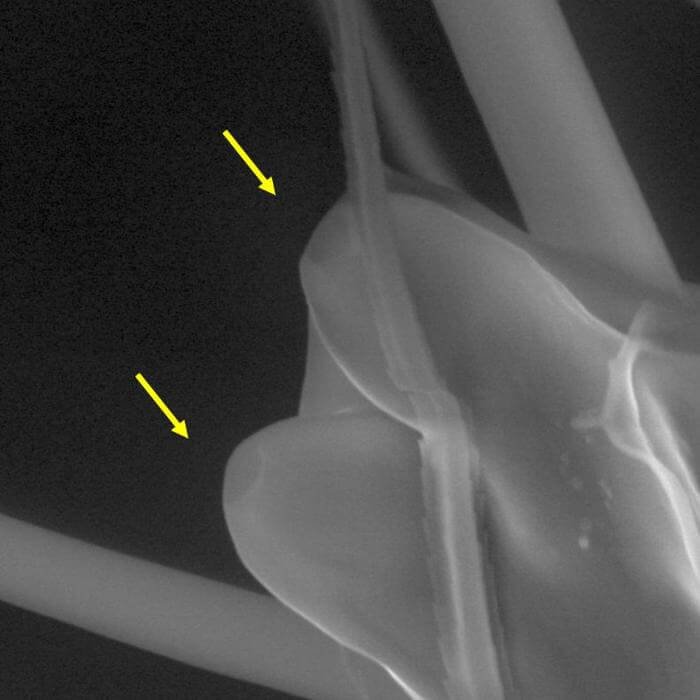
The researchers found that the secret lies in specialized heat-sensing neurons located at the tip of the mosquito’s antennae. These neurons contain a protein called TRPA1, which acts as a molecular thermometer. When exposed to infrared radiation, these neurons heat up slightly, activating TRPA1 and signaling the presence of a warm-blooded target.
Intriguingly, the study also found that two light-sensitive proteins called opsins, typically associated with vision, play a role in this heat-sensing ability. These opsins seem to enhance the mosquitoes’ sensitivity to lower levels of infrared radiation, allowing them to detect even subtle temperature differences.
This newfound understanding of mosquito sensory capabilities could have far-reaching implications for mosquito control and disease prevention. By knowing exactly how mosquitoes detect us, we might be able to develop more effective repellents or traps that interfere with their heat-sensing abilities.
The research also sheds light on why mosquitoes are such efficient disease vectors. Their ability to precisely locate warm-blooded hosts from a distance, combined with their other sensory capabilities, makes them highly adept at finding and feeding on humans – and potentially spreading pathogens in the process.
Perhaps most fascinating is the evolutionary story this discovery tells. Mosquitoes have developed a sophisticated, multi-sensory system for locating their prey, fine-tuned over millions of years to home in on the unique signatures of warm-blooded animals. It’s a reminder of the incredible adaptations that can arise through natural selection, even in creatures we often regard as pests.
As climate change and global travel extend the range of Aedes aegypti beyond tropical and subtropical regions, understanding their hunting techniques becomes increasingly crucial. These mosquitoes are now appearing in parts of the United States where they were never found just a few years ago, including California.
“Despite their diminutive size, mosquitoes are responsible for more human deaths than any other animal,” DeBeaubien notes. “Our research enhances the understanding of how mosquitoes target humans and offers new possibilities for controlling the transmission of mosquito-borne diseases.”
So, the next time you feel that telltale itch, remember: you’ve just been pinpointed by nature’s most sophisticated targeting system. But don’t despair – this new intel might just be the key to our victory in the great mosquito wars. After all, knowing thy enemy is half the battle – even if that enemy is smaller than your fingernail and can see your body heat.
Paper Summary
Methodology
The researchers designed a clever experimental setup to test mosquitoes’ responses to infrared radiation. They created an arena with two zones, each equipped with a temperature-controlled plate. One zone was kept at ambient temperature (about 29.5°C), while the other was heated to human body temperature (34°C). To isolate the effect of infrared radiation, they used a thin polyethylene film that blocks convective heat but allows infrared to pass through. The mosquitoes were placed in a cage within this arena, and their behavior was recorded with a video camera.
The researchers then used custom-developed software to track the mosquitoes’ movements and analyze their preferences. They also conducted experiments to determine the maximum distance at which mosquitoes could detect the infrared radiation and tested different combinations of sensory cues (carbon dioxide, human odor, and infrared) to understand how these factors interact.
Key Results
The study found that Aedes aegypti mosquitoes strongly prefer areas emitting infrared radiation at human body temperature when combined with other human-associated cues like carbon dioxide and skin odor. This preference was observed at distances up to 70 centimeters, much farther than previously thought possible for heat detection. The researchers identified the TRPA1 protein in antennal neurons as crucial for this infrared sensing ability.
They also discovered that two opsin proteins enhance sensitivity to lower levels of infrared radiation. Mosquitoes lacking these proteins showed reduced preference for the warmer areas, especially at lower temperature differences.
Study Limitations
While groundbreaking, this study has some limitations. The experiments were conducted in controlled laboratory conditions, which may not fully replicate the complex environments mosquitoes navigate in the wild. The study focused primarily on Aedes aegypti mosquitoes, and while some experiments were done with Anopheles mosquitoes (malaria vectors), more research is needed to determine if these findings apply broadly across different mosquito species.
Additionally, the study doesn’t explore how this infrared sensing ability might be affected by environmental factors like humidity or air currents, which could influence mosquito behavior in real-world settings.
Discussion & Takeaways
This research significantly advances our understanding of mosquito sensory biology and host-seeking behavior. The discovery that mosquitoes use infrared sensing as a mid-range cue for locating hosts fills a crucial gap in our knowledge of how these insects find their targets. This information could lead to new strategies for mosquito control, such as developing traps that mimic the infrared signature of humans or creating repellents that interfere with infrared detection.
The study also highlights the sophisticated sensory integration in mosquitoes, showing how they combine multiple cues (CO2, odor, visual, and now infrared) to efficiently locate hosts. This multi-modal approach to host-seeking explains why mosquitoes are such effective disease vectors and underscores the challenges in developing comprehensive mosquito control strategies.
Funding & Disclosures
This research was supported by grants from the National Institute of Allergy and Infectious Disease and the U.S. Army Research Office. The study was conducted at the University of California, Santa Barbara, with additional support from various research facilities and equipment grants. The authors declared no competing interests, ensuring the integrity and objectivity of the research findings.


