
Couple watching a romantic movie on TV (© Andrey Popov - stock.adobe.com)
HALLE, Germany — Have you wondered why you’re drawn to edge-of-your-seat thrillers while your friend prefers laugh-out-loud comedies? The answer might lie deeper than you think – in the very structure of your brain. A new study has uncovered surprising links between our movie preferences and how our brains process emotions like fear and anger.
Researchers from universities across Germany conducted brain scans on 257 healthy individuals as they viewed fearful and angry faces. They then compared the brain activity patterns between people who favored different movie genres. The results, published in Frontiers in Behavioral Neuroscience, suggest that our taste in films may be linked to fundamental differences in how our brains respond to emotional stimuli.
The study focused on activity in two key brain regions: the amygdala, which plays a central role in processing emotions, particularly fear and anger; and the nucleus accumbens, part of the brain’s reward system. By examining these areas, researchers hoped to gain insight into both emotional reactivity and the potential rewarding aspects of different genre preferences.
Perhaps most surprising were the stark differences found between fans of action movies and those who prefer crime thrillers. Despite both genres often featuring high-stakes scenarios and negative emotions, they were associated with opposite patterns of brain activity.
Action movie enthusiasts showed increased activity in the amygdala when viewing fearful and angry faces. This heightened emotional responsiveness suggests they may be more prone to intense emotional experiences. In contrast, crime thriller fans exhibited decreased amygdala activity, indicating a more muted emotional response to the same stimuli.
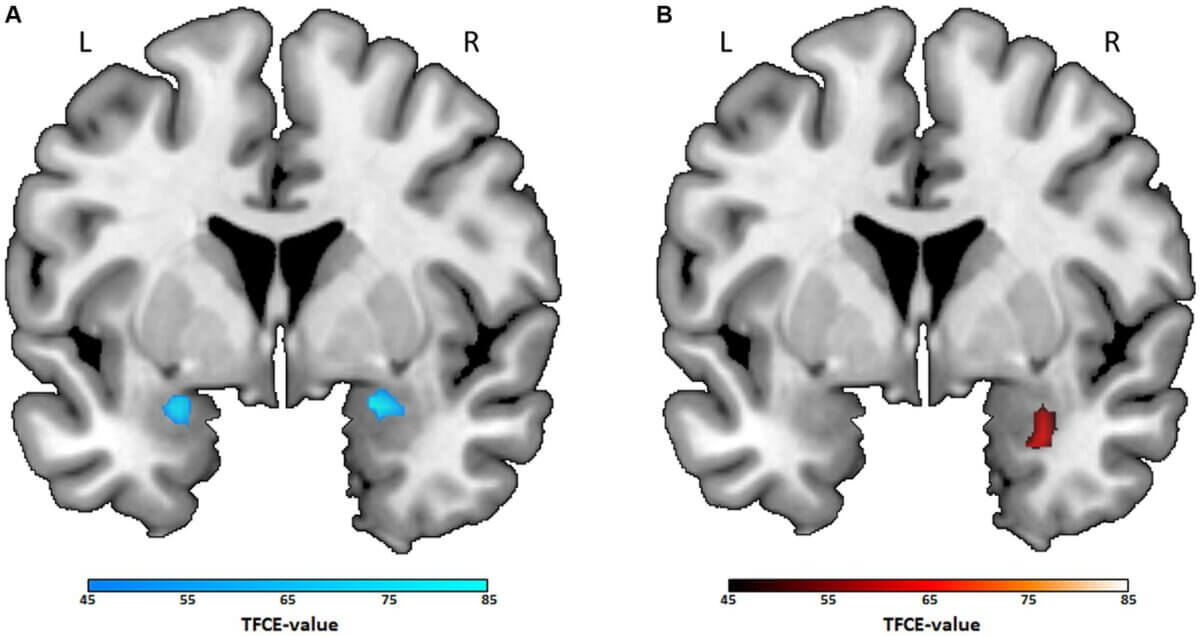
These findings challenge the common assumption that action and thriller genres appeal to viewers for similar reasons. While both may offer excitement and suspense, the underlying emotional engagement appears quite different.
“It seems plausible that individuals who are more neurobiological prone to response and approach fear and anger (or affective stimuli in general) are those who prefer movies, which primarily rely on emotional arousal stemming from representing and eliciting these emotions,” the researchers write in their report.
For action movie fans, the thrill may come from the visceral emotional experience itself. Crime thriller aficionados, on the other hand, might derive enjoyment from other aspects of the genre, such as unraveling mysteries or experiencing suspense. Their lower emotional reactivity could allow them to engage with tense storylines without becoming overwhelmed.
The study also revealed interesting patterns for other genres. Comedy lovers, like action fans, showed increased activity in both the amygdala and nucleus accumbens. This suggests they may have a generally higher responsiveness to emotional stimuli, regardless of whether the emotions are positive or negative.
Meanwhile, documentary enthusiasts exhibited decreased activity in both brain regions, similar to the crime thriller group. This could reflect a preference for more factual, less emotionally charged content.
These findings open up fascinating questions about the complex relationship between our brains, emotions, and entertainment choices. Do people gravitate towards genres that match their innate emotional processing tendencies? Or could repeated exposure to certain types of movies shape how our brains respond to emotions over time?
While the study doesn’t provide definitive answers, it offers a compelling new perspective on why we enjoy the movies we do. It suggests that our film preferences might be more than just a matter of taste – they could be influenced by, or even influence, the very wiring of our brains.
“Films are so fascinating because they not only depict every human emotion, but they also evoke them. Negative emotions, such as anger or fear, play a central role in many films,” says Esther Zwiky, a psychologist at Martin Luther University Halle-Wittenberg, in a statement. “It appears that people choose the film genres that most optimally stimulate their brains.”
This research could have implications beyond just understanding our Netflix queues. It might inform how filmmakers craft more engaging experiences for different audiences or even how we approach media literacy and emotional well-being.
Paper Summary
Methodology
The researchers used a technique called functional magnetic resonance imaging (fMRI) to observe brain activity. Participants were shown images of fearful and angry faces while inside an MRI scanner. The scanner detected small changes in blood flow, which indicate which parts of the brain are active.
The main task involved matching faces showing the same emotion. Participants saw three faces on a screen – one at the top and two at the bottom. They had to choose which of the bottom faces matched the emotion of the top face. This was alternated with a simple shape-matching task as a control condition.
Before the brain scans, participants completed a questionnaire about their movie genre preferences. They could select up to two favorite genres from a list, including action, crime/thriller, comedy, drama, and others.
The researchers then compared the brain activity patterns between people who preferred different genres, focusing on activity in the amygdala and nucleus accumbens.
Key Results
- Action movie fans showed increased amygdala activity when viewing fearful and angry faces.
- Crime/thriller enthusiasts exhibited decreased activity in both the amygdala and nucleus accumbens.
- Comedy lovers, like action fans, showed increased activity in both brain regions.
- Documentary preference was associated with decreased activity in both areas.
- Other genres (drama, romance, sci-fi/fantasy) didn’t show significant differences.
These patterns held true both when comparing genre fans to non-fans and when directly comparing different genre preference groups.
Study Limitations
The study only looked at responses to fearful and angry faces, not other emotions that might be relevant to different movie genres. The research also used still images, not actual movie clips, which might produce different responses.
The study didn’t account for how much exposure participants had to their preferred genres, which could influence brain responses. There may have been variations in how participants defined different genres.
The sample size for some genre preferences (like horror) was too small for analysis. The study can’t determine whether brain activity patterns cause genre preferences or result from repeated exposure to certain types of movies.
Discussion & Takeaways
The researchers suggest that movie preferences might be linked to how susceptible people are to different types of emotional gratification from films. For example, action movie fans might enjoy the intensity of the emotional experience itself, while crime thriller fans might get more satisfaction from cognitive aspects like solving mysteries.
This study challenges the idea that similar genres (like action and thriller) appeal to viewers for the same reasons. It suggests that even when movies aim to evoke similar emotions, viewers might be drawn to them for different underlying reasons.
The findings open up new avenues for research into how media preferences relate to emotional processing and potentially even mental health. It could inform strategies for using movies therapeutically or for creating more engaging content for different audiences.
However, the researchers caution that more work is needed to understand the direction of these effects – whether brain activity patterns lead to genre preferences, or if watching certain types of movies over time changes how our brains process emotions.
Funding & Disclosures
The study was supported by the German Federal Ministry of Education and Research and the German Research Foundation (DFG). The authors declared no conflicts of interest related to the research.


