

(Credit: Sergey Neanderthalec/Shutterstock)
CHARLOTTESVILLE, Va. — In the ever-growing market of wellness products, a new trend has emerged that’s causing concern among health experts: mushroom gummies marketed as “nootropics” or brain-boosters. However, these seemingly innocent candies may be hiding a sinister secret. A recent investigation by researchers at the University of Virginia (UVA) Health has uncovered that some of these gummies contain illegal and potentially harmful substances not listed on their labels, including the potent hallucinogen psilocybin.
The investigation was sparked by a series of emergency room visits to UVA Health Medical Center between September 2023 and June 2024. Five patients, including a three-year-old child, were treated after consuming mushroom gummies. While the adults had taken the gummies intentionally, the toddler ingested them accidentally — a stark reminder of the dangers these products can pose when left within reach of children.
“People tend to equate ‘legal’ with ‘safe,’ which is not necessarily the case. These products are not regulated and can contain any number of unlabeled substances which, when consumed, can cause undesired symptoms,” explains Dr. Avery Michienzi, the assistant medical director of UVA’s Blue Ridge Poison Center, in a media release.
The gummies in question are often marketed as containing Amanita muscaria, a mushroom that is currently legal but can cause hallucinations and other unpleasant effects. However, when the UVA team tested five different brands of these products, they found much more than advertised.
Three of the five brands tested contained psilocybin or psilocin – the active ingredients in “magic mushrooms.” These substances are classified as Schedule I drugs by the U.S. Drug Enforcement Administration, meaning they have no accepted medical use and a high potential for abuse. Their presence in over-the-counter products is not just misleading – it’s illegal.
The deception doesn’t stop there. Researchers also found other undisclosed ingredients, including caffeine, ephedrine (a stimulant), and mitragynine (commonly known as kratom), an opioid-like substance that carries a risk of addiction.
“While we anticipated that we might find some undisclosed ingredients, we were surprised to find psilocybin and psilocin knowing that they are scheduled drugs. The consumer should be given accurate information about what substances are included in these products,” says Dr. Lindsay Bazydlo, medical director of UVA Health’s Toxicology Laboratory.
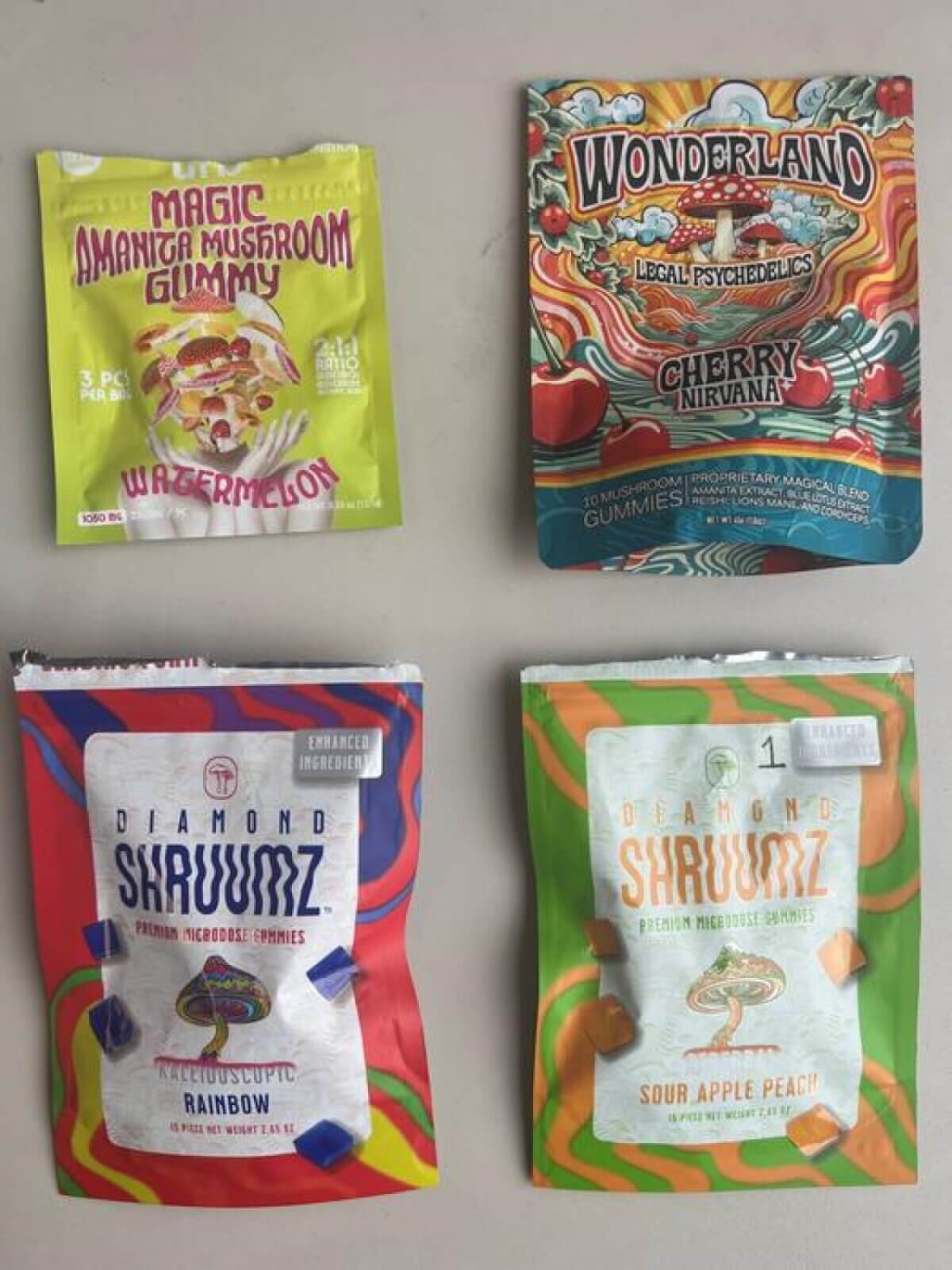
The presence of these undisclosed substances poses a significant public health risk. Consumers purchasing what they believe to be legal, harmless supplements may unknowingly ingest powerful drugs. This can lead to unexpected and potentially dangerous effects, especially if combined with other medications or health conditions.
For healthcare providers, these findings present a new challenge. The symptoms of mushroom gummy intoxication – which can include hallucinations, rapid heartbeat, confusion, and nausea – may mimic other conditions or intoxications. Complicating matters further, standard hospital drug screens don’t typically detect substances like psilocybin, making accurate diagnosis difficult.
The researchers are urging both the public and healthcare providers to be aware of these risks. They advise against purchasing or consuming mushroom gummies or other unregulated “nootropic” products, regardless of their claims or apparent legality. For parents and caregivers, it’s crucial to keep these products out of reach of children, as even a small amount could lead to serious health effects.
As the wellness industry continues to expand, with new and exotic products hitting the market almost daily, this investigation serves as a stark reminder of the importance of regulation and transparency in consumer goods. Until stricter oversight is in place, the safest approach may be to stick to proven, regulated supplements and medications for cognitive health.
The UVA team’s findings have been published in the Centers for Disease Control and Prevention’s Morbidity and Mortality Weekly Report, sounding an alarm for regulators, healthcare providers, and consumers alike. As we navigate the complex landscape of health and wellness products, this study underscores a crucial point: when it comes to what we put in our bodies, what we don’t know can indeed hurt us.
Paper Summary
Methodology
The UVA researchers took a multi-pronged approach to investigate these mushroom gummies. First, they collected data on patients who had been treated at their medical center after consuming these products. Then, they purchased samples of different brands of mushroom gummies from local gas stations and smoke shops.
These samples were analyzed in UVA Health’s Toxicology Laboratory using a sophisticated technique called liquid chromatography-quadrupole time of flight mass spectrometry. This method allows scientists to identify unknown compounds in a sample by comparing them to a library of known substances. It’s like a chemical fingerprint analysis, able to detect even trace amounts of different compounds.
Key Results
Out of the five brands tested:
- Three contained psilocybin or psilocin, which are illegal hallucinogenic compounds.
- One contained caffeine and mitragynine (kratom), which weren’t listed on the label.
- One contained ephedrine, a stimulant not disclosed on the packaging.
- None of the gummies actually contained the Amanita muscaria compounds they claimed to have.
These results show a significant discrepancy between what’s on the label and what’s actually in these products, highlighting the risks of consuming unregulated supplements.
Discussion & Takeaways
The researchers emphasize several key points:
- Unregulated “nootropic” products can contain dangerous, unlisted ingredients.
- The presence of illegal substances like psilocybin in these products poses legal and health risks to consumers.
- Standard drug tests may not detect these substances, complicating medical treatment.
- There’s a need for increased regulation and oversight in the supplement industry.
- Consumers should be wary of products making bold cognitive enhancement claims.
- Healthcare providers need to be aware of these products and their potential effects when diagnosing and treating patients.
The study serves as a wake-up call for both consumers and regulators, highlighting the potential dangers lurking in seemingly innocuous wellness products. It underscores the importance of only consuming regulated, properly tested supplements and medications.


