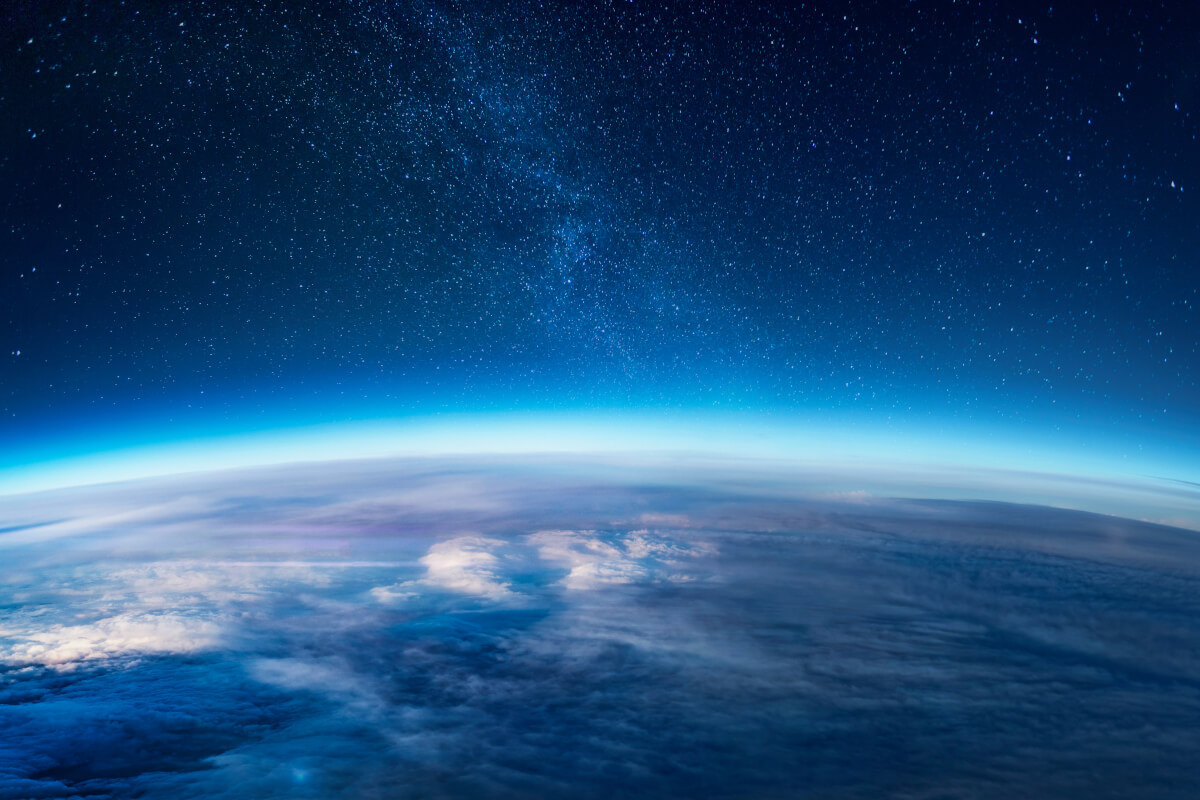
Sulfur containing molecules may not have formed from evolution alone after all. (© Alican - stock.adobe.com)
GREENBELT, Md. — It’s not magnetism, and it’s not gravity – meet the third fundamental force shaping Earth’s atmosphere. Scientists have finally measured the long-hypothesized electric field surrounding Earth that’s actually been hiding in plain sight for billions of years.
This planetary-scale phenomenon has eluded scientists for over six decades. Now, thanks to a daring rocket mission launched from the edge of the Arctic, we’ve not only confirmed its existence but also measured its strength and effects on our atmosphere.
The ambipolar electric field, as it’s known in scientific circles, might sound like something out of “Star Trek,” but this invisible force plays a very real and crucial role in how our planet’s atmosphere interacts with space, potentially influencing Earth’s long-term habitability. The implications of this discovery stretch far beyond our own world, offering new insights into the atmospheres of other planets and the search for extraterrestrial life.
The study, published in Nature, details the findings of NASA’s aptly named Endurance mission. Led by Glyn A. Collinson and his team, the project involved launching a specialized rocket from Svalbard, Norway – the northernmost rocket range on Earth. This remote location was crucial for the mission’s success.
“Svalbard is the only rocket range in the world where you can fly through the polar wind and make the measurements we needed,” explains Suzie Imber, a space physicist at the University of Leicester and co-author of the paper, in a media release.
The Endurance rocket, launched on May 11, 2022, was equipped with a suite of highly sensitive instruments designed specifically for this mission. The primary instrument was the Photoelectron Spectrometer (PES), consisting of eight boom-mounted dual electrostatic analyser sensors. These sensors were precisely aligned to measure electrons flowing along Earth’s magnetic field lines.
Complementing the PES was the Swept Langmuir Probe (SLP), which measured electron density and temperature, and the Electromagnetic Fields and Waves (FIELDS) package, which provided additional data on the electrical environment around the rocket. This combination of instruments allowed for a comprehensive measurement of the subtle electrical changes in the upper atmosphere.
The rocket’s trajectory was carefully planned to minimize perturbations and ensure clean data collection. It soared to an impressive altitude of 768 kilometers, traversing a region known as the exosphere – the tenuous outer edge of Earth’s atmosphere. The mission alternated between 70-second periods of uncontaminated science collection and brief 10-second intervals where the rocket realigned itself with Earth’s magnetic field.
During its 19-minute flight, the rocket’s instruments measured an electric potential change of just 0.55 volts across a 322-mile altitude range.
“A half a volt is almost nothing — it’s only about as strong as a watch battery. But that’s just the right amount to explain the polar wind,” says Collinson, the principal investigator of Endurance at NASA’s Goddard Space Flight Center, in a statement.

This “polar wind” refers to a mysterious stream of particles flowing from Earth’s atmosphere into space, first detected by satellites in the late 1960s. While some atmospheric loss is expected due to intense solar radiation, the polar wind puzzled scientists because it contained cold particles moving at supersonic speeds, with no apparent heat source to explain their velocity.
The discovery of the ambipolar field solves this long-standing mystery. Despite its weakness, this electric field exerts a considerable influence on atmospheric particles. For hydrogen ions, the most common type in the polar wind, the outward force from this field is 10.6 times stronger than gravity.
“That’s more than enough to counter gravity — in fact, it’s enough to launch them upwards into space at supersonic speeds,” explains Alex Glocer, an Endurance project scientist and study co-author.
The effects of this field extend beyond just hydrogen. Oxygen ions at the same altitude effectively weigh half as much when immersed in this field. Overall, the ambipolar field increases the “scale height” of the ionosphere – a layer of the upper atmosphere – by a staggering 271%. This means the ionosphere remains denser at greater heights than previously thought possible.
Collinson likens this effect to “a conveyor belt, lifting the atmosphere up into space.” This analogy vividly illustrates how the ambipolar field continuously shapes our atmosphere, potentially influencing its long-term evolution.
“Any planet with an atmosphere should have an ambipolar field,” Collinson points out.
This insight opens up new avenues for understanding the atmospheres of other planets, including Venus and Mars, and could play a crucial role in assessing the potential habitability of exoplanets.
As we grapple with the ongoing challenges of climate change and environmental preservation on Earth, understanding the fundamental forces shaping our atmosphere becomes increasingly vital. The discovery of the ambipolar field adds a new dimension to our understanding of Earth’s delicate balance and its place in the cosmos.
In the grand tapestry of planetary science, the Endurance mission has woven a crucial thread, connecting theoretical predictions with observable reality. As we continue to explore the mysteries of our own world and others, this newfound knowledge of Earth’s hidden electric field will undoubtedly spark new questions, fuel further research, and perhaps even reshape our understanding of what makes a planet truly habitable.
Paper Summary
Methodology
The Endurance rocket mission was meticulously designed to measure the subtle electric field in Earth’s upper atmosphere. The rocket carried a suite of instruments, including a Photoelectron Spectrometer (PES), a Swept Langmuir Probe (SLP), and an Electromagnetic Fields and Waves (FIELDS) package.
These instruments worked in concert to detect changes in the energy of electrons escaping from the ionosphere, which provided a direct measure of the electric potential drop across different altitudes. The mission’s trajectory was carefully planned to minimize perturbations and ensure clean data collection during its 13-minute flight.
Key Results
The study revealed a total electric potential drop of 0.55 ± 0.09 volts between altitudes of 250 km and 768 km. This corresponds to an electric field strength of 1.09 ± 0.17 microvolts per meter, aligned parallel to Earth’s magnetic field.
The measurements showed excellent agreement with theoretical predictions based on classical ambipolar diffusion theory. The electric field was found to significantly influence the structure of the ionosphere, increasing its scale height and enhancing the density of ions at higher altitudes.
Study Limitations
While groundbreaking, the study has some limitations. The measurements were taken during a single rocket flight under specific geomagnetic conditions, limiting the dataset to a snapshot in time and space. The findings are most applicable to the polar regions and may not fully represent the electric field’s behavior at lower latitudes or under different geomagnetic conditions.
Additionally, the study focused on the steady-state behavior of the ionosphere and did not capture dynamic changes that might occur during geomagnetic disturbances.
Discussion & Takeaways
The discovery of Earth’s ambipolar electric field provides a crucial piece of the puzzle in understanding the complex interactions between our planet’s atmosphere and space. It helps explain long-standing observations of cold plasma in the magnetosphere and offers new insights into the mechanisms of atmospheric escape.
The study underscores the importance of considering electric fields in models of planetary atmospheres and magnetospheres. Future research could explore how this field varies with solar and geomagnetic activity, its effects on atmospheric chemistry, and its role in long-term atmospheric evolution.
Funding & Disclosures
The Endurance rocket mission was funded through NASA grant 80NSSC19K1206. Additional support came from the National Environment Research Council grant NE/R017000X/1 for EISCAT operations. The study involved collaboration between multiple international research organizations, including institutions from China, Finland, Japan, Norway, Sweden, and the UK. The authors declared no competing interests, ensuring the integrity and impartiality of the research findings.


