(© I Viewfinder - stock.adobe.com)
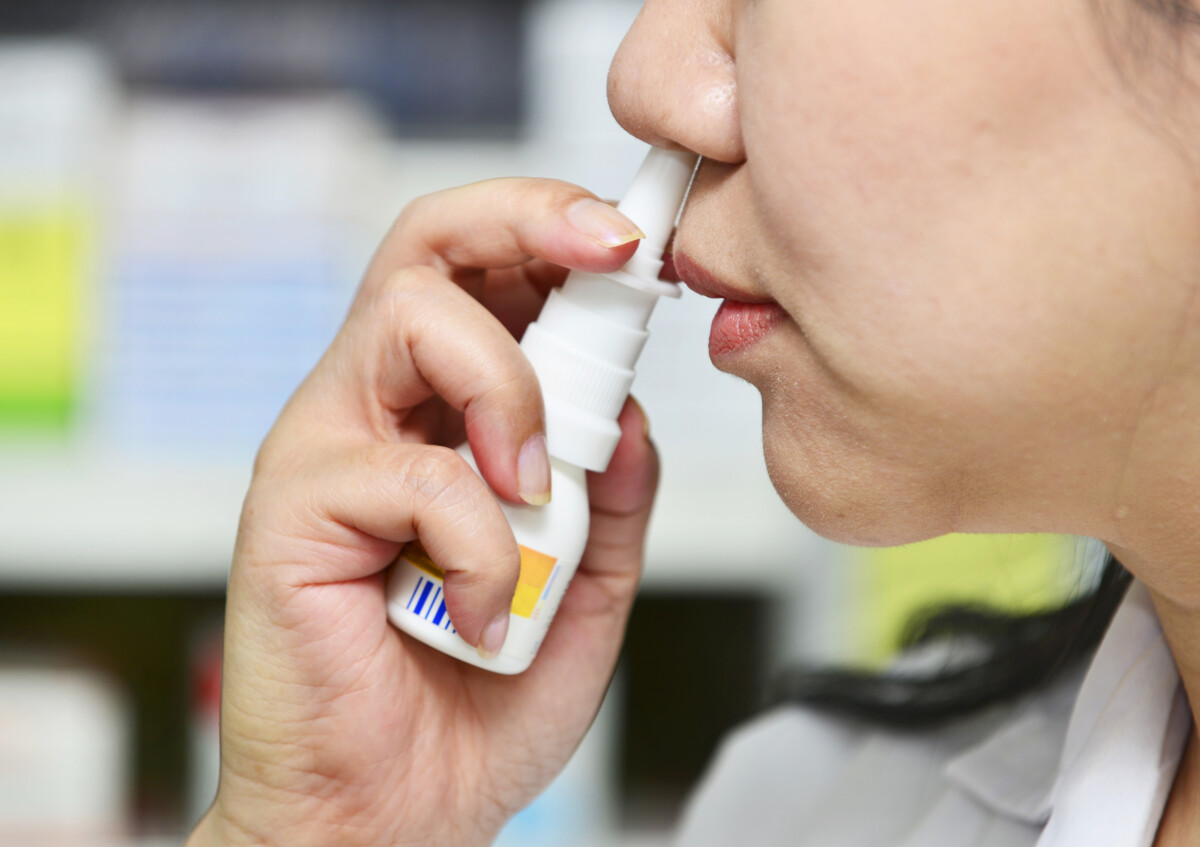
Nasal vaccines provide viral protection in ways injected vaccines can’t.
In A Nutshell
- A new nasal spray vaccine fully protected ferrets from a lethal H5N1 bird flu challenge: all vaccinated animals survived while unvaccinated controls died within a week.
- In both H5N1 and H7N9 tests, vaccinated ferrets stayed healthy and virus became undetectable in nose samples by day 5.
- Because it is built on an RNA platform and can be freeze-dried, the vaccine could be easier to update and store than traditional flu vaccines, but human trials still need to happen.
- The big idea: spraying a vaccine into the nose may build defenses right where flu usually starts, not just in the bloodstream.
A nasal spray vaccine delivered complete protection against lethal H5N1 bird flu in laboratory ferrets, with every vaccinated animal surviving while all unvaccinated controls died within a week of infection.
Researchers at the Access to Advanced Health Institute tested the experimental vaccine against H5N1, one of the deadliest influenza strains to jump from birds to humans. In challenge studies, the vaccine provided 100% survival. Unvaccinated animals succumbed to infection within a week, while vaccinated ferrets showed no symptoms, maintained their weight, and completely cleared the virus from their nasal passages by day five.
The timing carries weight given recent H5N1 activity in the United States. As of January 9, 2026, the CDC confirmed 71 human cases and two deaths across 13 states since 2024, originating from cattle and poultry exposure. The first U.S. death from H5N1 was reported in January 2025, and an H7N9 outbreak hit a Mississippi chicken flock in March 2025.
What sets this vaccine apart is both its delivery method and its manufacturing speed. The nasal spray approach, described in Nature Communications, creates immune defenses directly in the respiratory tract where flu infections begin. Traditional injected vaccines don’t typically do that. The production process allows researchers to reformulate the vaccine for new viral strains much faster than the six months required for conventional flu vaccines.
Complete Protection in Lethal Challenge Tests
The research team tested the vaccine against both H5N1 and H7N9 avian influenza strains. H7N9 killed up to 31% of infected patients in previous outbreaks, while H5N1 has caused significant mortality across Africa, Asia, and the Middle East.
In the non-lethal H7N9 studies, ferrets received either nasal spray or injected versions of the vaccine. Three weeks after the second dose, researchers exposed all animals to a high dose of virus delivered directly into their nasal passages. Vaccinated ferrets remained healthy while control animals developed fever and clinical illness. By day 5 post-infection, the virus was no longer detectable in nasal samples from vaccinated animals. Control animals still carried detectable concentrations of infectious virus.
The lethal H5N1 portion of the project proved even more notable. All six unvaccinated control ferrets died by day 7. An older-generation injectable H5N1 vaccine allowed one animal to die on day 9. The new nasal spray vaccine saved every animal: all 6 survived without any symptoms, weight loss, or fever throughout the 14-day observation period.

Why Nasal Delivery Makes the Difference
The vaccine uses self-amplifying RNA technology, similar to COVID-19 mRNA vaccines. The RNA instructs cells to produce copies of itself along with hemagglutinin, a protein from the flu virus surface. This packaging allows it to cross the nasal mucosa and trigger two types of immunity: systemic protection in the bloodstream and mucosal immunity in the respiratory tract where infections actually start.
The research with mice revealed this dual advantage. Animals receiving nasal spray vaccines developed blood antibody levels comparable to injected vaccines, plus an additional layer of defense that injectable vaccines typically don’t create. Nasal administration produced specialized IgA antibodies in the lungs and established resident immune cells that remain stationed in lung tissue waiting for invaders.
Standard injectable flu vaccines produced no detectable mucosal immunity in the same tests. This respiratory defense may explain why the nasal vaccine worked so well despite producing lower blood antibody levels than older vaccines in some comparisons. Traditional vaccine measurements focus on blood antibodies, but nasal vaccines work through different mechanisms.
The team also tested a combination vaccine targeting both H5N1 and H7N9 simultaneously by simply mixing the two formulations together. Animals receiving this bivalent vaccine developed immune responses to both strains that matched single-strain versions, with the same complete protection in challenge studies.
Faster Production, Better Storage
The vaccine’s design allows rapid response to emerging threats. Manufacturers can stockpile the stable lipid carrier component in refrigerators for over a year, then quickly produce and mix in new RNA targeting whatever strain is currently circulating. This sidesteps the typical months-long process of growing viruses in chicken eggs.
After freeze-drying, the complete vaccine remains stable for at least two years at non-freezing temperatures. This eliminates the need for ultra-cold freezers that complicated COVID-19 vaccine distribution.
Human Testing Comes Next
To be clear, the vaccine hasn’t been tested in humans yet. Formal toxicity studies and Phase 1 clinical trials are planned, along with testing in non-human primates whose respiratory systems more closely resemble ours.
One challenge will be measuring how well nasal vaccines work in people. Blood antibody levels, the standard metric for injectable flu vaccines, may not accurately predict protection from mucosal vaccines. Researchers may need to collect respiratory tract samples to understand how these vaccines function in humans.
The vaccine currently targets a 2004 H5N1 strain rather than the variants now circulating in US dairy cattle. However, studies of other H5N1 vaccines suggest they may provide some cross-protection against related strains, and the RNA platform allows rapid reformulation if needed.
The FDA recently authorized self-administration of FluMist, an existing nasal spray flu vaccine. If this new platform proves safe and effective in humans, it could potentially follow a similar path toward needle-free vaccination at home.
Paper Notes
Limitations
Several factors limit interpretation of results. Nasal delivery in mice involved pipette drops that likely resulted in some vaccine being swallowed rather than remaining in the respiratory tract. Ferret and mouse respiratory anatomy differs substantially from humans. Sample sizes were relatively small, with 6-8 animals per group in most experiments. The vaccine targets 2004-era H5N1 and 2013-era H7N9 strains rather than currently circulating variants, though the platform allows rapid reformulation. Many conclusions about mucosal immunity mechanisms are based on mouse data that may not translate directly to human responses. The study did not identify clear correlates of protection beyond complete survival, making it unclear which immune measures predict vaccine success.
Funding and Disclosures
Research was sponsored by the US Government under Other Transaction number W15QKN-16-9-1002 between the Medical CBRN Defense Consortium (which includes Access to Advanced Health Institute) and the Government. The US Government is authorized to reproduce and distribute reprints for governmental purposes. Two authors (A. Gerhardt and E.A. Voigt) are co-inventors on patent applications related to this technology: PCT/US21/40388 titled “Co-lyophilized RNA and Nanostructured Lipid Carrier” with related national filings, US provisional patent application 63/345,345 titled “Intranasal Administration of Thermostable RNA Vaccines,” and US provisional 63/144,169 titled “A thermostable, flexible RNA vaccine delivery platform for pandemic response.” All other authors declared no competing interests.
Publication Details
Matthew R. Ykema, Michael A. Davis, Darshan N. Kasal, Madeleine F. Jennewein, Ethan Lo, Jasneet Singh, Samuel Beaver, Noah Cross, Eduard Melief, Sierra Reed, Christopher Press, Devin S. Brandt, Wynton D. McClary, Raodoh Mohamath, Pauline Fusco, Julie Bakken, Corey Casper, Airn Tolnay Hartwig, Alana Gerhardt, Richard A. Bowen, and Emily A. Voigt. “Intranasal replicon vaccine establishes mucosal immunity and protects against H5N1 and H7N9 influenza,” published January 13, 2026, in Nature Communications. DOI:10.1038/s41467-025-64829-6. Authors are affiliated with Access to Advanced Health Institute (Seattle, WA), University of Washington Departments of Medicine and Global Health (Seattle, WA), Fred Hutch Cancer Center (Seattle, WA), Colorado State University Department of Biomedical Sciences (Fort Collins, CO), and Oregon Health & Science University (Beaverton, OR).


