

A plate with fried maggots and a side of ketchup. (Photo by Pixel-Shot on Shutterstock)
In A Nutshell
- New research suggests Neanderthals may have regularly eaten rotting, maggot-infested meat to survive lean times.
- Fly larvae feeding on decomposing tissue had extremely high nitrogen isotope levels — even higher than most Ice Age animals.
- Ethnographic accounts show that many Indigenous groups deliberately ate decomposed meat and considered it a delicacy.
- Rather than primitive brutes, Neanderthals may have been strategic food planners who used every available calorie — including maggots.
WEST LAFAYETTE, Ind. — New research suggests our ancient relatives weren’t just hunters but sophisticated food processors who may have regularly consumed decomposed, maggot-infested meat.
Opening food storage to find it crawling with fat, white maggots would send most people running. But groundbreaking new research suggests Neanderthals and other ancient humans may have eaten that very same meat — not as a last resort, but as a practical and possibly even preferred source of nutrition.
A study published in Science Advances challenges the long-held belief that Neanderthals were simply ice age predators feasting on fresh mammoth steaks. Instead, researchers from Purdue University, Wayne State University, and the University of Michigan argue that regularly consuming putrefied, maggot-laced meat may help explain a long-held mystery about the chemical signatures left in Neanderthal bones.
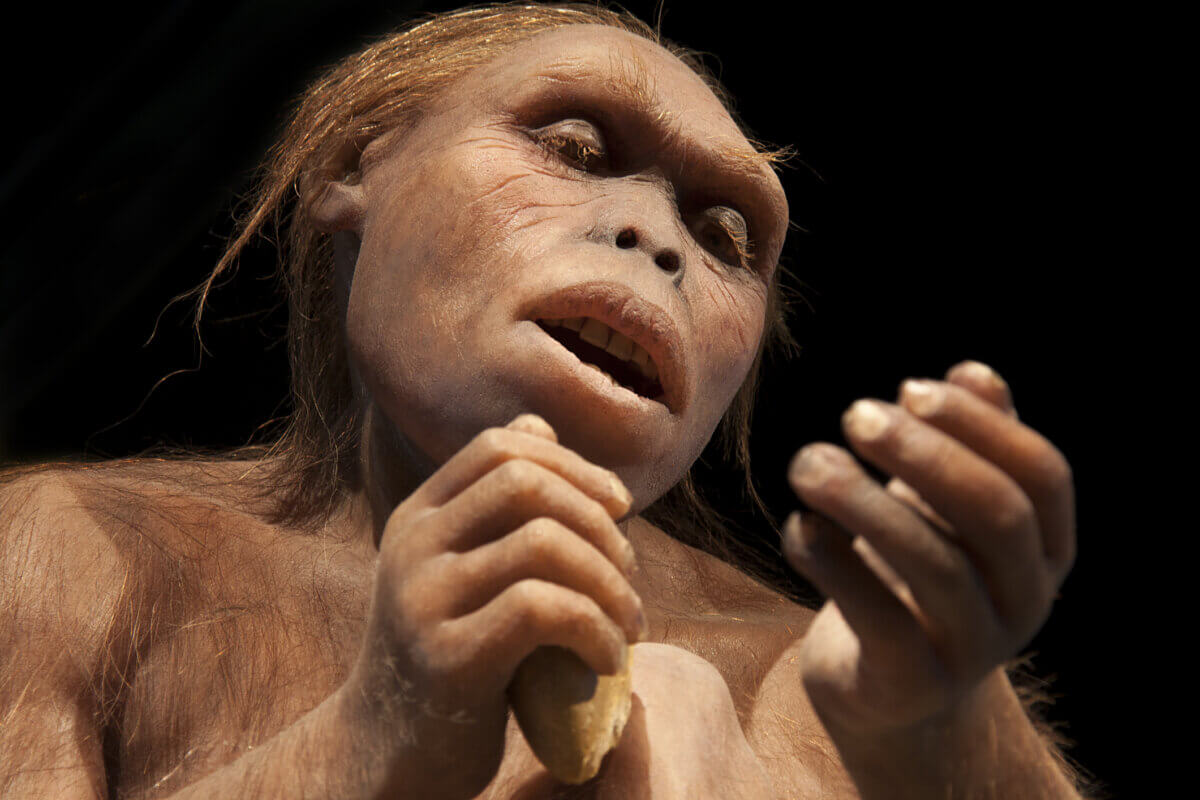
Why Neanderthals Couldn’t Eat Like Lions
Scientists have long been puzzled by nitrogen isotope ratios in Neanderthal remains — the aforementioned chemical signatures that place them at the very top of the food chain, alongside predators like cave lions, wolves, and hyenas.
The assumption has been that Neanderthals must have eaten enormous quantities of fresh meat. But that theory has a major flaw, according to lead author Melanie Beasley and her colleagues.
Humans — even robust Neanderthals — simply can’t tolerate the levels of protein intake that true carnivores can. A modern human weighing about 175 pounds can safely metabolize only around 300 grams of protein per day before risking a dangerous condition known as “rabbit starvation.”
“A modern African lion can readily subsist on protein intakes that would probably prove lethal to a human in a matter of a few weeks,” the researchers write.
So if Neanderthals weren’t eating lion-sized quantities of meat, what accounted for their extreme nitrogen readings? The answer, the researchers say, might be maggots.
What Scientists Discovered About Maggots
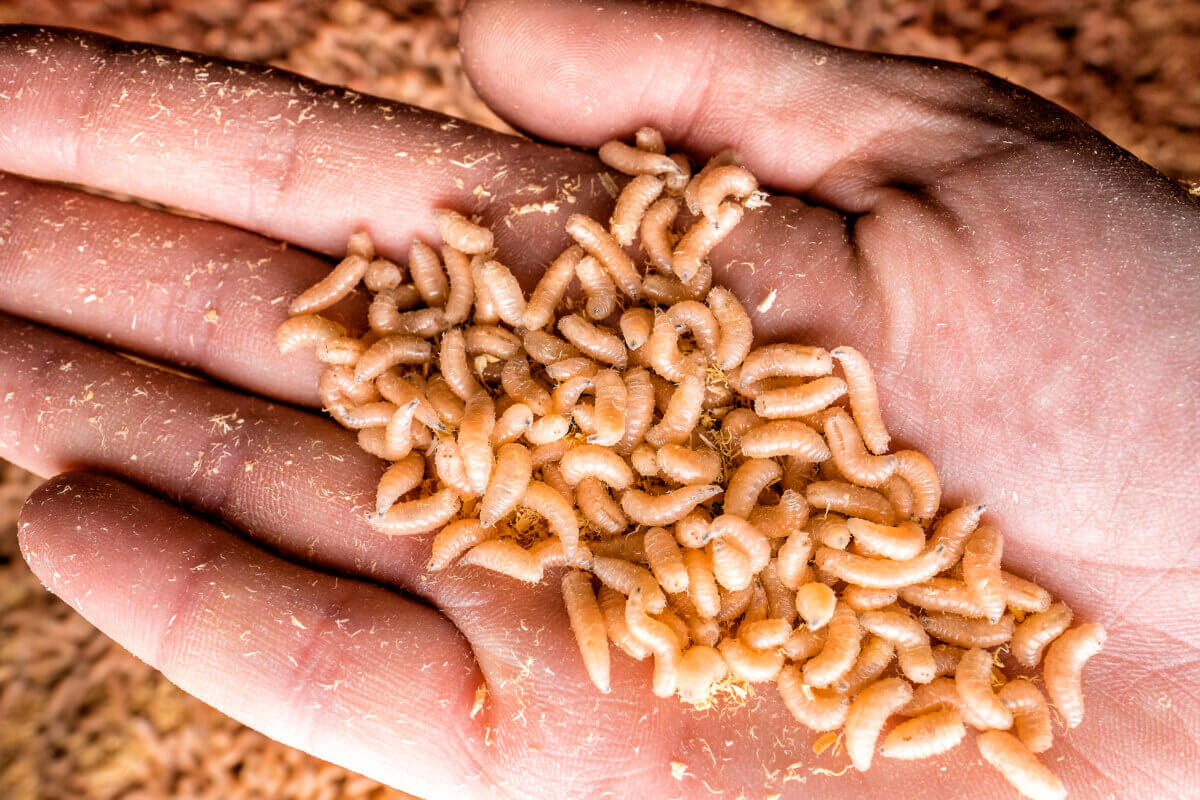
To test their theory, researchers analyzed fly larvae collected from decomposing human tissue at the University of Tennessee’s Forensic Anthropology Center. Over a two-year period, they examined 389 maggots from three fly families that commonly colonize rotting flesh.
The results were clear: the maggots had nitrogen isotope values ranging from 5.4 to 43.2 parts per thousand — some more than four times higher than those of any known Ice Age plant-eating animal. Roughly three-quarters of the maggots had nitrogen values exceeding the highest known value for any Late Pleistocene herbivore.
That means consuming maggots could explain how Neanderthals ended up with such elevated nitrogen values, without requiring them to eat biologically unsustainable amounts of fresh meat. Interestingly, the decomposing meat itself showed only modest nitrogen increases — far less than the larvae feeding on it.
Ancient Peoples Actually Preferred Rotten Meat
The idea of eating maggoty meat might sound repulsive to modern readers, but historical accounts show that many Indigenous groups not only ate such foods, they valued them. In one often-cited example, early explorers described companions who “scooped out handfuls of the crawling things and ate them with evident relish,” even as the meat oozed with age and smelled overpowering.
These weren’t survival rations. Many groups actively allowed meat to decompose until it was swarming with maggots — and considered it a delicacy. When Europeans reacted with disgust, some Indigenous people reportedly shrugged and explained that they didn’t “eat the smell.”
The practice had real benefits. Neanderthals and other Ice Age humans lived in unpredictable environments where successful hunts were never guaranteed. When they did kill a mammoth or reindeer, they had to find ways to store meat without modern refrigeration, often for weeks or months.
That meat inevitably began to rot and attract flies. Rather than waste valuable calories, ancient humans likely consumed the decomposing meat along with its maggot inhabitants. Larval-stage insects are particularly energy-rich: black soldier fly larvae, for example, can contain 20 to 40 percent fat, compared to 7 to 20 percent for many adult insects.
Sophisticated Food Processors, Not Primitive Brutes
The findings may also explain why Arctic explorers once reported that unskinned winter kills began rotting faster than summer ones. The animals’ thick coats insulated internal heat, allowing decomposition and maggot development to continue even in subzero temperatures.
Researchers found that maggots collected in colder months had significantly higher nitrogen values than those gathered in warmer seasons. That made them especially valuable during lean times when fresh kills were scarce.
The study has limitations. The experiments used human muscle tissue rather than reindeer or mammoth meat. And while the findings support the hypothesis that maggot consumption could elevate nitrogen isotope levels, more research is needed to quantify how much maggot intake would be required to alter bone chemistry significantly.
Still, the implications are quite provocative. Rather than viewing Neanderthals as primitive hunters gorging on fresh meat, this research reframes them as strategic, resourceful food processors. They planned for scarcity, stored meat in creative ways, and made use of every available calorie — even those modern humans find revolting.
Disclaimer: This article is based on a peer-reviewed scientific study and includes reasonable interpretation and paraphrasing for a general audience. While the research presents a compelling hypothesis, it does not directly prove that Neanderthals ate maggot-infested meat, nor does it document their dietary preferences. All conclusions are based on isotope data, ethnohistoric analogs, and expert interpretation.
Paper Summary
Methodology
Researchers collected 389 fly larvae from three different families (blow flies, cheese flies, and black soldier flies) from decomposing human tissue at the University of Tennessee’s Forensic Anthropology Center over a two-year period. They analyzed the nitrogen isotope ratios (δ15N) in these maggots and compared them to published data on Neanderthals and Late Pleistocene fauna. The study used 34 human donors with tissue samples collected over various time periods and environmental conditions. Muscle tissue samples were also analyzed to track changes during decomposition.
Results
The fly larvae showed extremely high nitrogen isotope values ranging from 5.4 to 43.2 parts per thousand, with 75.3% having values higher than the highest known Pleistocene herbivore. In contrast, the decomposing muscle tissue itself showed only modest increases in nitrogen values (ranging from -0.6 to +7.7 parts per thousand). Maggots collected during winter months had significantly higher nitrogen values than those collected in warmer weather. The study found that maggot consumption could easily account for the elevated nitrogen signatures previously observed in Neanderthal bones.
Limitations
The study acknowledges several limitations including modest sample sizes, use of human tissue rather than the mammoth and reindeer meat Neanderthals would have consumed, and experimental conditions that don’t fully replicate the range of storage methods and environmental conditions of the Late Pleistocene. The research focused on modern fly species rather than those that would have been present in Pleistocene Europe, and more work is needed to understand the relationship between maggot consumption amounts and changes in bone chemistry.
Funding and Disclosures
Work was supported by the Haslam Foundation through a postdoctoral fellowship at the University of Tennessee, Knoxville, in the Department of Anthropology. The authors declared no competing interests.
Publication
“Neanderthals, hypercarnivores, and maggots: Insights from stable nitrogen isotopes” by Melanie M. Beasley, Julie J. Lesnik, and John D. Speth was published in Science Advances on July 25, 2025 (Vol. 11). DOI: 10.1126/sciadv.adt7466.


