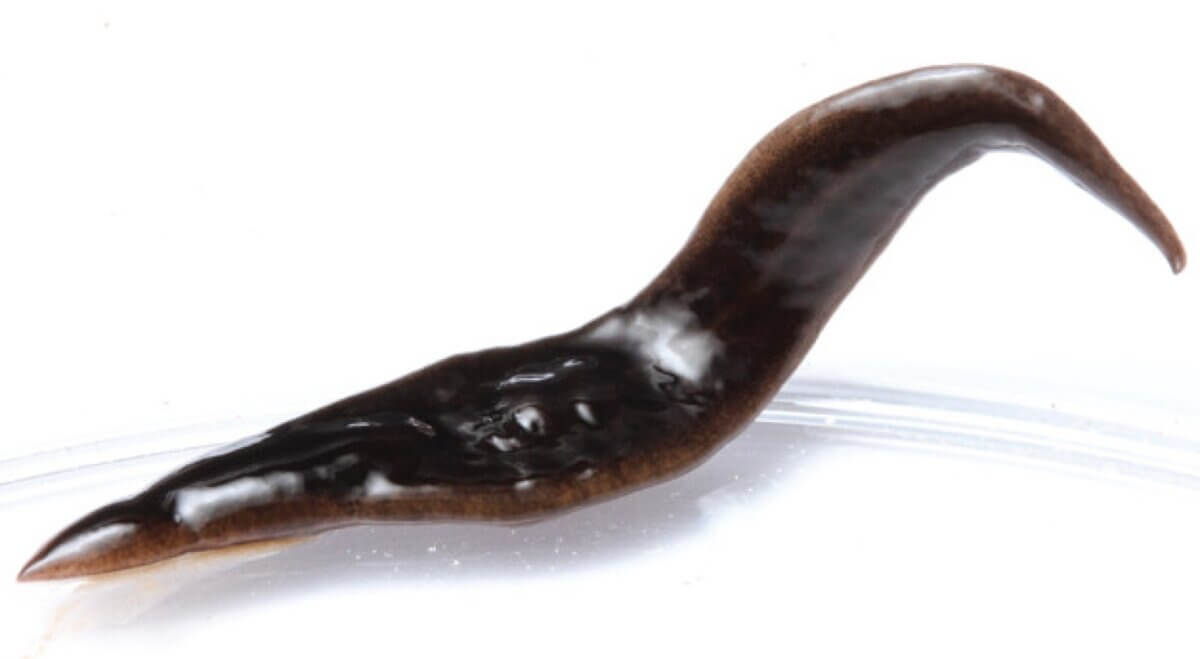
Amaga pseudobama n. sp., living specimen collected in Kingston, North Carolina in July 2020, photographed in a Petri dish from the Dorsal view; the head is on the right. (Credit: PeerJ)
PARIS — A team of international researchers has uncovered a new species of land flatworm in the United States, adding to the growing list of invasive species in the country. The flatworm, named Amaga pseudobama, was found in plant nurseries across several southern states, raising concerns about its potential spread and impact on local ecosystems.
The discovery, detailed in a recent study published in the journal PeerJ, highlights the ongoing challenges posed by invasive species and the importance of vigilant monitoring and identification efforts. The new flatworm species bears a striking resemblance to other known invasive flatworms, making it a stealthy invader that could easily go unnoticed.
Lead researcher Jean-Lou Justine and his colleagues first encountered the mysterious flatworm in 2020 when specimens were found in a plant nursery in Kinston, North Carolina. Initially, the researchers thought they had stumbled upon Obama nungara, a well-known invasive flatworm species from South America that has already made its way to Europe. However, closer examination and DNA analysis revealed a surprising twist – this was an entirely new species.
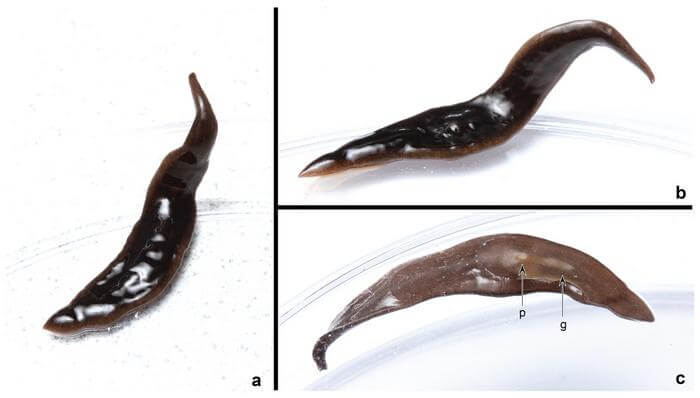
The newly discovered Amaga pseudobama is a small, dark brown flatworm with a pale stripe running down its back. It measures about 19-28 millimeters in length, making it the smallest known species in its genus. Despite its diminutive size, the flatworm’s potential impact on local ecosystems could be significant.
Land flatworms are predators that feed on soil-dwelling invertebrates like earthworms, slugs, and snails. When introduced to new environments, they can disrupt the delicate balance of soil ecosystems, potentially affecting plant growth and soil health. The concern is amplified by the fact that Amaga pseudobama seems to be spreading rapidly across the southern United States.
The research team found evidence of the flatworm’s presence not only in North Carolina but also in Florida and Georgia. What’s more, citizen science observations suggest it may have already reached other states, including Texas and California. This wide distribution indicates that the invasion likely began more than a decade ago, giving the species ample time to establish itself across a broad geographic range.
One of the most intriguing aspects of this discovery is how easily Amaga pseudobama can be mistaken for other flatworm species. Its appearance is remarkably similar to two other invasive flatworms: Obama nungara and Geoplana arkalabamensis. This resemblance poses a significant challenge for identification, especially when relying on photographs from citizen scientists.
To definitively identify Amaga pseudobama, the researchers had to delve deep into its anatomy and genetics. They performed detailed analyses of the flatworm’s internal structures, including its reproductive organs, and sequenced its mitochondrial genome. These studies not only confirmed that it was a new species but also provided valuable insights into its relationship with other flatworm species.
The genetic analysis revealed that Amaga pseudobama is closely related to Amaga expatria, another invasive flatworm species found in the Caribbean. This finding suggests that the two species may have a common origin, possibly in South America, and have independently made their way to different parts of the world through human activities.
As global trade and travel continue to facilitate the spread of organisms across continents, the risk of invasive species introductions remains high. Land flatworms like Amaga pseudobama are particularly prone to human-mediated dispersal, often hitching rides in potted plants or soil.
The researchers emphasize the importance of early detection and proper identification in managing invasive species. They call for more comprehensive surveys and improved molecular tools to quickly and accurately identify new arrivals before they have a chance to establish and spread.
For gardeners and plant enthusiasts, the study serves as a reminder to be cautious when acquiring new plants, especially from areas where invasive flatworms have been reported. Carefully inspecting plants and soil before bringing them home can help prevent the inadvertent spread of these and other invasive species.
As research continues, scientists hope to gain a better understanding of Amaga pseudobama’s ecology, life cycle, and potential impacts on native ecosystems. This knowledge will be crucial in developing effective strategies to manage and potentially control its spread.
Paper Summary
Methodology
The researchers used a combination of morphological and molecular techniques to identify and characterize the new flatworm species. They collected specimens from various locations in the southern United States and preserved them for analysis. The team performed detailed anatomical studies, including histological examinations of the flatworms’ internal structures.
They also extracted DNA from the specimens and sequenced specific genes, including the mitochondrial cytochrome c oxidase subunit I (cox1) gene, which is commonly used for species identification. Additionally, they sequenced the complete mitochondrial genome of the new species. The researchers compared their findings with known flatworm species and used phylogenetic analyses to determine the evolutionary relationships between Amaga pseudobama and other flatworms.
Key Results
The study confirmed that Amaga pseudobama is a distinct species, different from both Obama nungara and Geoplana arkalabamensis, despite their similar appearances. The new species was found to be most closely related to Amaga expatria. The researchers documented the presence of A. pseudobama in North Carolina, Florida, and Georgia, with possible occurrences in Texas and California based on citizen science observations. The complete mitochondrial genome of A. pseudobama was sequenced, revealing some unusual features shared with other flatworm species, including difficulties in identifying start codons for certain genes.
Study Limitations
The study was limited by the relatively small number of specimens available for analysis, particularly from different geographic locations. The reliance on citizen science observations for some distribution data introduces potential inaccuracies due to misidentification. Additionally, the ecological impacts of A. pseudobama on native ecosystems were not directly studied, leaving questions about its potential effects unanswered.
Discussion & Takeaways
The discovery of Amaga pseudobama highlights the ongoing threat of invasive species and the challenges in identifying them. The study underscores the importance of combining morphological and molecular techniques for accurate species identification. The researchers suggest that A. pseudobama may have been present in the United States for over a decade, emphasizing the need for improved early detection methods. The study also raises questions about the classification of Amaga species and suggests that further research may be needed to refine the taxonomy of this genus.
Funding & Disclosures
The study was supported by the Institut de Systématique, Évolution, Biodiversité at the Muséum National d’Histoire Naturelle in Paris, France. The researchers declared no competing interests, although it was noted that one of the authors, Jean-Lou Justine, is an Academic Editor for PeerJ, the journal in which the study was published.


