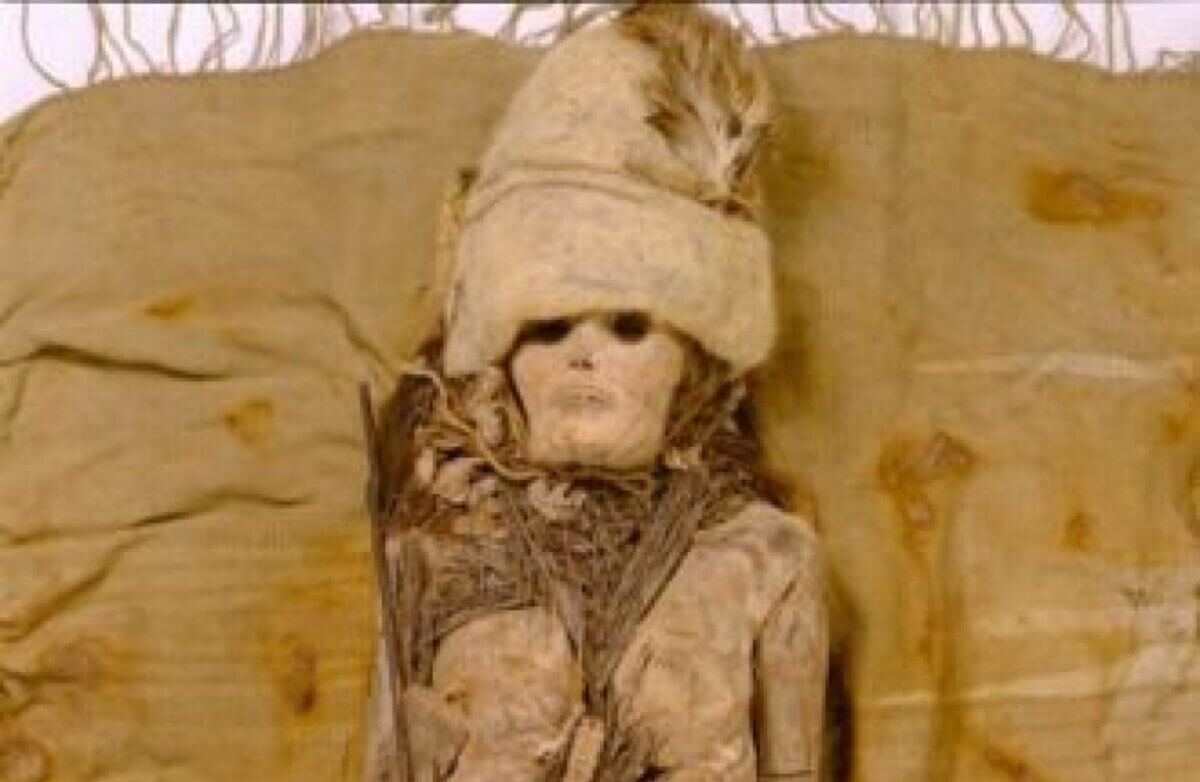
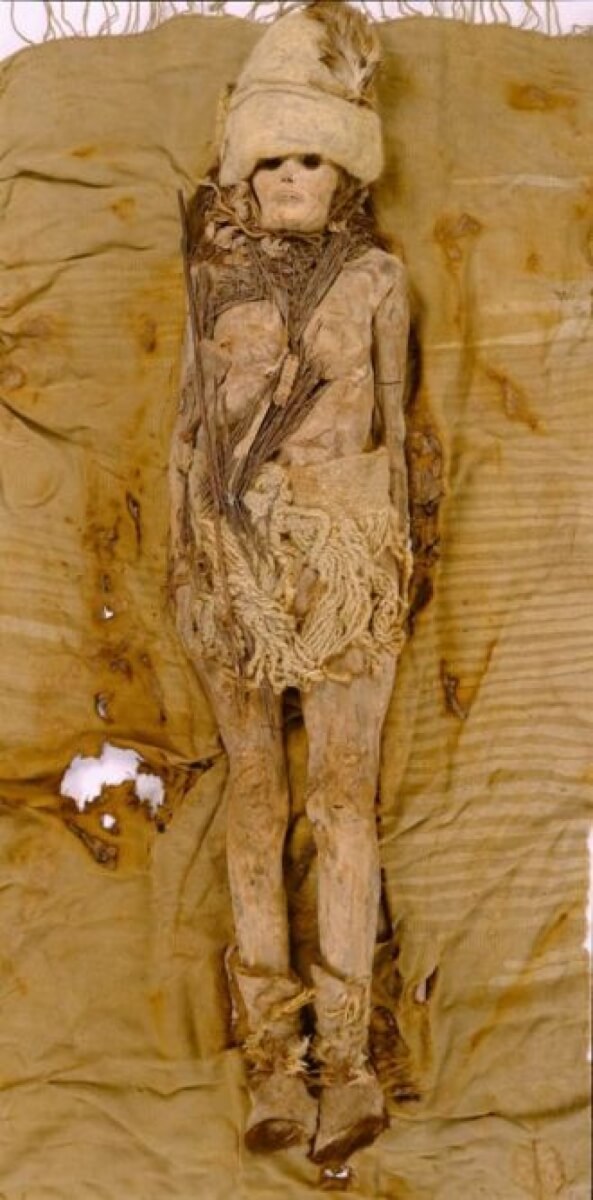
Tarim mummies from the present-day Xinjiang region of Northwestern China (Credit: Wenying Li/Chinese Academy of Sciences/Cell Press)
BEIJING — In a discovery that’s sure to delight both history buffs and cheese fans, scientists believe they have unearthed the world’s oldest cheese alongside mummies in Northwestern China. At a staggering 3,600 years-old, this Bronze Age dairy product is not only rewriting the history books but also challenging long-held beliefs about the origins of a popular fermented milk drink.
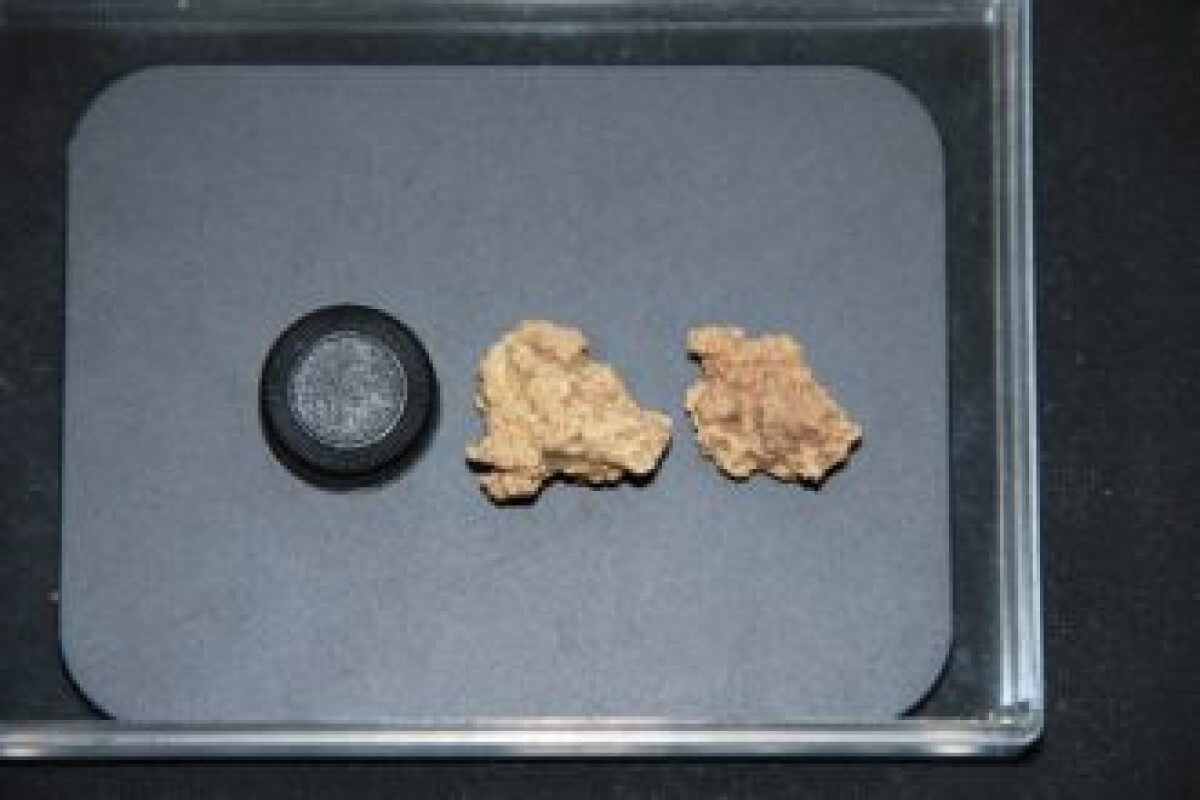
The cheese in question was found in the Xiaohe cemetery, located in China’s Tarim Basin. Initially discovered about two decades ago as mysterious white substances smeared on the heads and necks of mummies, it has taken years of scientific advancements to unlock its secrets. Now, thanks to cutting-edge DNA analysis, we know that this ancient snack was none other than kefir cheese, a tangy, fermented dairy product that’s still enjoyed today. The team published their findings in the journal Cell.
“Food items like cheese are extremely difficult to preserve over thousands of years, making this a rare and valuable opportunity,” explains Dr. Qiaomei Fu, the study’s lead researcher from the Chinese Academy of Sciences, in a media release. “Studying the ancient cheese in great detail can help us better understand our ancestors’ diet and culture.”
What makes this cheesy discovery so groundbreaking?
For starters, it’s forcing us to reconsider where kefir originated. Until now, many believed that kefir hailed from the North Caucasus mountain region in modern-day Russia. However, this ancient Chinese cheese tells a different story.
The research team, led by Dr. Fu, extracted DNA from cheese samples found in three different tombs at the cemetery. They not only identified cow and goat DNA but also discovered the genetic material of microorganisms used in kefir production. One key player was a bacterium called Lactobacillus kefiranofaciens, which is still used to make kefir today.
Here’s where it gets interesting: modern L. kefiranofaciens falls into two main groups – one from Russia and another from Tibet. When the researchers compared the ancient bacterial DNA to these modern strains, they found that the 3,600-year-old cheese was more closely related to the Tibetan group. This suggests that kefir culture has been thriving in Northwestern China since the Bronze Age, challenging the notion of a purely Russian origin.
“Our observation suggests kefir culture has been maintained in Northwestern China’s Xinjiang region since the Bronze Age,” Dr. Fu notes.
The revelations don’t stop there. By comparing the ancient and modern bacterial DNA, the scientists were able to track how these tiny cheese-makers evolved over millennia. They found that over time, L. kefiranofaciens became better adapted to human digestive systems and more efficient at fermenting milk.
To put it in simpler terms, imagine if you could compare a modern smartphone to a rotary phone from the 1950s. You’d see how technology has evolved to become more user-friendly and efficient. Similarly, these bacteria have “upgraded” themselves over thousands of years to better serve their human hosts.
The research also shed light on ancient cheesemaking practices. Unlike their Middle Eastern and Greek counterparts, who often mixed milk from different animals, the ancient Xiaohe people seemed to prefer keeping their dairy sources separate. This gives us a unique glimpse into the culinary practices of Bronze Age China.
Dr. Fu and her team’s work goes beyond just satisfying our curiosity about ancient snacks. By successfully extracting and analyzing DNA from such old food samples, they’ve opened up new possibilities for understanding our ancestors’ lives and their interactions with the world around them.
“This is an unprecedented study, allowing us to observe how a bacterium evolved over the past 3,000 years,” Dr. Fu concludes. “Moreover, by examining dairy products, we’ve gained a clearer picture of ancient human life and their interactions with the world. This is just the beginning, and with this technology, we hope to explore other previously unknown artifacts.”
So, the next time you enjoy a tangy glass of kefir or spread some cheese on your crackers, remember: You’re partaking in a tradition that’s been around for at least 3,600 years.
Paper Summary
Methodology
The researchers analyzed ancient cheese residues from a Bronze Age site in Xinjiang, China. They used a combination of DNA extraction, sequencing, and metagenomics to understand the bacterial and mammalian DNA present in the cheese samples. This allowed them to reconstruct the genomes of bacteria, particularly Lactobacillus kefiranofaciens, which are important for fermenting kefir. They also identified goat DNA from the cheese, suggesting that goat milk was used for dairy production in this ancient population.
To achieve this, they retrieved ancient DNA using specialized probes that targeted specific genetic material from both the milk-producing animals and the fermenting bacteria. The DNA was then sequenced and compared with modern strains to study how these bacteria and dairy practices evolved over time.
Key Results
The scientists found that people 3,600 years ago in China were making kefir cheese from goat milk. They also discovered that the bacteria used in fermenting the milk have changed over time, evolving to survive in different environments. Some of the bacteria found in the ancient cheese are the same ones used today to make kefir, showing how this food tradition has continued for thousands of years. The bacteria have developed ways to protect themselves from harmful conditions, which helped keep the kefir cheese safe to eat. The study also suggests that making kefir helped ancient people who were lactose intolerant to digest dairy products.
Study Limitations
While the findings provide significant insights, the study is limited by the small number of samples. The cheese remains were well-preserved, but not all microorganisms could be recovered due to DNA degradation over time. Furthermore, the methods used, like DNA capture and sequencing, may have introduced biases, leading to the preferential retrieval of some genetic materials over others. More samples from various regions would be needed to confirm the broader applicability of the results. Additionally, the functional roles of some horizontally transferred genes in the bacteria need further experimental validation.
Discussion & Takeaways
This study highlights how ancient food production practices, such as kefir cheese-making, shaped human interactions with microbes. The kefir-making process spread across regions and allowed people who were lactose intolerant to still consume dairy by turning it into fermented products that are easier to digest. The bacteria used in kefir have evolved over thousands of years to resist environmental stress, which might have made fermented dairy products safer to consume. The study also shows how kefir bacteria spread from the Xinjiang region to other parts of East Asia, suggesting a different route of kefir’s spread than previously thought.
Funding & Disclosures
The study was funded by several organizations, including the National Natural Science Foundation of China, the Chinese Academy of Sciences, and the Feng Foundation of Biomedical Research. The authors have declared no conflicts of interest in conducting and publishing this research.


