Salmon and other seafood types are one of the best foods for protein.(Photo by cattalin on pixabay.com)
BARCELONA, Spain — For some patients dealing with cardiovascular issues, a heart attack may be unavoidable. If that day does come, a study finds the right diet can actually keep patients from suffering complications and lower their risk of death from myocardial infarction. Researchers in Spain say eating both animal and vegetable sources of omega-3 fatty acids makes the heart more resilient during and after a cardiac event.
The team examined 950 patients who had been taken to the hospital following a heart attack. Each patient’s omega-3 levels were measured using a sample of their blood. This allowed researchers to see how much of these fats the heart attack patients had eaten in the weeks leading up to their hospitalization.
Following their discharge, study authors followed the patients for three years to see if they suffered any setbacks. The results show having a high amount of omega-3 in the blood at the time of a heart attack leads to fewer complications after leaving the hospital.
Which foods can increase omega-3 levels?
Fish and fish oil supplements have become a popular source of omega-3 fatty acid. While salmon and mackerel are great ways to boost these fats, there are plenty of alternatives. For vegetarians and vegans, omega-3 options include seaweed, chia seeds, flaxseeds, kidney beans, and walnuts.
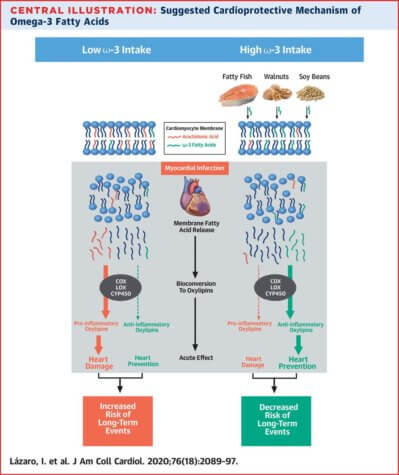
DOI: 10.1016/j.jacc.2020.08.073)
Researchers note there are also two varieties of omega-3 fatty acid. Eicosapentaenoic acid (EPA) comes from oily fish. The study finds EPA is incorporated into the heart muscle cells, the cardiomyocytes. This helps to protect the cells from a large number of heart stressors and limits the damage heart attacks cause.
The less studied type of omega-3 is alpha-linolenic acid (ALA) which generally comes from vegetables. This fat, commonly found in walnuts and soybeans, plays a bigger role in keeping patients alive after myocardial infarction.
Study authors find high levels of EPA show a connection to lower risks of hospital readmission. Higher levels of ALA on the other hand lowered the chances of death due to a heart attack.
“Incorporating marine and vegetable omega-3s into the diet of patients at risk of cardiovascular disease is an integrative strategy for improving both their quality of life and prognosis if they suffer a heart attack,” says Antoni Bayés, clinical director of Cardiology at Germans Trias i Pujol Hospital, in a press release.
“The article is important because it highlights the complementary (and non-competitive) effects of the two types of omega-3,” adds Aleix Sala, a researcher the Hospital del Mar Medical Research Institute (IMIM).
The study appears in the Journal of the American College of Cardiology.


