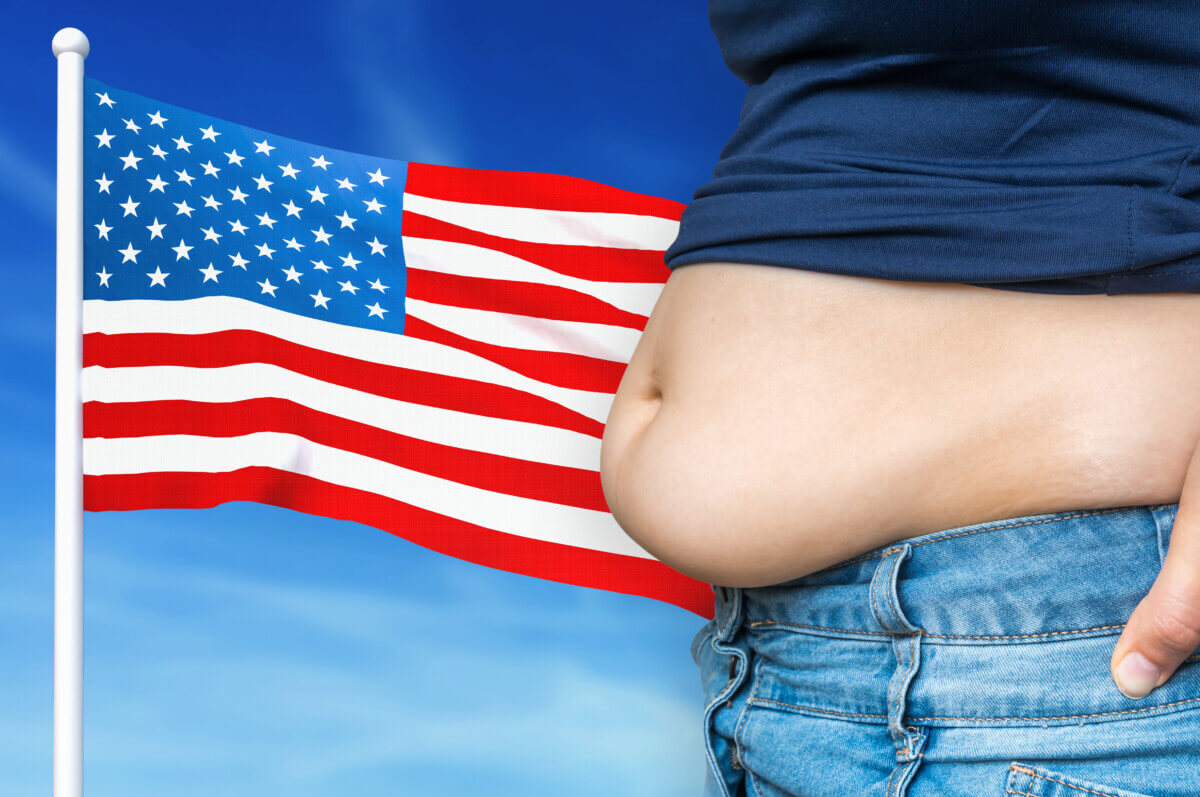
The obesity crisis in the United States may be worse than realized. (© andriano_cz - stock.adobe.com)
7 in 10 U.S. Adults Could Fall Under New Obesity Definition
In A Nutshell
- Adding waist size to BMI raises U.S. obesity rates from 42.9% to 68.6%, according to a major JAMA Network Open study.
- One in four adults have “hidden” belly-fat obesity despite a normal BMI.
- Older adults and Asian participants saw the biggest increase in obesity classification.
- The new definition could change who qualifies for treatment and reshape healthcare policy.
BOSTON — A major shift in how doctors define obesity could fundamentally reshape medical practice, according to groundbreaking research analyzing health data from over 300,000 Americans.
Scientists found that adopting a new obesity framework endorsed by 76 professional medical organizations increased obesity rates from 42.9% to 68.6% among study participants. This dramatic jump stems from including people who have dangerous belly fat despite maintaining what doctors previously considered a healthy weight.
Published in JAMA Network Open, the study analyzed data from the All of Us research program and represents the first large-scale examination of how new obesity guidelines would affect healthcare. The research tracked participants for four years to document real health outcomes, not just theoretical classifications.
Beyond the Scale: Why Waist Size Matters
Rather than relying solely on the height-to-weight calculation that has dominated medicine for decades, the new approach incorporates waist circumference, waist-to-hip ratio, and waist-to-height ratio alongside BMI to create a more complete health assessment.
Under the new framework, someone can be classified as having obesity through three different pathways:
Traditional BMI-plus approach: Having a BMI above the standard obesity threshold (typically 30 for most groups, but 27.5 for Asian populations) PLUS at least one elevated waist measurement, OR having a BMI over 40 regardless of waist measurements.
Waist-centered approach: Having at least two elevated waist measurements even if BMI falls below traditional obesity levels.
Body fat approach: Having excess body fat as measured by specialized scans, regardless of other measurements.
The waist measurements use specific cutoffs that vary by sex and race. For example, elevated waist circumference is generally defined as 40 inches or more for men and 35 inches or more for women, though these thresholds are adjusted for different ethnic groups who may face health risks at lower measurements.
The research team, led by Dr. Lindsay Fourman from Massachusetts General Hospital, found that traditional BMI measurements miss many people with dangerous fat distribution patterns. The research team found that belly fat, regardless of overall weight, serves as a key predictor of metabolic disease..
Scientists identified a category called “anthropometric-only obesity” affecting 78,047 study participants. These individuals maintain normal BMI scores while carrying elevated measurements around their midsection. Among this group, 17,426 people (22.3%) had BMI scores doctors previously labeled as normal or underweight.

Health Risks That BMI Misses
Researchers tracked participants to document who developed serious health problems. People with this hidden form of obesity faced significantly higher risks than those without obesity, despite looking healthy on standard scales.
Compared to people without obesity, those with the waist-centered type were 76% more likely to have organ problems. They also faced more than double the risk of developing diabetes and 55% higher risk of heart disease.
The research team found that people with this form of obesity often developed high blood pressure, physical limitations, and sleep apnea. These conditions typically emerge gradually, making early identification through waist measurements potentially valuable for prevention.
Age and Demographics Drive Changes
The study revealed striking patterns across different groups. Among participants aged 18 to 29, obesity prevalence under the new definition reached 43.9%. The most dramatic change occurred among seniors: 78.3% of Americans over 70 in the study met criteria for obesity under the new framework, compared to previous BMI-based classifications.
This age-related increase reflects how body composition changes over time, with fat increasingly accumulating around the midsection as people get older. Among people over 70 in the study, 54.4% had what researchers called “clinical obesity” indicating the presence of organ dysfunction or physical limitations.
The research also found notable differences by race and gender. Asian participants saw the largest relative increase in obesity rates, jumping 90.3% from 2,439 participants (27.0%) to 4,641 participants (51.4%) under the new definition. Male participants were more likely than female participants to have anthropometric-only obesity, affecting 32.5% of men versus 21.7% of women in the study.
Obesity Treatment Guidelines Face Major Overhaul
The new framework could dramatically alter who receives obesity medications and treatments. Currently, about 45% of study participants would qualify for weight-loss drugs based on today’s guidelines. Under the new approach, roughly half of those people would be moved to a lower priority for treatment since they’d be classified as having earlier-stage obesity.
Additionally, among participants with the most serious form of obesity under the new definition, about 1 in 4 wouldn’t qualify for current weight-loss medications. This mismatch shows that treatment guidelines may need a major overhaul.
The new guidelines recommend different treatment approaches. People with clinical obesity would get the most aggressive treatment, including medications and surgery when appropriate. Those with the earlier stage might receive lifestyle counseling first, with medications reserved for specific cases.
Clinical vs. Preclinical Obesity
The new approach introduces two categories based on whether health problems are already present. “Clinical obesity” means someone has existing health problems or physical limitations that may be related to their weight pattern. “Preclinical obesity” means concerning measurements are present but serious health issues haven’t developed yet.
To determine clinical obesity, doctors look for specific conditions including high blood pressure, diabetes, sleep apnea, joint problems, liver issues, or physical limitations like difficulty with daily activities. The presence of any of these alongside elevated body measurements would classify someone as having clinical obesity.
About 36% of all study participants had clinical obesity, with rates climbing sharply with age. The distinction matters because people with clinical obesity faced the highest risks of future diabetes, heart disease, and death.
Even the earlier stage carried meaningful health risks. People with preclinical obesity had more than three times the risk of developing diabetes and 40% higher risk of heart problems compared to those without obesity.
The study tracked the most common health problems associated with clinical obesity: high blood pressure topped the list, followed by physical limitations and sleep apnea. The research revealed that organ dysfunction itself, even without obesity, significantly increased health risks.
For healthcare systems and insurance companies, these changes could carry massive financial consequences. Medicare and other payers may need to reassess coverage policies as the eligible population for obesity treatments potentially shifts substantially.
The study’s authors acknowledge that implementing the new definition would require more work and resources than current BMI-based screening. However, they argue that the improved ability to identify health risks may justify the additional effort, particularly if integrated into electronic health record systems.
The research’s obesity prevalence using traditional BMI-based criteria (42.9%) closely aligns with Centers for Disease Control and Prevention estimates for the US population (40.3%), supporting the potential broader applicability of these findings to American adults generally.
Disclaimer: This article summarizes recent peer-reviewed research for general information only. It is not a substitute for medical advice. Readers should consult qualified healthcare professionals for individualized assessment or treatment.
Paper Summary
Methodology
Researchers analyzed data from 301,026 adults in the All of Us research program, enrolled between May 2017 and September 2023. Participants underwent standardized measurements of height, weight, waist circumference, and hip circumference, and completed health surveys. The study used electronic health records to track health outcomes over a median follow-up period of 4 years.
Results
Under the new obesity definition, 68.6% of participants met criteria for obesity compared to 42.9% using traditional BMI-based criteria. The increase was driven by including 78,047 people with “anthropometric-only obesity” who had elevated waist measurements despite normal BMI. Clinical obesity affected 36.1% of all participants. People with anthropometric-only obesity had odds ratios of 1.76 for organ dysfunction and adjusted hazard ratios of 2.12 for diabetes and 1.55 for cardiovascular events compared to those without obesity.
Limitations
The study relied on diagnostic codes, surveys, and laboratory results to classify clinical obesity, which may not fully capture all cases of organ dysfunction. Researchers could not establish whether organ dysfunction was directly caused by obesity. The analysis used the new framework’s ability to predict future health risks as a measure of clinical utility, rather than a gold standard comparison.
Funding and Disclosures
This work was supported by grants from the National Institutes of Health, the American Heart Association, and the Bristol Myers Squibb Foundation. Lead author Dr. Fourman reported receiving grant support and personal fees from pharmaceutical companies. Dr. Grinspoon reported receiving personal fees from investment and biotech companies and grant support from pharmaceutical companies.
Publication Information
“Implications of a New Obesity Definition Among the All of Us Cohort” was published in JAMA Network Open on October 15, 2025. The study was conducted by researchers from Massachusetts General Hospital, Harvard Medical School, and other institutions.


” Lead author Dr. Fourman reported receiving grant support and personal fees from pharmaceutical companies.”
mmmhmmm!
Obesity is an issue but not even remotely the way this article has laid it out. BMI and other metrics are useless. All you got to do is put the work in…. hit the weight stack, get on your bicycle, run, whatever. Who cares about body type? Put the work in and you ~WILL~ see improvement. The catch is you got to put the work in. Three times a week, half an hour if it’s cardio, at least two compound lifts if it’s weights. Put the work in and you will see improvement, you will feel more empowered.
An old criteria included the body structures Ectomorpk, Endomorph and Mesomorph
Why wasn’t the prospective new criteria and formula with it laid out here? Absent that, this article is a less than half-baked teaser that ought to get someone fired for letting it go through.
You are so right! Totally obnoxious article. Wasting our time!
I think this would be very funny, except it is very sad. What I mean is that is in discussions about BMI you always see the individuals who raise objections claiming that people with elevated BMI are not necessarily obese. Maybe they are very muscular. Of course, if you look around you, you realize that 99% of persons with BMI over 30 can raise a loaded fork to their mouth several times a day, but not benchpress 250 pounds at the gym.
This included King Donald I!
Sounds like printing money for Novo Nordisk. I’m one of those with “normal” BMI which does not take into account my slender build. I have significant belly fat which is NOT good.