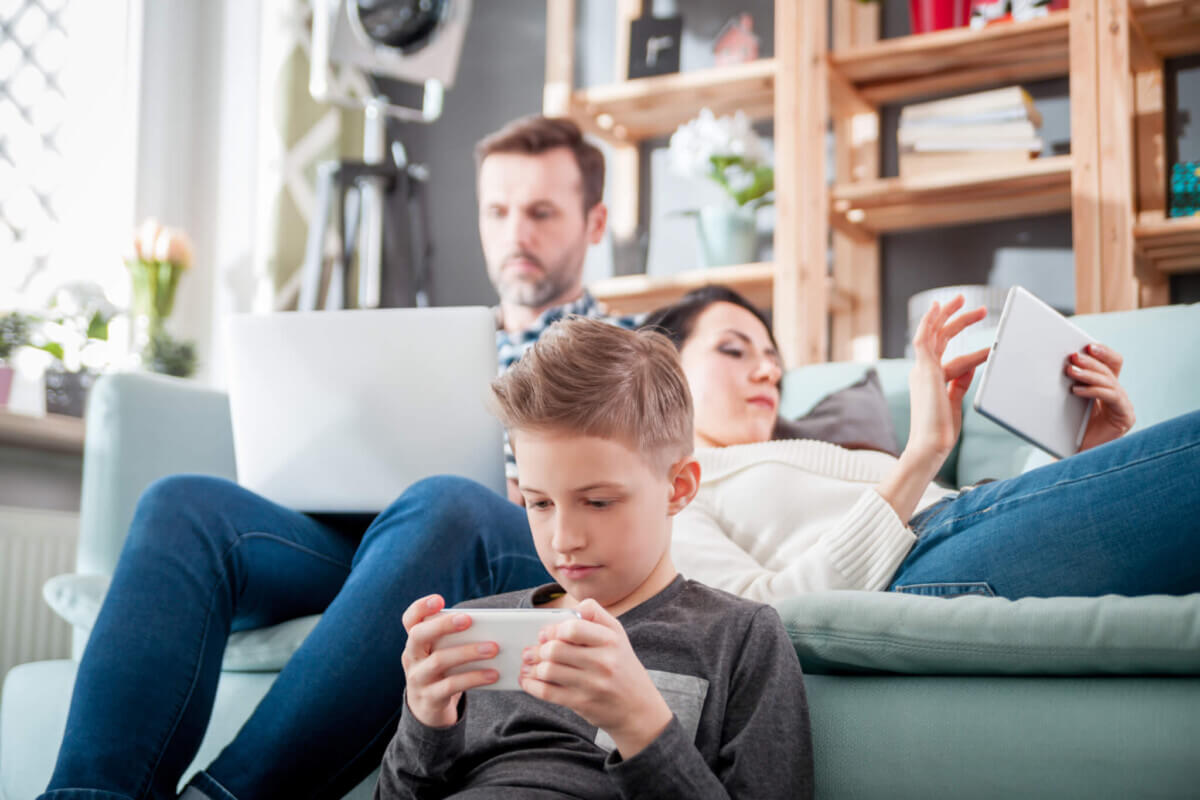
Parents set the example for children's screen habits. (© leszekglasner - stock.adobe.com)
Research shows that just going outside with the family is an effective way to bond without screens.
In A Nutshell
- Nearly half of parents (48%) now schedule family bonding time as if it were an appointment on the calendar.
- 22% of parents haven’t had honest conversation with child about their hopes and dreams in over a year
- Phones interrupt over half of parent–child conversations, and even partners admit to frequent digital distractions.
- Seven in ten parents wish life felt less digitally connected, with many reporting loneliness and fewer honest conversations.
- Families see outdoor spaces as a reset: 79% feel more authentic outside, and most would spend more time outdoors if backyards were more inviting.
NEW YORK — Parents across America are scheduling something once considered natural: quality time with their own children. New survey results reveal that nearly half of parents now make formal “appointments” for family bonding. The findings show how digital distractions and packed schedules have reshaped everyday family life.
The study of 2,000 parents of children under 18 found that 48% schedule time for family connection. Another 41% set aside planned date nights with partners, and 35% even reserve exercise sessions. What once happened spontaneously — conversation, relaxation, connection — now often requires a calendar reminder.
The survey, conducted by Talker Research on behalf of Solo Stove, highlights how constant distractions have made family life more structured and less free-flowing.
Phones Interrupt More Than Half of Conversations
One major culprit is phone use. Parents reported that children held their phones during 52% of conversations. Meanwhile, partners were distracted by devices during 58% of their own talks. And even when people manage to sit down together, other pressures creep in: 49% compete with busy schedules, 48% with household chores, 43% with work commitments, and 32% with outside activities.
Liz Vanzura, CMO of Solo Stove, said the results echo what families are already feeling. “We heard from parents that many feel the world has grown increasingly disconnected. Seventy-eight percent shared that they worry about losing real conversations with their children and say life today feels more overwhelming and lonelier than ever.”
Even scheduled time doesn’t always work. Parents estimated that 56% of planned hangouts still involve at least one person distracted by phones, work, or stress.

Growing Isolation In The House
The findings point to a broader issue: many families feel isolated, even when surrounded by people. More than one in five parents (22%) said it has been a year or more since they had an honest, face-to-face conversation about hopes and dreams.
Some moments of connection still break through: 40% of parents reported sharing a genuine laugh with loved ones recently. But only 38% said they often spent time outdoors with family and friends. Even more striking, 10% could not remember the last time they had spoken spontaneously with a neighbor.
It’s no surprise, then, that 71% of parents said they wished they could go back to a less digitally connected world.
Compulsive phone checking has become the norm, with 57% of parents frequently opening their devices to find zero notifications. Fighting back, 82% have implemented device-free zones, particularly during dinner (47%), family movie nights (38%), and outings (28%).
Going Outside Leads To Premium Quality Time For Families
The study does offer one promising path forward: time outside. Parents reported spending an average of three days per week with family in backyard or outdoor spaces. Nearly 9 in 10 (89%) said they would spend even more time outdoors if those areas were more inviting.
The survey found that outdoor settings create more natural, distraction-free connection. Seventy-nine percent of parents said they felt more authentic when spending time with loved ones outside. Evenings (45%) and nighttime (30%) were the most common times for meaningful conversations.
“As many families are looking for ways to feel more connected, our research shows that their backyards and the outdoors can play an important role. Stepping outdoors creates a chance to put down the screens, have real conversations, and strengthen the bonds that matter most,” says Vanzura.
The numbers tell a clear story. Families are fighting to preserve real connection in an age of constant notifications and competing obligations. Scheduled appointments may help, but they cannot fully replace the ease of spontaneous conversations.
Parents are carving out device-free zones, seeking moments of laughter, and looking to the outdoors as a place where conversations feel real again. The challenge is not only to manage time but also to protect space for genuine human connection.
Methodology
The findings come from a comprehensive survey of 2,000 parents with children under 18, conducted by Talker Research between August 29 and September 4, 2025. The online survey was commissioned by Solo Stove and used both traditional access panels, where participants opt in to take surveys for incentives, and programmatic sampling, where people encountered the survey while browsing online. All participants completed the survey in English and received virtual rewards for their participation. Researchers excluded responses from participants who completed the survey too quickly, provided inappropriate answers, or appeared to be automated bots. The survey methodology included quality controls such as preventing duplicate responses and requiring a minimum of 80 respondents per data point, with statistical significance calculated at the 95% confidence level. Since the survey was only available to people with internet access, the results may not represent families without online connectivity.


