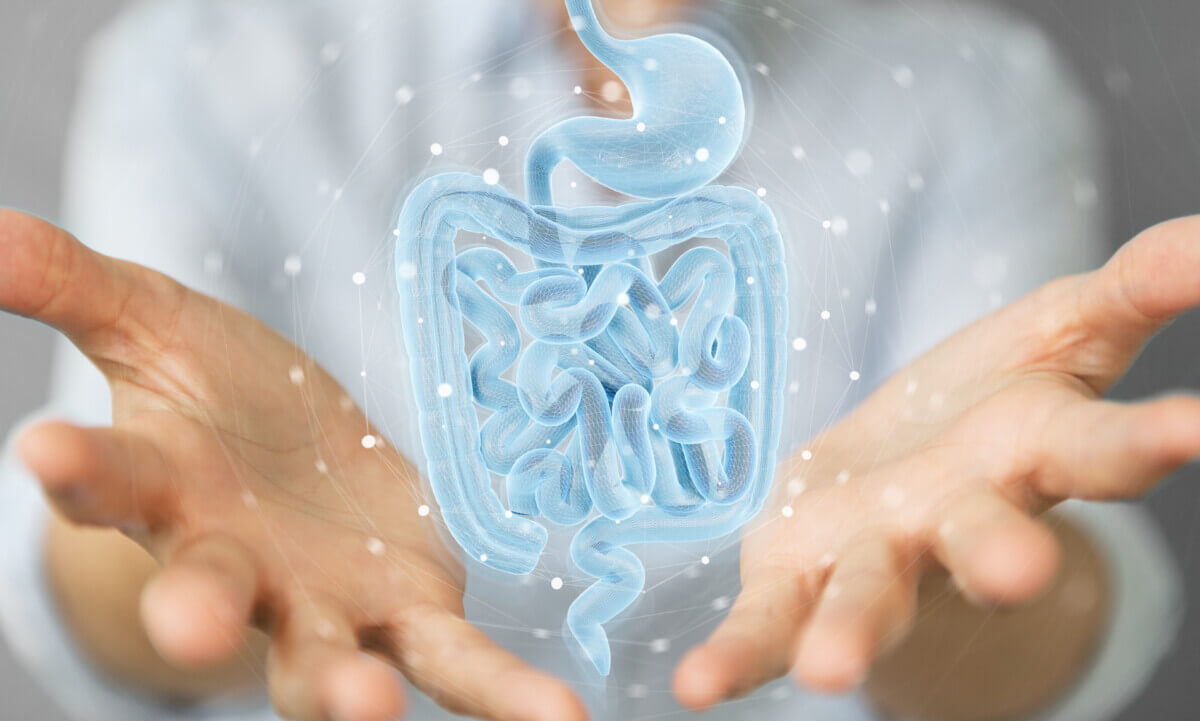
Microbiome-based therapies could help countless people this year. (© sdecoret - stock.adobe.com
BOSTON — Every year, about 90,000 people in the United States will be diagnosed with Parkinson’s disease. At any given time, about one million Americans have the disorder, and that is expected to rise to 1.2 million by 2030. Despite these substantial numbers and intense research, the cause of Parkinson’s is still unclear.
However, scientists may be getting closer to identifying the cause. A study published in JAMA Network Open has found that upper gastrointestinal (GI) damage has an association with a 75% greater risk of a future diagnosis of Parkinson’s disease.
Parkinson’s disease is a progressive, degenerative disorder that primarily affects neurons (nerve cells) involved with movement. When neurons in the brain that produce the neurotransmitter (chemical messenger) dopamine become damaged or die, it leads to tremors, muscle rigidity, bradykinesia (slowing of movement), and impaired balance and coordination.
With Parkinson’s disease, nerve endings that produce the neurotransmitter norepinephrine are also lost. Norepinephrine controls automatic body functions such as pulse rate and blood pressure.

About 20 years ago, researchers proposed a “gut-first” hypothesis for the cause of Parkinson’s disease. The theory stated that in some patients, Parkinson’s disease begins in the gut and travels through the nervous system to the brain. Since that idea was proposed, many gut-related factors have been investigated for associations with the disease.
A research team led by Trisha Pasricha, MD, MPH, of Beth Israel Deaconess Medical Center in Boston investigated the association between upper GI mucosal (lining of the upper GI tract) damage and Parkinson’s disease. They studied 9,350 patients with no history of Parkinson’s who had upper GI endoscopy (direct visualization of the GI tract from the mouth to the small bowel) with biopsy. They defined mucosal damage as erosions, ulcers, or acid-induced injuries.
The team followed the patients for about 15 years. Of the patients with mucosal damage, 52 were diagnosed with Parkinson’s – 2.2% of this group. Of the patients without mucosal damage, 48 were diagnosed with Parkinson’s – only 0.5% of this group.
The patients with mucosal damage were also more likely to have a history of Helicobactor pylori, to have used medications for stomach acid, or to have chronically used NSAIDs. They were more likely to have had gastroesophageal reflux disease (GERD), smoked, and experienced constipation or dysphagia (difficulty swallowing).
According to Pasricha, many patients with Parkinson’s disease have symptoms like dysphagia or constipation years before their diagnosis. Pasricha says that her study showed for the first time that a history of upper gastrointestinal mucosal damage, confirmed by looking at endoscopic and pathology reports, was associated with a 76% greater risk of developing Parkinson’s disease.
This finding supports the hypothesis that, for at least some patients with Parkinson’s disease, the condition may have its origin in the gut. Knowing this association may affect surveillance for Parkinson’s disease. Finding the disease earlier in its course could allow for earlier, more effective intervention.


Does this mean Parkinson’s isn’t hereditary or caused by injury to nervous system?
Parkinson’s disease can have a hereditary component but it is rare. Most cases of Parkinson’s disease are not inherited. However, having a family history of Parkinson’s can slightly increase your risk. Some cases of Parkinson’s are associated with genetic mutations. That is more common when symptoms start before age 50.
I’m not sure what you mean by injury to the nervous system.
Parkinson’s is a “neurodegenerative” disease, meaning deterioration of parts of the anatomy and chemistry of the brain occurs, which account for the symptoms. All the causes, or why some people develop the disease is still being worked out. This article is about a possible association between Parkinson’s disease and disease in the gastrointestinal tract, but there is much left to learn about that potential association.