
Undergraduate student Calvin Teague demonstrates an optimal thumb grip on a mid-range disc. Credit: Drew Teasley
WASHINGTON — Have you ever wondered if there’s a science to throwing the perfect disc golf shot? A new study from Berry College researchers has found that where you place your thumb on the disc (or frisbee) can significantly impact both the spin and speed of your throw. The research, published in AIP Advances, offers insights that could help both beginners and pros improve their game.
Disc golf, a sport that has seen explosive growth with over 130,700 registered members as of 2022, combines the precision of traditional golf with flying discs. While many factors contribute to a successful throw, the research team focused on one crucial element: thumb placement during a backhand throw.
The study examined 24 disc golf players, divided into two skill levels based on their Professional Disc Golf Association (PDGA) ratings. The novice group included 15 players rated below 900 or unrated, while the advanced group comprised nine players rated 900 or higher. Each participant performed 25 throws using a standard mid-range disc equipped with a special sensor, placing their thumb in five different positions ranging from near the disc’s outer edge to close to its center.
The results revealed that thumb placement can make a significant difference in throwing performance. Advanced players consistently achieved about 50% higher spin rates and 25% faster launch speeds than novices across all thumb positions. However, both groups showed similar patterns in how thumb placement affected their throws.
The study found that placing the thumb about three centimeters from the disc’s outer edge (designated as position 2 in the study) proved to be the sweet spot for most players, resulting in an optimal combination of spin rate and launch speed. This position allowed players to generate both significant spin—which helps keep the disc stable in flight—and impressive launch speeds that contribute to distance.
“While the optimal parameters of a disc golf throw may vary based on physical build, arm speed, and other characteristics of the individual, our data suggests that the ~3 cm position is a sensible starting point for amateur players who might be unsure of where to place their thumb on the disc,” says researcher Zachary Lindsey of Berry College in a media release.
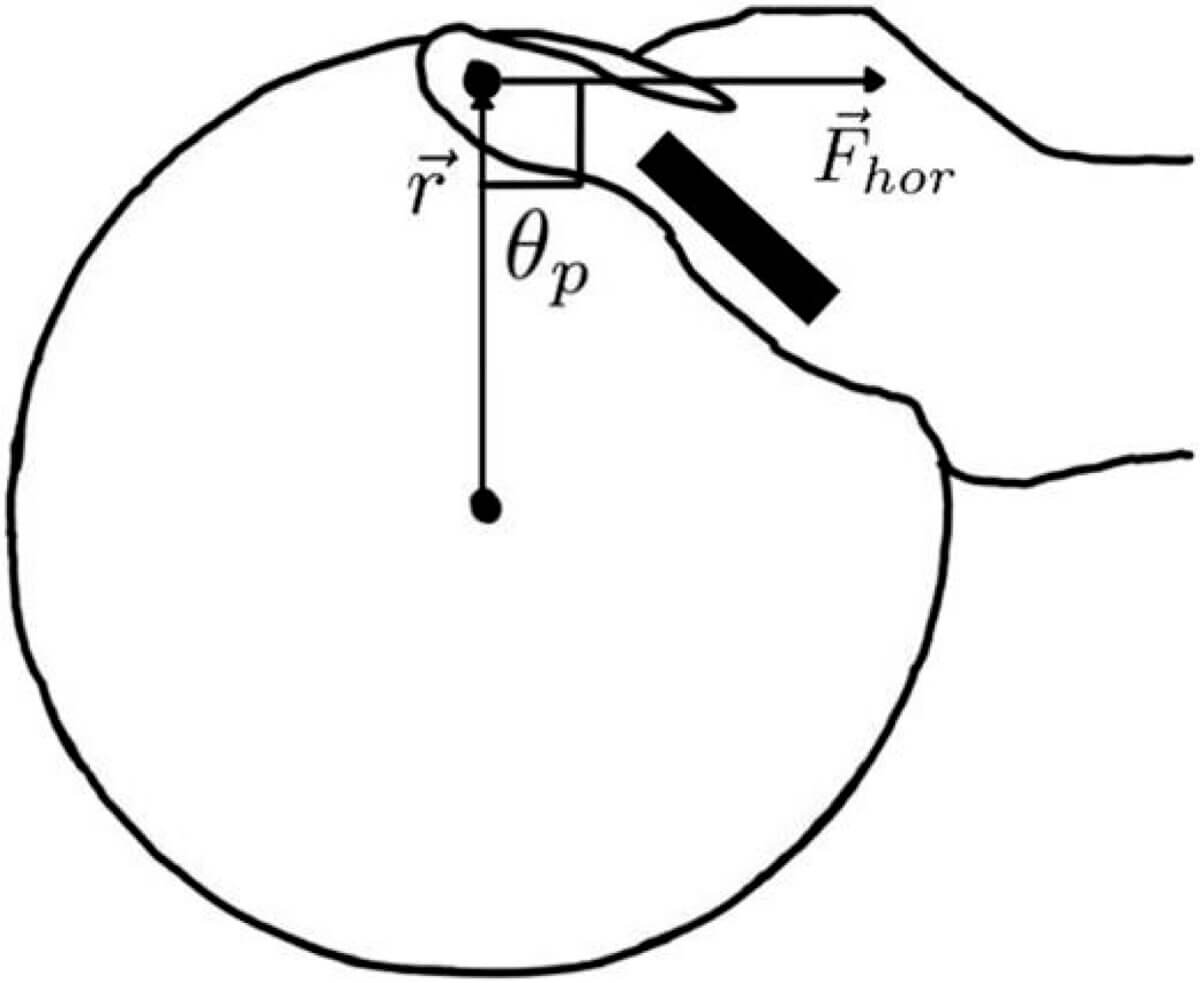
Interestingly, while placing the thumb at the outermost position generated the highest spin rates, it didn’t necessarily translate to the best overall performance. The researchers discovered a strong linear relationship between spin rate and launch speed — as one increased, so did the other, regardless of skill level.
For novice players, the best results came from placing their thumb either at the outer edge or slightly inward, while advanced players found their optimal performance with thumb positions slightly closer to the center. However, all players generally performed worse when placing their thumb too close to the disc’s center.
“We were particularly surprised to observe such a strong linear correlation between spin rate and launch speed across all throws performed in the study. Results showed that throws achieving higher spin rates also tended to have higher launch speeds as well,” Lindsey explains.
This research represents the first scientific study of its kind focusing on disc golf throwing mechanics and thumb placement. The findings could help players at all skill levels fine-tune their grip for better performance, although the researchers note that different types of discs might yield different results. So, whether you call it disc golf, frisbee golf, or frolf, watch where you place your thumb. It could give you the winning edge!
Paper Summary
Methodology
The researchers used a Discraft Buzzz mid-range disc equipped with a TechDisc sensor to measure both spin rate and launch speed. They marked five specific thumb positions on the disc’s top surface, ranging from 9.4 cm to 2.6 cm from the center. Each participant performed five throws at each position, attempting to maintain consistent form while only changing thumb placement. All throws were made using a backhand power grip, where players wrap all four fingers around the disc’s rim.
Key Results
The study analyzed 600 total throws across all participants. Advanced players averaged spin rates of around 1,100 rotations per minute (rpm) compared to roughly 750 rpm for novices. Launch speeds showed similar disparities, with advanced players averaging around 57 mph compared to 45 mph for novices. The optimal thumb position (position 2) resulted in launch speeds of about 47 mph for novices and 58 mph for advanced players.
Study Limitations
The study faced several constraints, including variations in individual throwing styles, inconsistency in throw power due to fatigue, and the assumption that participants maintained exact thumb placement throughout their throws. The research only examined one type of disc and one throwing style (backhand), so results might differ for other disc types or throwing techniques.
Discussion & Takeaways
The key finding was that thumb placement roughly 3 cm from the disc’s edge provides the best balance of spin and speed for most players. The study also revealed that spin rate and launch speed are directly correlated, suggesting that techniques that increase one tend to increase the other. This information could be particularly valuable for coaching and player development.
Funding & Disclosures
The research was supported by the Berry College Physics Department. The authors disclosed no conflicts of interest, and the study was approved by the Berry College Institutional Review Board for Human Subjects Research. The researchers acknowledged assistance from Matt Zollitsch from Prodigy Disc in recruiting advanced players and support from Dr. Todd Timberlake for data analysis assistance.


