
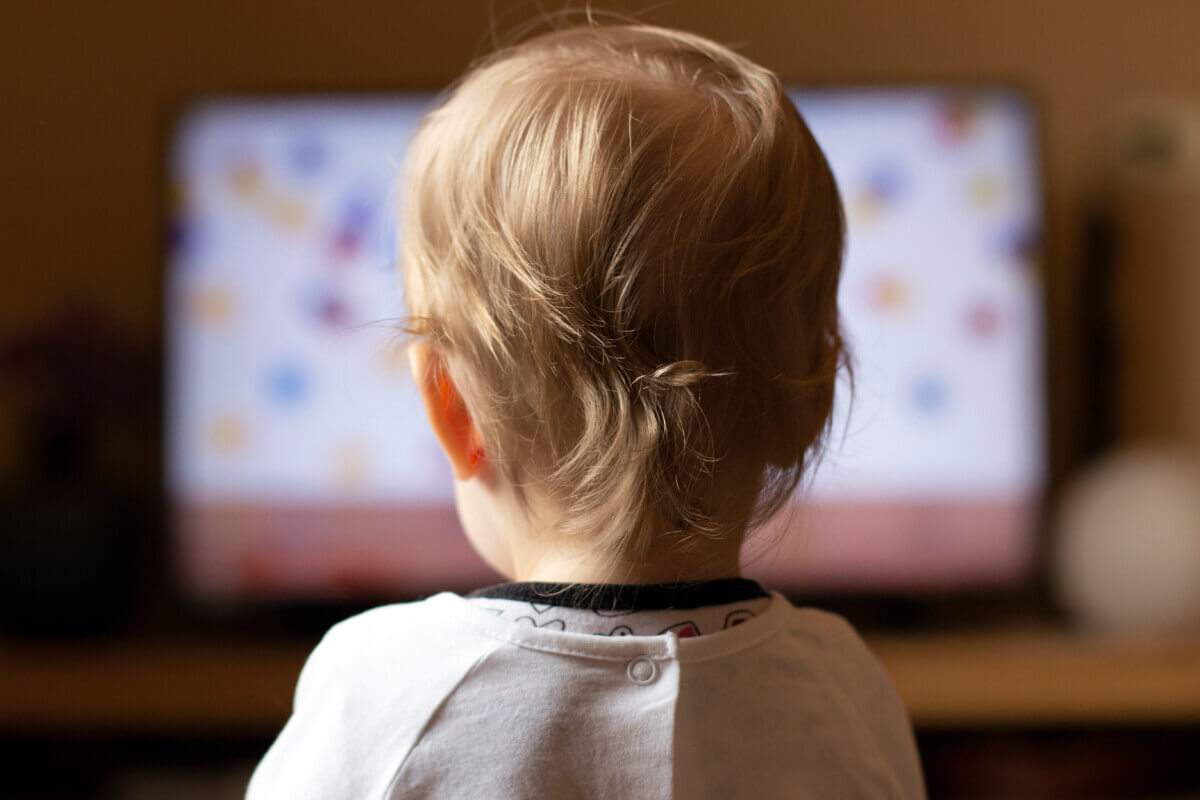
Exposure to violent TV in childhood can lead to aggressive teenage behavior for boys. (esthermm/Shutterstock)
In a nutshell
- Boys who regularly watched violent TV as preschoolers showed higher levels of aggression and antisocial behavior as teenagers, including increased fighting, threats, and interactions with law enforcement.
- No similar long-term effects were found in girls, highlighting a significant sex difference in how early media exposure influences later behavior.
- The effects persisted even after accounting for family dysfunction, parental behavior, and other risk factors, suggesting that early exposure to violent content is an independent predictor of later teen aggression in boys.
MONTREAL — The Batman pajamas and superhero obsession might seem like an adorable phase, but that action-packed media consumption could have lasting consequences. A new international study following children for over a decade found that boys who watched violent TV as preschoolers showed measurably higher rates of aggression and delinquency as teenagers. Meanwhile, girls exposed to the same content showed no similar effects, suggesting boys’ developing brains might be uniquely vulnerable to media violence.
The research, published in the International Journal of Environmental Research and Public Health, tracked nearly 2,000 children from preschool through adolescence and found that boys exposed to violent TV content at ages 3 and 4 showed increased physical aggression, proactive aggression, and antisocial behavior by age 15. The same pattern wasn’t observed in girls, highlighting a significant gender difference in how media violence affects developing minds.
These weren’t minor behavioral issues either. The antisocial behaviors included interactions with police, court appearances, and even placements in youth centers. Many parents assume their children’s viewing habits while young won’t cause lasting harm, but this research challenges that assumption. The effects persisted for more than a decade, even after researchers controlled for other factors like family dysfunction, parental antisocial behavior, and maternal depression.
The researchers examined data from the Quebec Longitudinal Study of Child Development, which followed children born in 1997-1998. Parents reported how frequently their children watched violent television at ages 3.5 and 4.5 years, while the participants themselves reported on their aggressive and antisocial behaviors at age 15.
Rather than conducting short-term experiments that might not reflect real-world exposure, the researchers tracked natural viewing patterns and their outcomes over more than a decade. Because the participants grew up in the late 1990s, before the explosion of smartphones and tablets, researchers could isolate television’s effects without confounding variables from multiple screen types.
Boys who watched violent TV as preschoolers showed a 6.5% increase in proactive aggression (threatening or hitting others to get what they want), a 7.4% increase in physical aggression (fighting, using weapons), and a 7.6% increase in antisocial behavior (court appearances, interactions with police) compared to boys with less exposure.
How Violent Media Rewires Young Brains
Why does violent content affect developing minds so profoundly? Psychologists point to several different reasons. Social learning theory suggests young children learn behaviors by observing models, including those on screen. When children see violence portrayed as exciting or rewarded, they may internalize these lessons.
Another factor is desensitization. Repeated exposure to violent scenes can reduce emotional reactions to violence over time, potentially making children less sensitive to others’ suffering and more accepting of aggression as normal behavior.
Through this habituation process, emotional reactions to violence diminish over time. Children may eventually trivialize aggression and view it as an acceptable way to resolve social conflicts or competition.

Considering how many children routinely consume violent media, these patterns are a real concern. However, the study found that while most girls had never been exposed to violent TV content, the majority of boys had been exposed at various frequencies.
Media violence isn’t limited to obvious sources like action movies or combat video games. Even children’s programs featuring superheroes or cartoon conflicts can contain concerning content when viewed through developmental lenses. Children are naturally attracted to fast-paced, stimulating content, which often features appealing characters who commit aggressive acts and are rewarded for them, increasing the likelihood of exposure.
Critical Window During Preschool Years
Preventive intervention campaigns targeting parents and communities could help promote more optimal development in youth by raising awareness about these potential consequences. Preschool years represent a critical developmental period when children’s brains are especially receptive to environmental inputs. Experiences during these formative years shape cognitive and social development in ways that can persist throughout life.
Monitoring content quality, not just screen time, is crucial during the preschool years. Parents can control what their young children watch more easily than they can control many other risk factors.
What young children watch matters, perhaps even more than how much they watch. Streaming services make endless content available at the tap of a finger, but that doesn’t mean little ones should have easy access to everything. Those few minutes of peace gained by letting your child dictate their screen time might come at a cost that doesn’t become apparent until your toddler has grown into a teenager.
Paper Summary
Methodology
The study analyzed data from the Quebec Longitudinal Study of Child Development, which tracked children born in 1997-1998. The sample included 963 girls and 982 boys. Parents reported the frequency of their child’s exposure to violent television content at ages 3.5 and 4.5 years, answering how often their child watched television shows or movies with a lot of violence on a scale from never to often. When the children reached age 15, they self-reported their aggressive and antisocial behaviors through an online questionnaire measuring four types of externalizing behavior: proactive aggression, reactive aggression, physical aggression, and antisocial behavior. The researchers used multiple regression analysis to examine the relationship between early violent TV viewing and later behavioral outcomes, controlling for numerous potential confounding factors including temperament, family functioning, parental antisocial history, maternal depression, family income, and baseline aggressive behavior.
Results
The study found significant associations between preschool violent TV viewing and later behavioral problems in boys, but not in girls. For boys, early exposure to violent television content predicted a 6.5% increase in proactive aggression, a 7.4% increase in physical aggression, and a 7.6% increase in antisocial behavior at age 15. These effects persisted even after controlling for numerous child and family characteristics. Proactive aggression included behaviors like threatening others to get what they want, while physical aggression encompassed fighting and weapon use. Antisocial behavior involved interactions with law enforcement, court appearances, and placements in youth centers. Notably, reactive aggression (hitting someone who hurt them first) was not significantly associated with early violent TV exposure.
Limitations
The researchers acknowledge several limitations to their study. First, as an observational study rather than an experimental one, they cannot establish causation. Second, their measurement of violent TV exposure relied on a single-item parent report, which could introduce subjectivity and recall bias. A more rigorous approach might have used direct observation or detailed media diaries. Additionally, both the parent reports of TV viewing and adolescent reports of behavior might be subject to social desirability bias. Finally, the study did not examine intermediate mechanisms between early TV exposure and later behavior, which could have provided deeper understanding of how this relationship develops.
Funding and Disclosures
The researchers state that their specific study received no external funding. However, they acknowledge the original Quebec Longitudinal Study of Child Development was funded by various organizations including the Fondation Lucie et Andre Chagnon, the Institut de la Statistique du Québec, several ministries of the Quebec government, the Institut de recherche Robert-Sauve en santé et en sécurité du travail, and the Centre hospitalier universitaire Sainte-Justine. The authors declared no conflicts of interest.
Publication Information
The study, titled “Prospective Associations Between Preschool Exposure to Violent Televiewing and Externalizing Behavior in Middle Adolescent Boys and Girls,” was authored by Linda S. Pagani and colleagues from the School of Psycho-Education at the University of Montreal, along with collaborators from the University of Turin in Italy and Bowling Green State University and University of Michigan in the USA. It was published in January 2025 in the International Journal of Environmental Research and Public Health as an open access article distributed under the Creative Commons Attribution license.


