(Credit: Harpic)
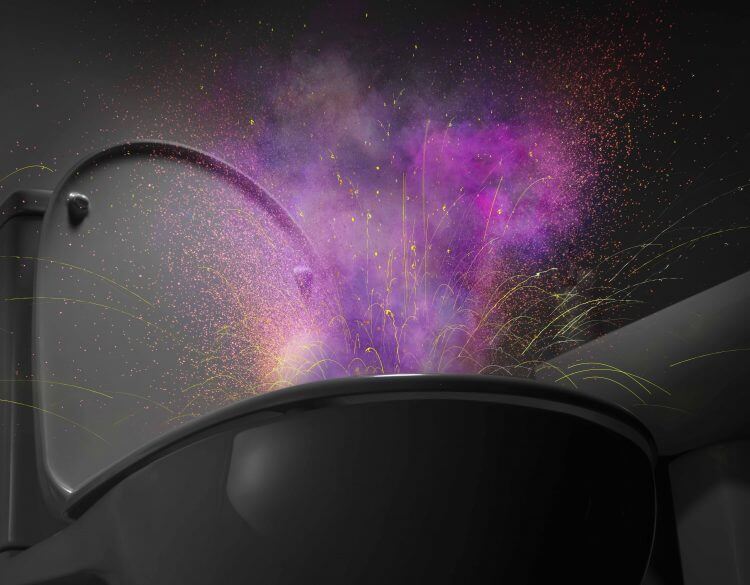
Clouds of contaminated water droplets spray into air, can travel deep into lungs
In a nutshell
- Research shows squat toilets release up to 2.6 times more bacteria into the air compared to bidet-style toilets during flushing, with a second flush increasing bacterial release even further.
- Most of the bacteria-laden droplets are small enough to stay airborne and reach deep into lungs when inhaled, but proper ventilation can reduce airborne bacteria concentrations by up to 2.2 times.
- Simple changes like choosing well-ventilated facilities, avoiding multiple flushes, and waiting briefly after others flush can help reduce exposure to potentially harmful bacteria in public restrooms.
WUHAN, China — Public restrooms harbor an invisible risk that a new study has brought to light. Stomach-churning research shows that each toilet flush releases clouds of bacteria-laden water droplets into the air, with some toilet designs creating more health concerns than others.
A team of researchers at China University of Geosciences systematically studied how different toilet types and ventilation systems affect the spread of airborne bacteria. They focused on two common bacterial species found in restrooms: Staphylococcus aureus, a bacteria commonly found on skin and in airways, and E. coli, which typically lives in intestines.
Which Toilets Are Worse?
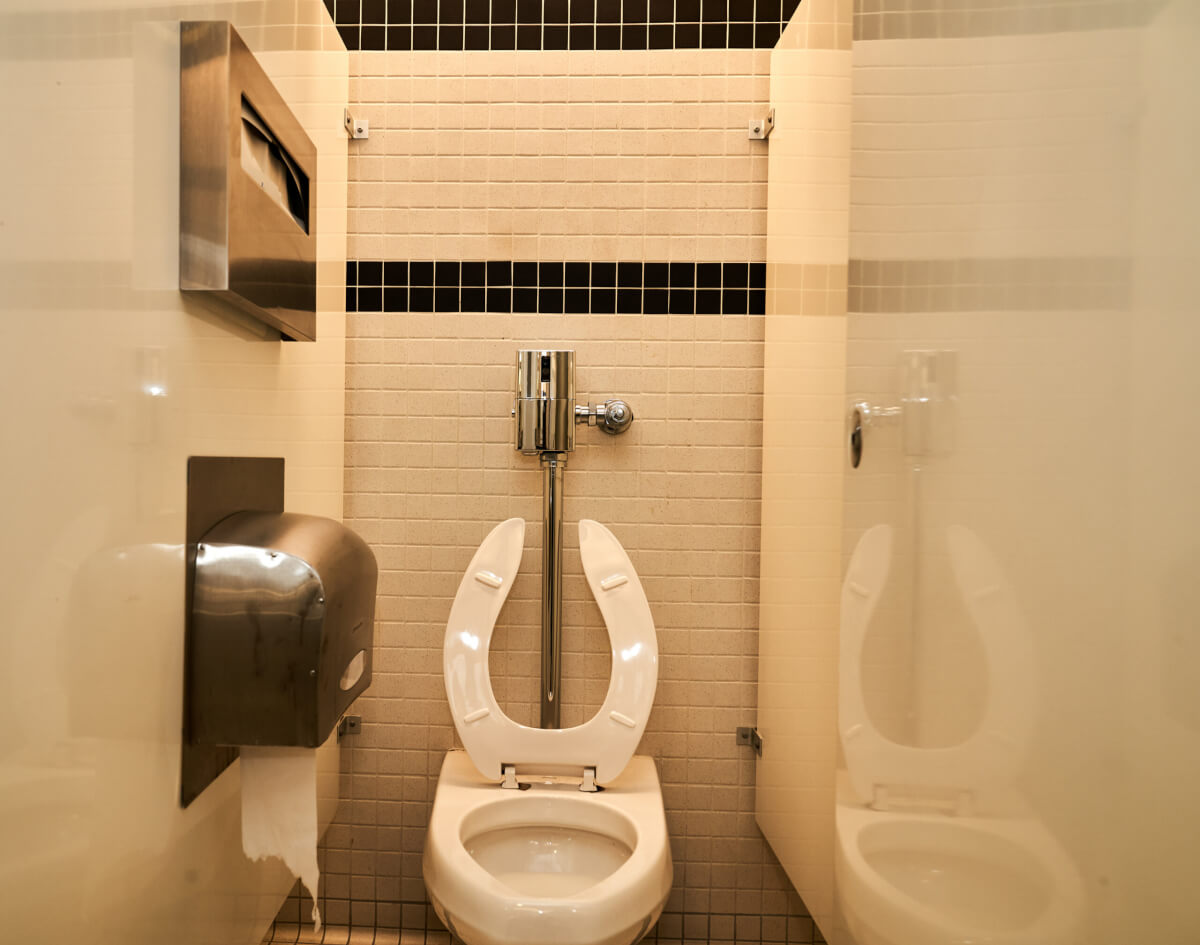
The study, published in Risk Analysis, compared traditional squat toilets to modern bidet-style toilets, examining how much bacteria each released during flushing. Squat toilets proved significantly worse for bacterial spread, releasing up to 2.6 times more S. aureus and 1.4 times more E. coli than bidet toilets. The researchers found this difference stems from basic design features: squat toilets sit lower to the ground and have smaller bowl walls, allowing more water droplets to escape during flushing.
One surprising discovery challenges common bathroom habits. A second flush released even more bacteria than the first — up to 1.8 times more S. aureus and 1.4 times more E. coli. Rather than improving cleanliness, multiple flushes may actually increase exposure to airborne bacteria.
Why the Size of These Particles Matters
The size of these water droplets matters for human health. The researchers found that most of the bacteria-carrying droplets were smaller than 4.7 micrometers, tiny enough to float in the air and be inhaled deep into the lungs. Between 55-70% of S. aureus droplets and 52-62% of E. coli droplets fell into this concerning size range.
Proper ventilation in public restrooms is proving to be a crucial factor in reducing health risks. When exhaust fans were running, the concentration of airborne bacteria dropped by up to 2.2 times compared to unventilated conditions.
To understand the real health implications, the researchers compared their measurements to World Health Organization safety guidelines. Most scenarios exceeded these safety thresholds, suggesting that public restrooms could pose infection risks, particularly for people with weakened immune systems. However, good ventilation brought these risks down significantly.
What This Means for Public Restroom Safety
Since public restrooms see far more traffic than private bathrooms, the study suggests small changes could make a big difference in reducing health risks.
- Upgrading from squat toilets to bidet-style toilets could reduce bacterial emissions.
- Ensuring restroom ventilation systems are running effectively can dramatically lower airborne bacteria.
- Reevaluating the habit of multiple flushes might help minimize unnecessary bioaerosol release.
“Our findings underscore the substantial health risks posed by bioaerosol exposure in public washrooms,” says lead author Wajid Ali, a PhD student in environmental studies at China University of Geosciences, in a statement. “Enhancing ventilation systems by optimizing exhaust fan efficiency and air exchange rates can effectively reduce bioaerosol concentrations and exposure risks for the public.”
What Can You Do to Stay Safe?
If you’re using a public restroom, the study suggests a few simple precautions:
- Choose stalls with good ventilation whenever possible.
- Avoid multiple flushes unless necessary.
- If someone just flushed, waiting a few moments before entering the stall may reduce exposure to airborne bacteria.
This research reveals that even routine actions like flushing can have hidden health implications. As we design and maintain public spaces, understanding these microscopic risks becomes increasingly important for protecting public health.
Paper Summary
Methodology
Researchers examined two identical washrooms containing different toilet types (squat vs bidet), taking air samples during various flushing scenarios. They used a specialized six-stage impactor device to capture and measure airborne bacteria, considering factors like ventilation (fan on/off) and flushing conditions (with/without waste material). Samples were collected at different heights based on typical user positions.
Results
Squat toilets consistently produced higher bacterial concentrations than bidet toilets. Second flushes released more bacteria than first flushes. Ventilation reduced bacterial concentrations by 1.6-2.2 times. The majority of particles were small enough to be deeply inhaled. Most scenarios exceeded WHO safety guidelines, though ventilation significantly reduced risks.
Limitations
The research was conducted in controlled office settings, which may not perfectly reflect all public restroom environments. The study focused on only two bacterial species and didn’t examine viral particles. Long-term exposure effects weren’t assessed.
Discussion & Takeaways
The findings suggest that public restroom design needs serious reconsideration, with emphasis on proper ventilation and modern toilet fixtures. The study challenges common practices like double-flushing and highlights the importance of mechanical ventilation in reducing health risks.
Funding & Disclosures
The research was supported by the Environmental Microbiology and Human Health Programme and the SPF Clean Air Programme. The authors declared no conflicts of interest.
Publication Information
Published in Risk Analysis (2025), DOI: 10.1111/risa.70000 Authors: Wajid Ali, Zhen Hu, Zhe-ren Tang, Si-yi Liu, Zaheer Ahmad Nasir, Frederic Coulon, Peng Liu, Cheng Yan Affiliated institutions: China University of Geosciences, Wuhan Huzhenyu Environmental Technology Co., Ltd, China Three Gorges Corporation, and Cranfield University


