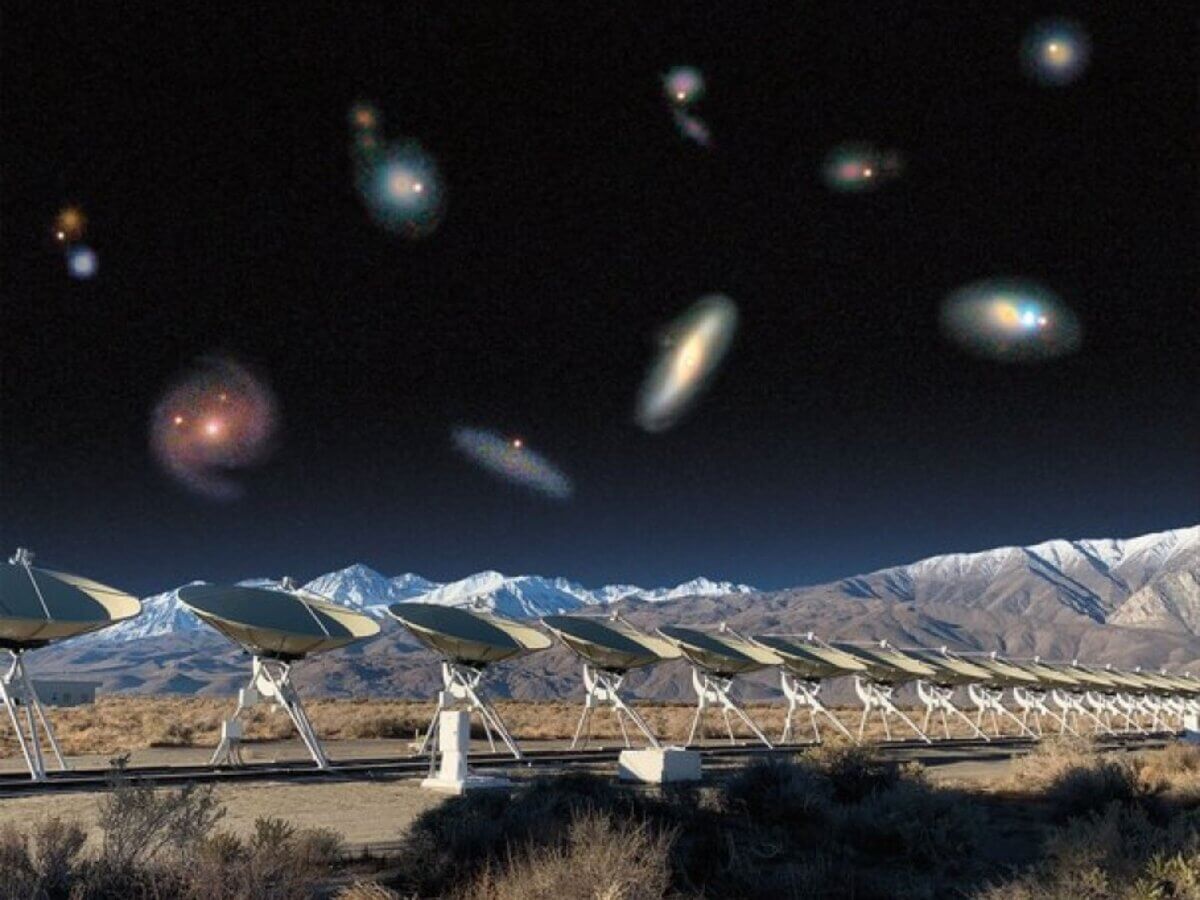
Results from Caltech's Deep Synoptic Array-110 provide new clues about how magnetars form (Credit: CalTech)
PASADENA, Calif. — When the sky suddenly erupts with pulses of powerful radio energy, scientists spring into action. These extreme events, known as fast radio bursts (FRBs), have puzzled astronomers ever since their discovery in 2007. Now, a team from the California Institute of Technology has used a cutting-edge telescope array to pinpoint the cosmic hotspots where these strange signals originate.
The key to unraveling the mystery of FRBs lies in their source: highly magnetized neutron stars called magnetars. These are the collapsed, dead remnants of massive stars that exploded in spectacular supernovas. Magnetars possess magnetic fields hundreds of trillions of times stronger than Earth’s, and it’s these colossal fields that seem to drive the rapid, powerful radio emissions characteristic of FRBs.
“The immense power output of magnetars makes them some of the most fascinating and extreme objects in the universe,” says Kritti Sharma, lead author of the new study published in the journal Nature. “Very little is known about what causes the formation of magnetars upon the death of massive stars. Our work helps to answer this question.”
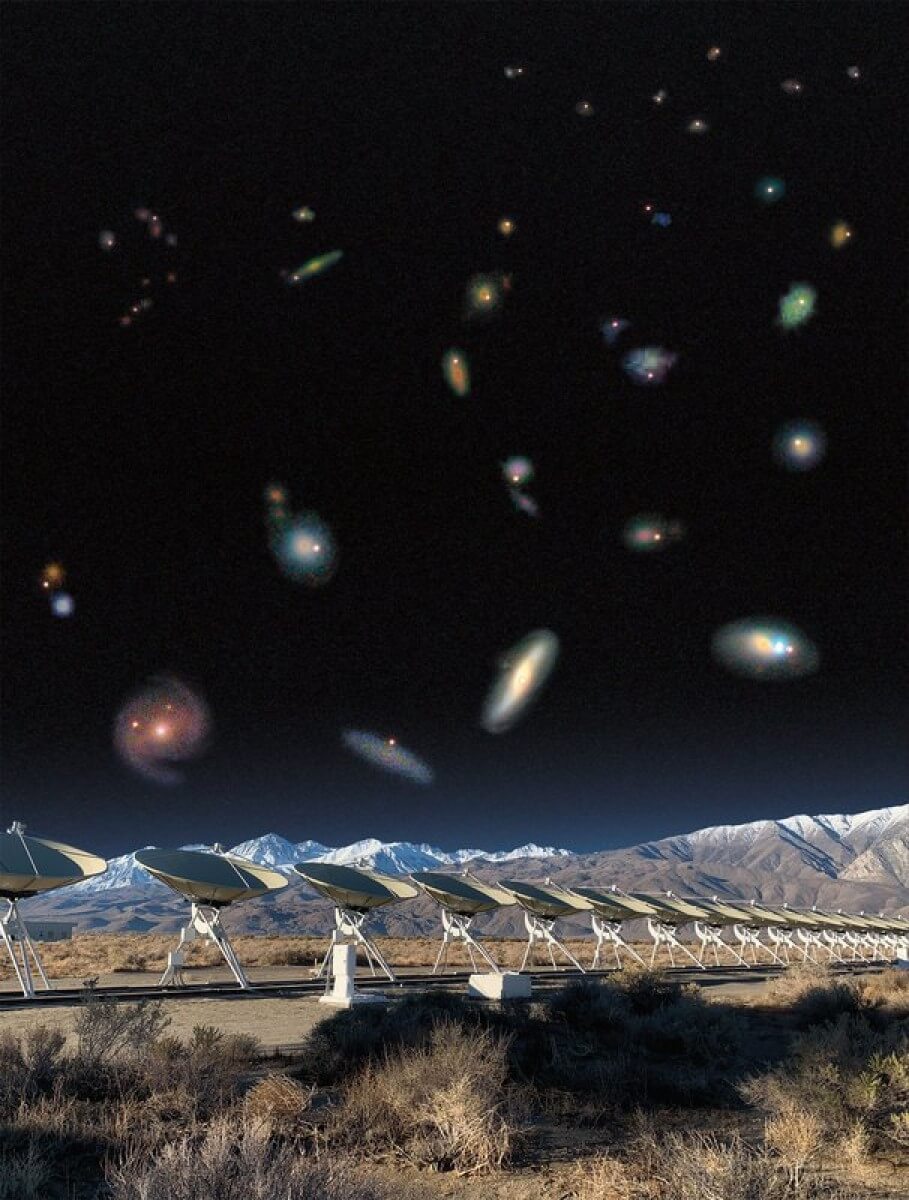
To find the origins of fast radio bursts, Sharma and her team turned to the Deep Synoptic Array-110 (DSA-110), a sprawling radio observatory in California operated by Caltech. This powerful array has now detected and pinpointed the locations of over 70 FRBs – more than double the number that had been localized by all other telescopes combined.
By analyzing 30 of these precisely located bursts, the researchers stumbled upon a surprising trend: FRBs seem to preferentially occur in massive, metal-rich galaxies that are actively forming new stars. This contrasts with earlier assumptions that FRBs would be scattered evenly across all types of star-forming galaxies.
“This alone was interesting because the astronomers had previously thought that FRBs were going off in all types of active galaxies,” the study notes.
The reason for this skew toward massive, metal-rich galaxies likely lies in how magnetars form in the first place. Stars that are heavy in elements heavier than hydrogen and helium – the “metals” of the astronomical world – tend to be larger and more likely to exist in binary systems with companion stars. When these massive binary stars reach the end of their lives and merge, the resulting explosion can forge an especially powerful magnetar.
“A star with more metal content puffs up, drives mass transfer, culminating in a merger, thus forming an even more massive star with a total magnetic field greater than what the individual star would have had,” Sharma explains.
In other words, the more metal-rich a galaxy is, the more massive its stars will be – and the more likely they are to produce magnetars when they meet their explosive ends. This could explain why FRBs, the calling cards of magnetars, are concentrated in these galactic heavyweights.
“The fact that FRBs are more common in these metal-rich galaxies implies that the source of FRBs, magnetars, are also more common to these types of galaxies,” the study states.
This new understanding of magnetar origins represents a major step forward in unraveling the mysteries of radio signals in space. With the planned construction of an even larger and more powerful radio observatory, the DSA-2000, in the Nevada desert, astronomers are poised to detect and locate many more of these cosmic cataclysms in the years to come.
“This result is a milestone for the whole DSA team,” says Vikram Ravi, an assistant professor of astronomy at Caltech and a co-author of the study. “And the fact that the DSA-110 is so good at localizing FRBs bodes well for the success of DSA-2000.”
So, while the origins of FRBs may still hold some secrets, one thing is clear: when it comes to unraveling the universe’s greatest mysteries, astronomers are tuning in to the cosmic radio waves, and the messages they’re receiving are louder and clearer than ever before.
Paper Summary
Methodology
The study observed fast radio bursts (FRBs) using the Deep Synoptic Array (DSA-110), an advanced radio telescope setup. The array can detect and accurately pinpoint the origins of FRBs, focusing on massive, star-forming galaxies. Researchers observed 60 FRBs over two years and selected 30 with identifiable host galaxies. Data on these galaxies, including redshift (distance measure) and star formation activity, was collected through various telescope observations and analyzed to understand the conditions favoring FRB occurrences.
Key Results
The research found that FRBs occur more frequently in large, star-forming galaxies. Compared to general star-forming galaxies in the universe, FRBs seemed to prefer high-mass, metal-rich environments. This trend suggests that the presence of certain metals might influence the formation of FRB sources, likely magnetars—neutron stars with strong magnetic fields. The study highlights a significant scarcity of FRBs in low-mass galaxies, especially in nearby regions.
Study Limitations
A limitation of the study is the selection bias due to the DSA-110’s detection range, which could impact findings on FRB distribution in different types of galaxies. The research also relies on redshift measurements, which may have slight inaccuracies depending on the precision of the data collected from distant galaxies.
Discussion & Takeaways
The study suggests that specific environmental factors, like high metallicity and massive stellar environments, might increase the likelihood of FRB occurrences. This aligns with the hypothesis that magnetars in massive galaxies are primary FRB sources. These findings could pave the way for future studies to explore the exact processes behind FRB creation, especially in different galactic environments.
Funding & Disclosures
The research received support from institutions such as the California Institute of Technology and observatories like the Owens Valley Radio Observatory. No competing financial interests were declared by the researchers, ensuring the study’s focus remained on advancing scientific understanding without external influence.


