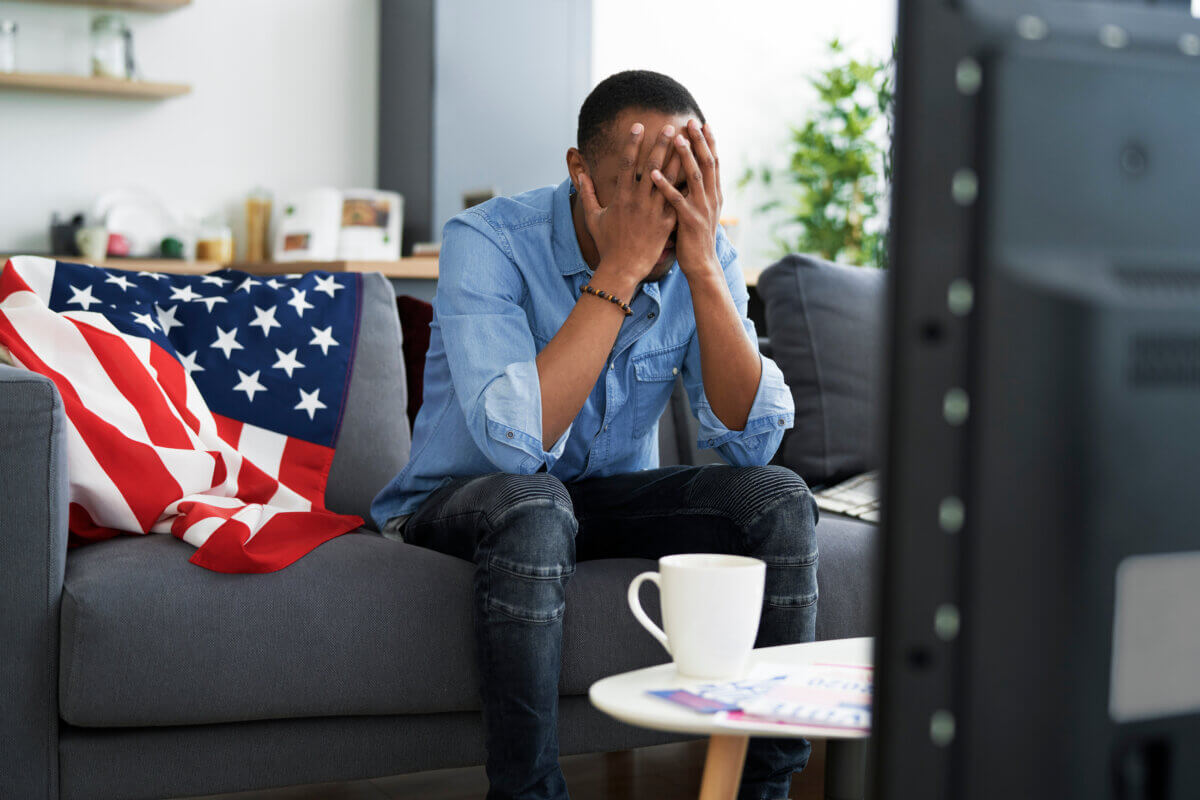
Watching election results can be stressful on your brain. (Credit: gpointstudio/Shutterstock)
There is a kind of collective national anxiety as any presidential election approaches. That has never been truer than with the 2024 race. It’s contentious at the best of times and the campaigning feels like it’s been going on forever. It’s also possible that we won’t know who our next president will be when the polls close on Election Day. Worst case, it could take days, even weeks to announce a winner.
The election outcome is out of everyone’s control once they place their votes, and that escalates anxiety. With such a close race, half the country will be disappointed by the outcome. However, you’ll be glad to know there are ways to manage the stress and anxiety associated with the U.S. political process, starting with deciding that you are going to manage stress well. Just making that decision changes your perception of stress and your ability to manage it. Here are tools for coping with your share of the collective election anxiety.
Don’t focus on the outcome
Avoid catastrophizing about what will happen if your candidate doesn’t win. Instead, invest your energy in something that takes your mind off the events and unknowable possibilities, such as engaging in your favorite hobby or reading a good book.
Think about actions you can take to continue championing the causes important to you, even if your candidate loses.
Remember that emotions wax and wane
Humans are bad at affective forecasting – judging how intense negative emotions will become and how long the negativity will feel overwhelming. We tend to imagine that the effect is going to be bigger on our personal lives than it is.
Track your happiness, a global research project founded by Matt Killingsworth, a senior fellow at the Wharton School at the University of Pennsylvania, involved 200,000 people using their smartphones to assess their mental habits and contentment with daily life. Killingsworth found that what makes you happy will still be in play even when you’re stressed about something else.
To quote Nobel Prize-winning psychologist Daniel Kahneman, “Nothing in life is as important as you think it is when you’re thinking about it.”
Keep your mind in the moment
Research shows that most people’s minds are wandering about 50% of the time. Channel your energy into what you’re doing at the moment. Killingworth suggests a simple exercise. When your attention is wandering, feel your feet on the floor and notice what’s right in front of you. The external world tends to be better than what we’re ruminating on in our minds.
Interact with people in real life
Social media can become a toxic reservoir of ill-formed opinions, misinformation, and disinformation. Instead, say hello to someone in line when you’re getting coffee or food. Misery loves company, and, in this case, social interaction reduces misery.
One in four people say they have ended a friendship over politics. When you are engaged in controversial topics, give up trying to change the other person’s mind. Focus on curiosity rather than criticism. Avoid inflammatory language and stereotyping.
Find balance
Stick with habits that nurture your mental health. Maintain sensible sleep and exercise schedules. Limit your exposure to news. Practice relaxing your face and mind.
In conclusion: remember that emotions are malleable, especially when you practice being in the present.


Remember most of us will be alive tomorrow (people pass all the time) and your life will be no different than before the election if you candidate loses. People enjoy your life, stop getting wrapped up in your politician. While your losing sleep and letting them live rent free in your mind, you are not get anything in return. Enjoy and care for things that matter. Your health, family, your local community and local elections matter way more than national elections
It’s so easy for the WEALTHY, so far removed from reality they have not the slightest clue how the poor, old, disabled, etc. are suffering.
“Nothing in life is as important as you think it is when you’re thinking about it.”
Really?
When was the last time you lived on $298 social security?
How many years were you homeless?
I do hope we’ll get government funded euthanasia SOON. People shouldn’t have to commit suicide when they can no longer afford to live.
I can think of five ways: Vodka, Scotch, Whiskey, Gin and Rum. If Kamala “wins” all five will be in short supply.
how about don’t watch.