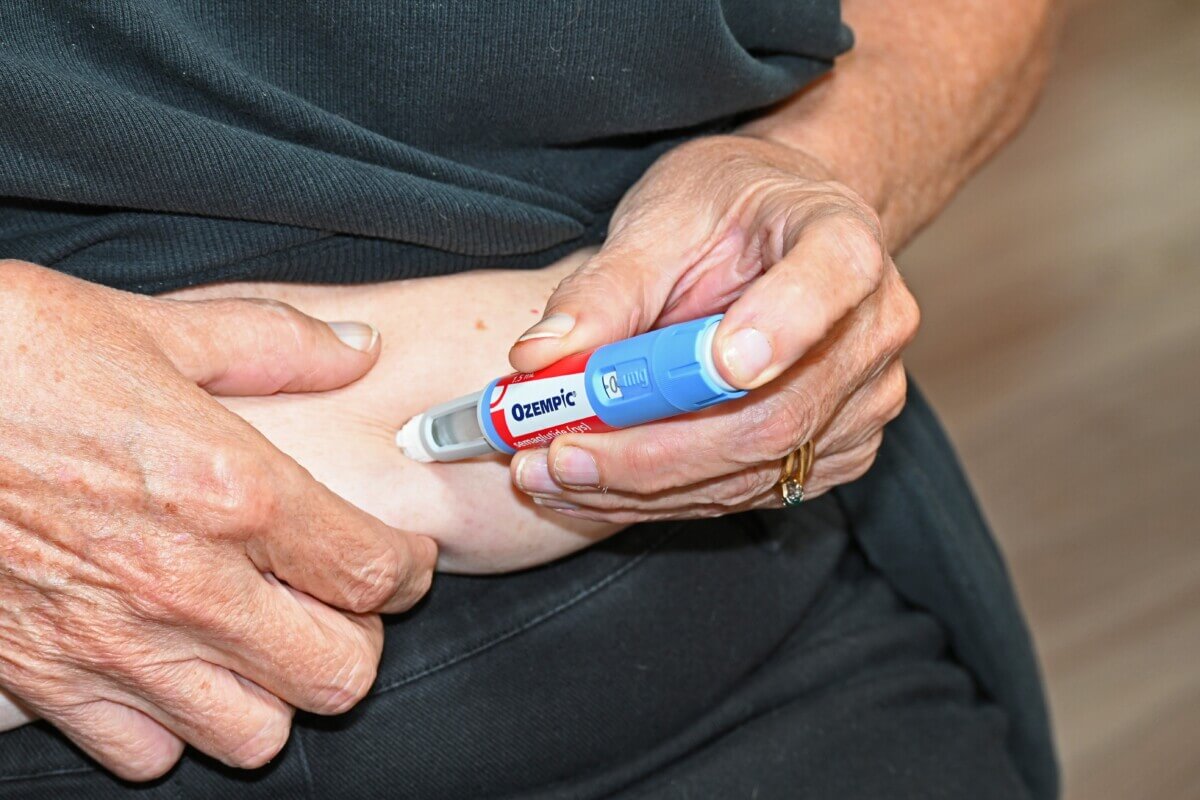
Patient injecting themself in the stomach with an Ozempic (semaglutide) needle. (Photo by Douglas Cliff on Shutterstock)
Are you looking for prescription drugs like Ozempic, Wegovy, and Mounjaro online? You’re not alone. However, shopping for medications on the Internet can be extremely risky.
Dozens of unethical peddlers are hawking glucagon-like peptide-1 agonists (GLP-1s) on the Internet. They are evading scrutiny by the U.S. Food and Drug Administration (FDA) and operating outside of legitimate prescription supply chains, according to a new research-based editorial in the Annals of Pharmacology.
GLP-1s are a class of drugs developed to manage blood sugar levels in people with Type 2 diabetes. These drugs work by stimulating insulin secretion to lower blood sugar, inhibiting the liver’s production of glucose, and slowing stomach emptying to prolong a sense of satiety (fullness).
Unexpectedly, the drugs had a much-desired side-effect – weight loss with little effort. With ongoing research and development, weight loss has become a primary benefit of these medications rather than a side-effect.
A team at the University of Connecticut School of Pharmacy identified more than 40 websites marketing lyophilized (freeze-dried) semaglutide and tirzepatide powder to customers without prescriptions. These sites list the drugs as “for research purposes only” and “not for human consumption.” By doing so, they dodge federal and state consumer protection laws. Only a few of the sites require buyers to identify themselves as researchers.
Alarmingly, these websites lack instructions for use, including reconstituting the powder, drawing up an accurate, appropriate dose, and safe injection.
C. Michael White, a professor at the UConn School of Pharmacy, discovered the illicit GLP-1 sites when he was searching online for media reports about GLP-1 drug-compounding pharmacies. He stumbled across a non-compounding site displaying a bottle of semaglutide marked “not for human consumption.” White recruited pharmacy students to help determine the extent of the unscrupulous activity.
GLP-1s exploded in popularity among overweight individuals, such that shortages of the drugs occurred in 2022. The shortage drew eager buyers to the sites illegitimately marketing the drugs.
At the time, the legitimate drugs skyrocketed to between $800 and $1000 for a four-week supply, while the illegitimate drugs cost $180 for semaglutide and $203 for tirzepatide for a four-week supply.
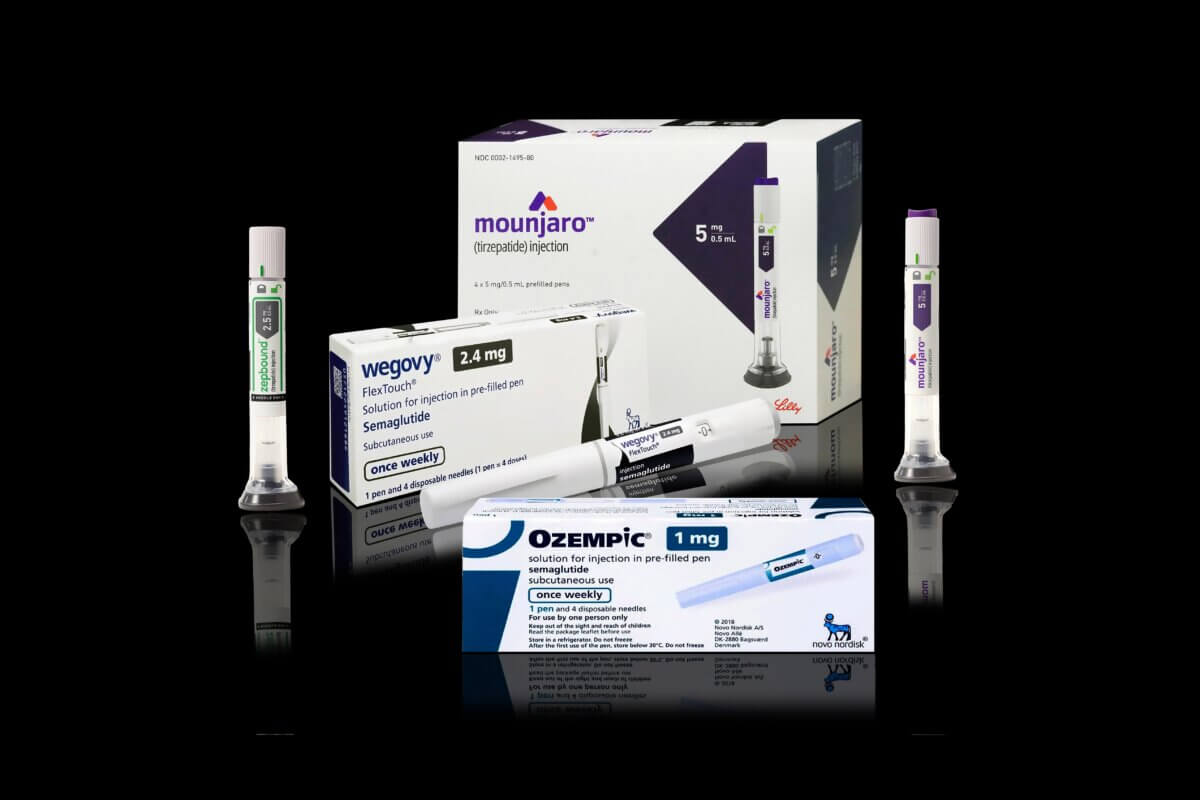
In August 2024, the shortage ended when Eli Lilly introduced tirzepatide as Zepbound. Patients with electronic prescriptions could purchase the drug in 2.5 mg. and 5.0 mg. vials directly from Lilly at about half the price of other GLP-1 brand-name drugs.
White notes that Lilly’s dramatically boosted its sales of tirzepatide by eliminating the step of putting the drug into pens. That’s unwelcome news for community pharmacies, which benefitted economically from filling the growing number of GLP-1 prescriptions.
Asked to comment, Lilly noted that “distributing Zepbound single-dose vials through LillyDirect’s self-pay channel allows us to offer transparent pricing, cut out extra costs, and pass savings directly to patients.”
Lilly added that they can also ensure patients receive genuine Lilly products, helping consumers avoid the risks posed by counterfeit and unsafe or untested knockoffs of Lilly’s FDA-approved medicines.
Michael J. Gaunt, PharmD, a senior manager of error reporting programs at the Institute for Safe Medication Practices, said in a statement that the UConn study provided “one more example of risks patients face as they may not fully understand the potential harm when they get drug products of dubious quality without prescriptions” from online sites that lack regulatory oversight.
He added that this is the kind of information that needs to be shared by pharmacy and medical professionals to stimulate “conversations with patients” about the potential risks.


