
(© natali_mis - stock.adobe.com)
HOUSTON, Texas — For patients dealing with heart problems, pacemakers are a common option to treat irregular heartbeats and monitor health. These devices have drawbacks however, as they’re either too rigid to help beating hearts or too fragile to gather information. Now, a mechanical engineer in Texas is leading a team developing a game-changing patch to protect the human heart. The rubber implant not only does the job of a pacemaker, but draws its power straight from the user’s heart.
Cunjiang Yu of the University of Houston and other researchers created a fully rubber electronic device that can be implanted directly on the heart. This allows it to collect data on electrophysiological activity, temperature, heartbeat, and other warning signs of cardiac issues.
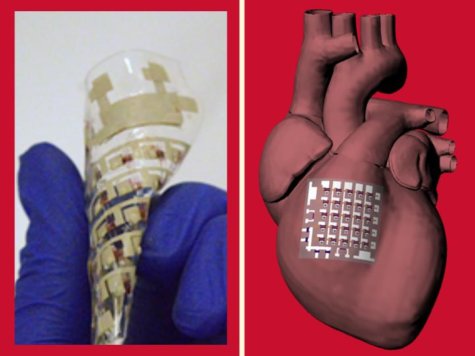
The study notes this is the first time scientists have developed an all-rubber electronic material compatible with heart tissue. Normal heart implants are usually built out of rigid materials.
“For people who have heart arrhythmia or a heart attack, you need to quickly identify the problem. This device can do that,” Yu says in a university release.
A heart patch powered by the heart
Along with monitoring readings from multiple regions of a patient’s heart, known as spatiotemporal mapping, the device has a unique way of powering itself. Unlike implants that need an external power source, the rubber patch harvests energy from the patient’s beating heart. Researchers say this makes the patch capable of tracking heart data and provides electrical pacing and thermal ablation to patients.
This isn’t the only rubberized biotechnology Yu is helping to develop. The Houston engineer is also leading the effort to create robotic hands, skins, and other devices using rubbery electronics that can sense and perform biological functions.
“Unlike bioelectronics primarily based on rigid materials with mechanical structures that are stretchable on the macroscopic level, constructing bioelectronics out of materials with moduli matching those of the biological tissues suggests a promising route towards next-generational bioelectronics and biosensors that do not have a hard-soft interface for the heart and other organs,” the researchers add.
“Our rubbery epicardial patch is capable of multiplexed ECG mapping, strain and temperature sensing, electrical pacing, thermal ablation and energy harvesting functions.”
The study appears in the journal Nature Electronics.


