

(© fizkes - stock.adobe.com)
Have you ever felt your cheeks grow warm and flush with color when you’re the center of attention? This common experience, known as blushing, has long fascinated scientists and philosophers alike. Now a study out of the University of Amsterdam sheds new light on what’s happening in our brains when we blush, challenging long-held beliefs about this uniquely human trait.
Researchers from the University of Amsterdam and other institutions in the Netherlands and Italy set out to uncover the neural mechanisms behind blushing. Their findings suggest that, contrary to popular theories, blushing may not require complex social cognition or self-reflection. Instead, it appears to be a more basic, automatic response to self-related stimuli.
“Blushing is a really interesting phenomenon because we still don’t know which cognitive skills are needed for it to occur,” says study co-author and developmental psychologist Milica Nikolic, in a statement.

The study, published in the Proceedings of the Royal Society B, focused on adolescent girls, who are particularly prone to self-consciousness and social anxiety. Participants were asked to perform an embarrassing task – singing karaoke – which was recorded on video. Later, while undergoing brain scans, they watched videos of themselves singing, as well as videos of others performing the same songs. The pressure was even greater after they were told that an audience would be watching the recordings with them.
As expected, the participants blushed more intensely when watching themselves sing compared to watching others. But the brain activity associated with this blushing was surprising. Rather than engaging areas involved in complex social thinking, blushing was linked to increased activity in regions associated with emotional arousal and attention.
Specifically, individuals who blushed more showed greater activation in an area of the cerebellum known as lobule V. While traditionally associated with motor control, the cerebellum is increasingly recognized for its role in processing emotions. This suggests that blushing may be more about emotional engagement than conscious self-reflection.
“Based on this we concluded that thinking about others’ thoughts may not be necessary for blushing to occur,” says Nikolic. “Blushing may be a part of the automatic arousal you feel when you are exposed and there is something that is relevant to the self.”
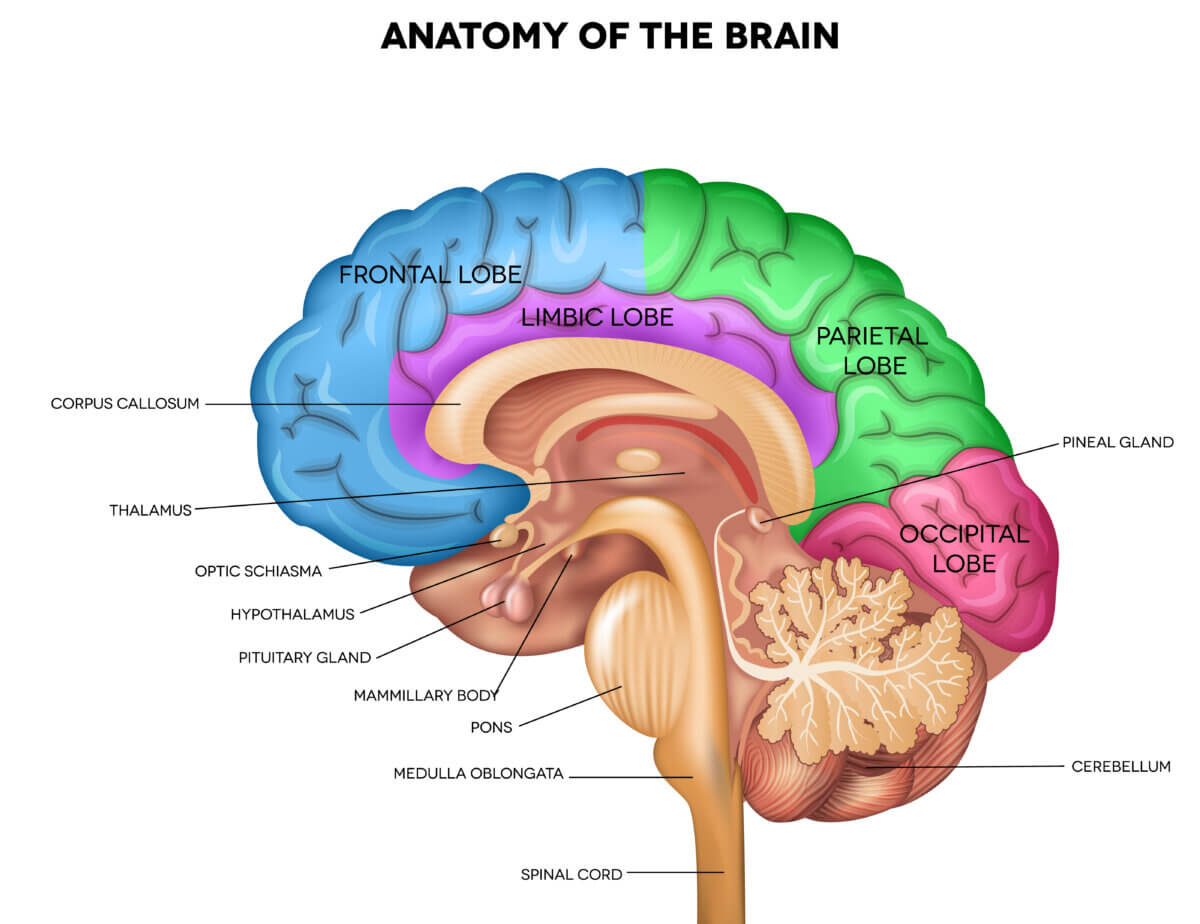
Another intriguing finding was that heavier blushers exhibited more synchronized brain activity in early visual processing areas when watching themselves sing. This implies that blushing might be connected to heightened attention and sensitivity to self-relevant visual information.
These results challenge the idea that blushing requires “thinking about what others think of us,” as Charles Darwin famously proposed. Instead, they align with newer theories suggesting that blushing is a rapid, spontaneous emotional response to social exposure – a “sudden surge of alertness” when we feel observed.
This new understanding of blushing has potentially far-reaching implications. It opens up possibilities for studying self-awareness in infants and even non-human animals, who may experience similar physiological responses without the need for complex self-reflection.
“The next step would be to look at blushing under different conditions, or perhaps, even explore the phenomenon in younger children, before they have developed the cognitive skills to think about other people’s thoughts,” says Nikolic.
The study also offers insights into social anxiety, a condition often associated with excessive blushing. By showing that blushing is more tied to basic emotional and attentional processes than to overthinking social situations, this research could inform new approaches to treating social anxiety disorders.
“Blushing in itself is very interesting because it’s universal. There are even people who develop a phobia of blushing, for example, people with a social anxiety disorder,” concludes Nikolic. “When we understand the mechanisms of blushing, we can target the fear of blushing better as well. Aside from that, it’s interesting to know more about blushing in a general sense as well, since it happens very often and is a common part of our everyday lives.”
Studies like this remind us that even our most seemingly complex social behaviors may have simpler origins than we imagine. The next time you feel a blush creeping across your cheeks, remember: it might just be your brain’s way of saying, “Hey, pay attention – this is about you!”
Paper Summary
Methodology
The researchers recruited 40 female adolescents aged 16-20 years. Participants first recorded themselves singing karaoke songs. Later, in an MRI scanner, they watched videos of themselves singing, along with videos of other participants and a professional singer performing the same songs. Throughout the experiment, the researchers measured participants’ cheek temperature (as an indicator of blushing) and brain activity. After the scanning session, participants rated how embarrassed they felt while watching the videos.
Results
The study found that participants blushed more intensely when watching videos of themselves compared to videos of others singing. Those who blushed more showed increased brain activity in the cerebellum (specifically lobule V) and the left paracentral lobe. Heavier blushers also exhibited more synchronized brain activity in early visual processing areas when watching themselves. Interestingly, the degree of blushing was not associated with self-reported feelings of embarrassment or social anxiety symptoms.
Limitations
The study has several limitations to consider. First, it used cheek temperature as a proxy for blushing, while blood flow measures might provide additional insights. Second, the findings may not generalize to other blushing-inducing situations beyond watching oneself sing. Third, the study focused on adolescent females, so results might differ in males or other age groups. Finally, as with all fMRI studies, the relationship between observed brain activity and actual neural processes is complex and should be interpreted cautiously.
Discussion and Takeaways
This study challenges prevailing theories about blushing by suggesting it may not require higher-order social cognition. Instead, blushing appears to be associated with basic emotional arousal and attentional processes. This new perspective aligns with emerging theories of embodied self-awareness and opens up avenues for studying self-awareness in infants and non-human animals. The findings could also inform new approaches to understanding and treating social anxiety disorders. However, the researchers emphasize the need for further studies to confirm and expand upon these results.
Funding and Disclosures
The study was supported by grants from the Dutch Research Council, including a VENI grant to the lead author, a VICI grant to one co-author, and a VIDI grant to another. Additional funding came from an Amsterdam Brain and Cognition Talent grant and a fellowship from the Institute of Advanced Studies in Berlin. The authors declared no competing interests.


