
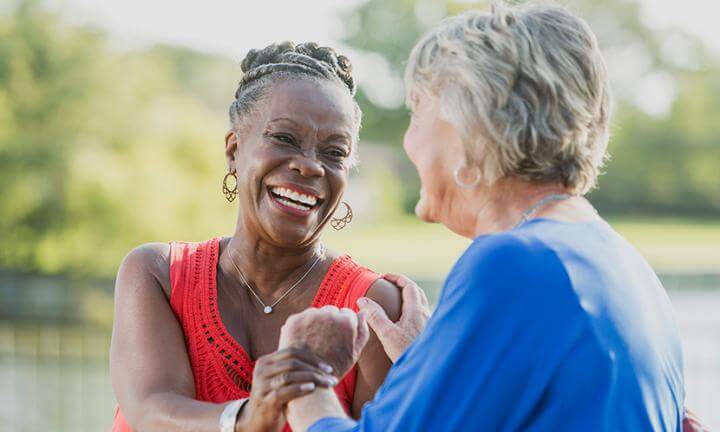
The data from the study expands on the growing research linking the relationship between weight change and mortality (credit: University of Texas at Austin)
AUSTIN — Want to live longer? Try being a social butterfly. A new study points out that the perks of rubbing elbows with a wide variety of people, especially in our later years, could be a key to a happier, healthier life.
Scientists with the University of Texas say that seniors who maintain active social lives gain many side benefits. Their research shows that expanding one’s number and variety of social interactions also increases physical activity levels and emotional well-being — which, consequently, can very well add years to a person’s lifespan.
“Adults often grow less physically active and more sedentary as they age, and these behaviors pose a risk factor for disease and death,” says lead study author Karen Fingerman, a professor of human development and family sciences at the university and the director of the university’s new Texas Aging & Longevity Center, in a statement.
“It is difficult to convince people to go to the gym or commit to work out on a regular basis,” she adds. “But they may be willing to reach out to acquaintances, attend an organized group event, or talk to the barista who serves them at their favorite coffee shop.”
Fingerman says these natural social encounters come with physical activity and complex behaviors that offer health benefits in unconventional ways.
The research group recruited more than 300 adults over the age of 65 living in the Austin, Texas metro area. Participants were asked to track their activities and social encounters every three hours for roughly a week. They also wore electronic devices that monitored their physical activity.
The research team was able to connect periods of increased social activities — e.g., leaving the house, talking with others and shopping — with increases in physical activity levels.
While previous studies have demonstrated the benefits of more intimate social ties, such as family and close friends, researchers say this study finds that adding casual social interactions to the mix may be even more important to physical health.
“Older adults may be able to be more sedentary with their close friends and family — sitting and watching TV or otherwise lounging at home,” says Fingerman. “But to engage with acquaintances, older adults must leave the house, or at least get up out of their chair to answer the door.”
As the old song says, “People who need people are the luckiest people in the world.” And may even outlive less sociable folks.
Findings are published in the Feb. 20, 2019 issue of the Journals of Gerontology Series B: Psychological Sciences and Social Sciences.


