
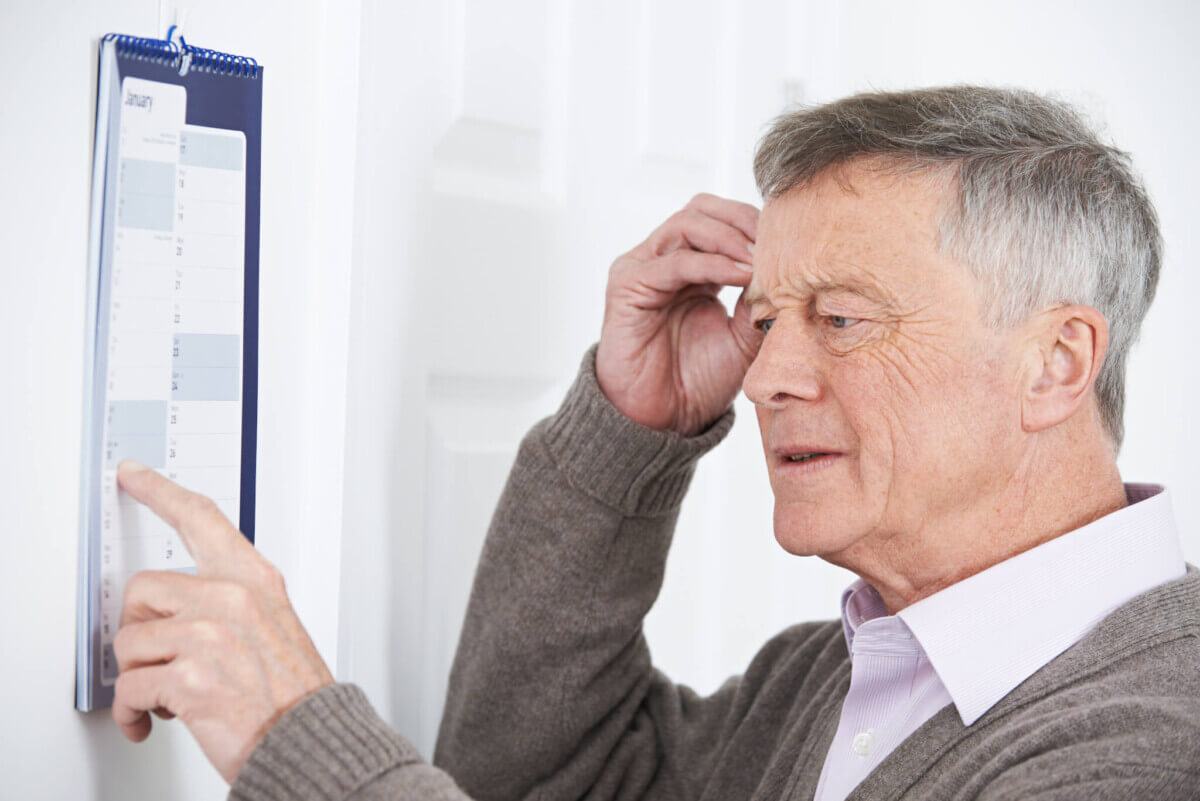
(© Prostock-studio - stock.adobe.com)
ARLINGTON, Texas — Forget brain games and memory supplements — the key to maintaining cognitive function as we age might be as simple as setting a reminder. That’s the provocative finding from a new study that challenges conventional wisdom about aging and memory, suggesting that external memory aids could eliminate certain age-related memory differences entirely.
A team of researchers from the University of Texas at Arlington and Arizona State University has found that digital reminders can effectively eliminate age-related declines in “prospective memory” – our ability to remember to do things in the future. This type of memory is essential for everyday tasks like remembering to take medications, attend appointments, or pay bills on time.
“Prospective memory is essential for daily living and maintaining independence, especially as people age,” says study lead author Hunter Ball, associate professor of psychology at UTA, in a statement. “Failing to remember these forward-looking tasks can lead to serious consequences, and previous research has shown that prospective memory tends to decline with age.”
The study, published in Psychology and Aging, reveals that while older adults typically struggle more than younger adults with certain types of memory tasks, having access to reminders can level the playing field. This finding could have significant implications for how we support healthy aging and independence among older adults.
The Memory Challenge
Imagine you’re at the grocery store, and you need to remember to pick up your prescription from the pharmacy afterward. This kind of “remember to remember” task uses prospective memory – a crucial cognitive skill that helps us navigate daily life. For older adults, these types of tasks can become increasingly challenging, potentially leading to missed medications, forgotten appointments, or other daily disruptions that can impact their ability to live independently.
The research team, led by B. Hunter Ball, wanted to understand how different types of reminders might help older adults manage these memory demands. They conducted two separate experiments that tested both younger and older adults’ ability to remember specific and general future tasks, with and without the help of reminders.
The Experiments
In the first experiment, 96 participants (57 younger adults and 39 older adults with an average age of 65) were asked to remember specific words while performing another task. For instance, they might need to remember to press a special key whenever they saw the word “table” appear during a word-judgment task. Sometimes they had to remember just one word, while other times they needed to remember four different words.
The second experiment involved 81 participants (44 younger adults and 37 older adults with an average age of 67) and used a slightly different approach. Instead of remembering specific words, participants had to remember categories – like “fruit” or “animal” – and respond whenever they saw any word that fit into those categories (like “apple” or “dog”).
What made these experiments unique was how they incorporated reminders. Sometimes participants could see the words or categories they needed to remember at the top of their computer screen, while other times they had to rely solely on their memory. The researchers also tracked participants’ eye movements to see how often they looked at the reminders.
Surprising Results
The findings challenged some common assumptions about aging and memory. In the first experiment, when participants had to remember specific words, older adults performed just as well as younger adults, even without reminders. This was true whether they had to remember one word or four words.
However, the second experiment revealed some interesting differences. When participants had to remember categories instead of specific words, older adults struggled more than younger adults, especially when they had to remember multiple categories at once. But here’s the key finding: when reminders were available, these age-related differences disappeared completely.
What’s particularly fascinating is how the older adults used the reminders. When the task was more demanding (remembering multiple categories), older adults checked the reminders more frequently than younger adults did. This suggests that older adults can effectively compensate for memory difficulties by strategically using external aids.
Implications for Daily Life
Many older adults already use various memory aids – from simple to-do lists to sophisticated digital assistants like Amazon Alexa. This research suggests that such strategies are not just helpful but can actually eliminate age-related memory differences in certain situations.
For example, instead of trying to remember all their medications through the day, an older adult might benefit from setting specific reminders on their phone or using a pill organizer with alarms. Similarly, digital calendar reminders for appointments or automated bill payments could help manage complex scheduling demands.
The research also highlights an important point about aging and adaptation: while some cognitive abilities may decline with age, older adults can effectively compensate by using external tools and strategies. This suggests that supporting healthy aging isn’t just about preventing decline – it’s also about providing effective tools and strategies to work around potential limitations.
“This new study demonstrates that cognitive offloading, specifically using reminders like cell phone calendars, can effectively mitigate these declines,” concludes Ball. “While our study was conducted in a controlled setting, these findings can easily be applied in real-world environments as a way to provide easy and effective way to alleviate the burden of prospective memory challenges in older adults.”
Looking ahead, this research suggests that the future of cognitive health might be less about preventing memory decline and more about developing innovative ways to work around it. By understanding how older adults can effectively use external memory aids, we’re opening new possibilities for maintaining independence and quality of life in our aging population.
Paper Summary
Methodology
The researchers used a computer-based task where participants had to judge whether words had one or two syllables. While doing this main task, they also had to remember to press a special key (the spacebar) when they saw certain target words or words from specific categories.
The researchers tracked how well participants remembered to press the spacebar, how accurately they performed the main task, and where they looked on the screen using eye-tracking technology. Each participant completed four different versions of the task: with and without reminders, and with either one or four things to remember.
Key Results
The key findings showed that reminders helped both younger and older adults remember better, especially when they had to remember multiple items. When remembering specific words, there were no age differences in performance. However, when remembering categories, older adults performed worse than younger adults when they had to remember multiple categories without reminders.
Importantly, having access to reminders eliminated this age-related difference. The eye-tracking data showed that older adults looked at the reminders more often when the task was more demanding, suggesting they were actively using this strategy to help their performance.
Study Limitations
The participants were primarily “young-old” adults (average age around 66) rather than “old-old” adults (over 75), so the findings might not apply to all older adults. The laboratory tasks, while carefully controlled, don’t perfectly mirror real-world situations where people need to remember things over longer periods or with more distractions.
Additionally, the reminders were provided automatically rather than having participants set them themselves, which might be different from how people use reminders in daily life.
Discussion & Takeaways
The study suggests that older adults can perform just as well as younger adults on memory tasks when given appropriate support through reminders. This is particularly important for tasks that require remembering categories or general rules rather than specific items.
The research also shows that older adults can strategically use reminders when they need them most, suggesting they have good awareness of when they need memory support. These findings could inform the development of better memory support systems for aging populations and suggest that teaching older adults to use reminder systems effectively could help maintain their independence.
Funding & Disclosures
The research was supported by the National Institute of General Medical Sciences and the National Institutes of Health. The study was conducted following appropriate ethical guidelines and was approved by the Institutional Review Board at the University of Texas at Arlington. The researchers declared no conflicts of interest, and all data and materials from the study are available through the Open Science Framework for other researchers to access and verify.


