
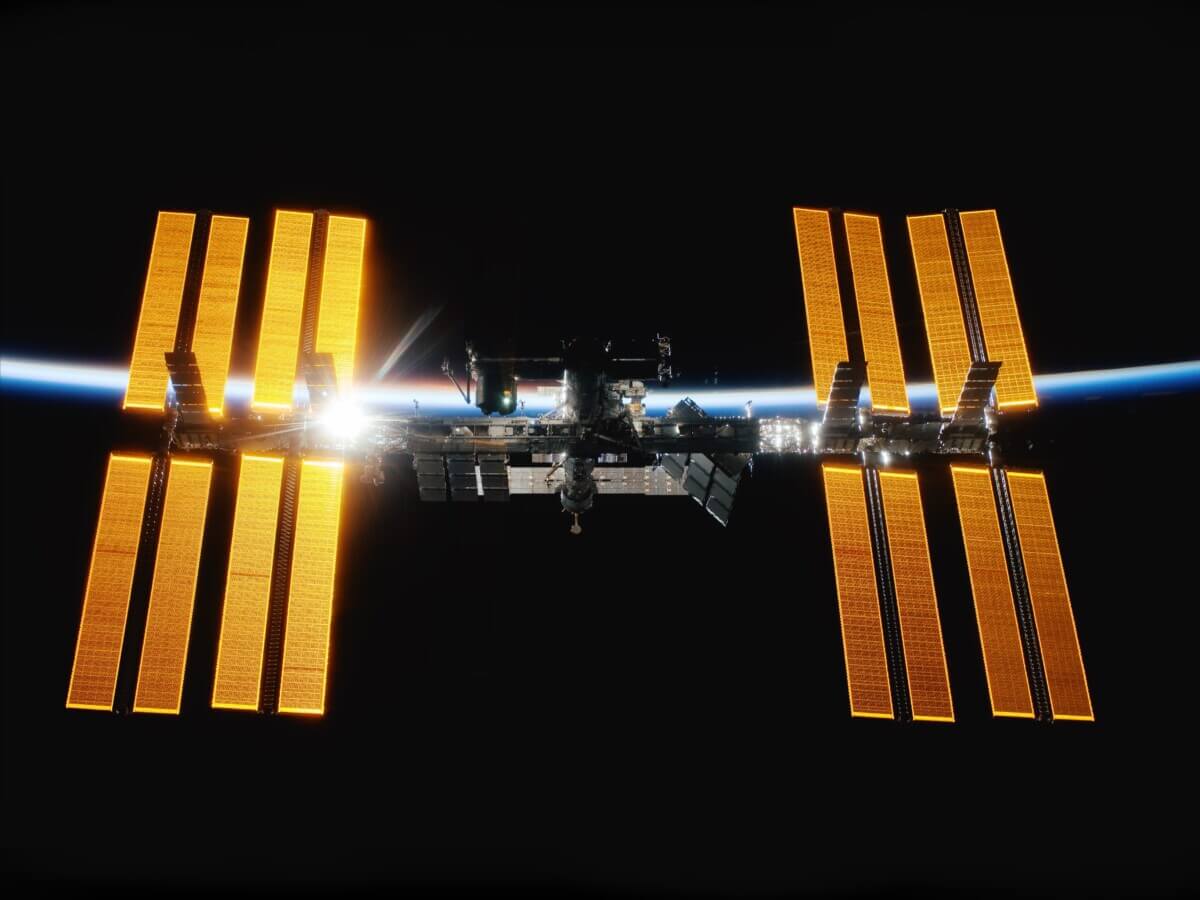
International Space Station (credit: NASA/Unsplash)
ORANGE, Calif. — Archaeology has officially entered the Space Age. In a groundbreaking study, researchers have conducted the first archaeological investigation of the International Space Station, shedding new light on how humans live and work without gravity.
The project, dubbed the Sampling Quadrangle Assemblages Research Experiment (SQuARE), aimed to understand how astronauts use and adapt spaces on the ISS, often in ways that differ from the station’s designers’ original intentions. This innovative approach to studying life in space could have far-reaching implications for the design of future space habitats and long-duration space missions.
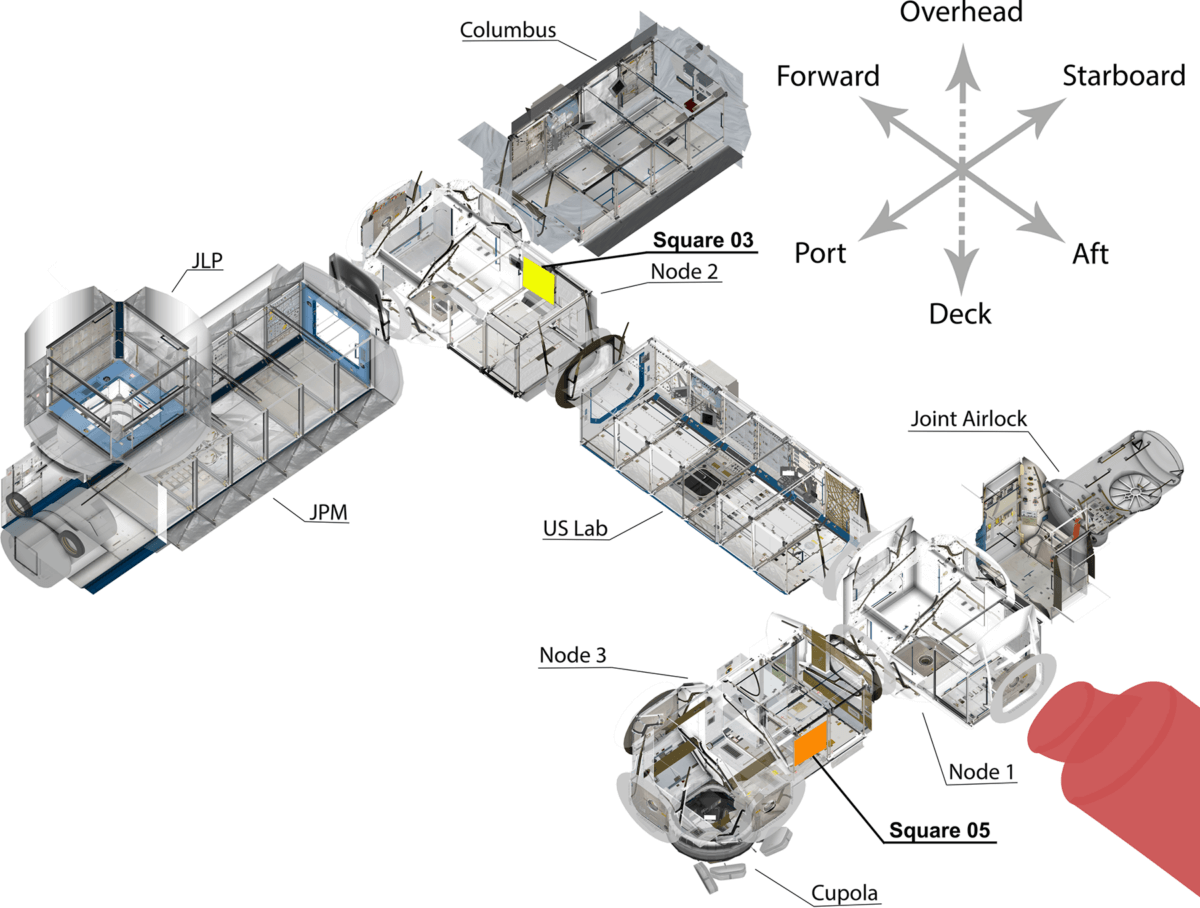
Led by Justin Walsh from Chapman University, the research team analyzed two specific areas on the ISS over a 60-day period in early 2022. By examining the placement and movement of objects in these areas, the archaeologists were able to piece together a picture of how astronauts actually use these spaces in their daily lives.
One of the most striking findings, published in PLoS ONE, was that areas designed for specific purposes often end up being used quite differently in practice. For example, a workstation intended for equipment maintenance became primarily a storage area, with tools and supplies often left untouched for long periods. This highlights the importance of flexible, multi-purpose spaces in future space habitat designs.
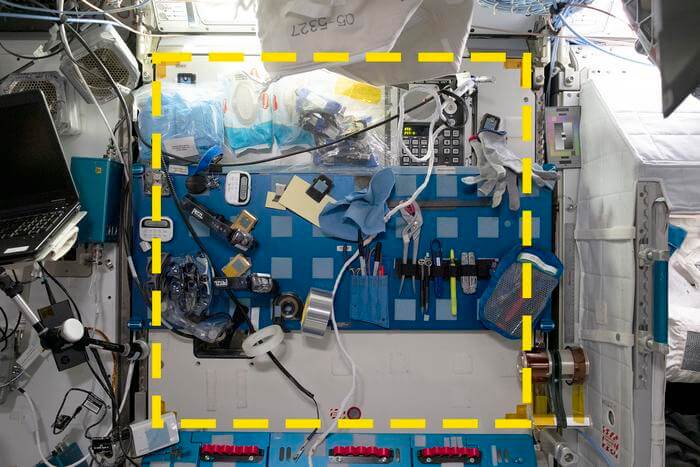
The study also revealed the ingenious ways astronauts cope with the challenges of microgravity. In the absence of gravity to keep objects in place, crew members employ various “gravity surrogates” – items like clips, bungee cords, and Velcro patches that help secure objects to walls and surfaces. These makeshift solutions made up a significant portion of the items observed in the study areas, underscoring their critical role in daily life aboard the ISS.
Another intriguing discovery was how astronauts adapt spaces for personal use. In one area near exercise equipment and the station’s bathroom, researchers observed a toiletry kit left out for nearly two months. This improvised personal care station suggests that current space station designs may not adequately account for the crew’s needs for privacy and personal grooming.
These findings have important implications for future space exploration. As humans set their sights on long-term missions to the Moon and Mars, understanding how to design living spaces that truly meet the needs of space travelers becomes crucial. The SQuARE project demonstrates that archaeological methods can provide valuable insights that go beyond what can be learned from interviews or predetermined metrics.
Moreover, this research opens up an entirely new field of study: space archaeology. Just as terrestrial archaeology helps us understand how ancient peoples lived and adapted to their environments, space archaeology can shed light on how humans adapt to the unique challenges of off-world habitats. This could prove invaluable as we continue to push the boundaries of human space exploration.
“The experiment is the first archaeology ever to happen off of the planet Earth. By applying a very traditional method for sampling a site to a completely new kind of archaeological context, we show how the ISS crew uses different areas of the space station in ways that diverge from designs and mission plans. Architects and planners of future space stations can learn valuable lessons from this work,” the researchers write in a media release.
The SQuARE project marks a significant milestone in our understanding of life in space. By bringing archaeological methods to bear on the ISS, researchers have uncovered new insights into how humans adapt to and shape their environment in microgravity. As we look to the future of space exploration, these findings could help inform the design of more effective and livable space habitats, paving the way for humanity’s long-term presence beyond Earth.
Paper Summary
Methodology
The researchers selected six locations on the ISS and asked astronauts to photograph these areas daily for 60 days. They focused on two of these areas for this initial study: a maintenance workstation and an area near exercise equipment and the bathroom. Using special software, they identified and categorized every visible object in each photo, tracking how items moved or changed over time. This allowed them to build a detailed picture of how these spaces were used day-to-day, much like how terrestrial archaeologists study layers of soil to understand how ancient sites were used over time.
Key Results
The study revealed that the maintenance workstation was used more for storage than actual maintenance work. Many tools remained untouched throughout the study period. In the area near the exercise equipment, personal hygiene items were frequently present, suggesting this space was often used for grooming despite not being designed for that purpose. In both areas, items used to secure objects in microgravity (like Velcro and bungee cords) were abundant, highlighting their importance in daily life on the ISS.
Study Limitations
The study only looked at two areas on the ISS for a limited time period, so it may not represent all aspects of life on the station. The researchers also didn’t have access to detailed crew schedules, which could have provided additional context for the observed activities. Furthermore, the presence of the study itself may have influenced crew behavior in the photographed areas.
Discussion & Takeaways
The researchers concluded that flexibility is key in space habitat design. Areas often end up being used differently than intended, so multi-purpose spaces could be more effective. They also highlighted the need for better personal care facilities and storage solutions in future space habitats. The study demonstrated the value of archaeological methods in understanding life in space, potentially opening up a new field of space archaeology.
Funding & Disclosures
The study was funded by Chapman University’s Office of Research and Sponsored Programs. The International Space Station National Laboratory provided access to the ISS and crew time. The researchers declared no competing interests. The study was conducted with the cooperation of NASA and international space agencies, with Axiom Space serving as the implementation partner for the research.


