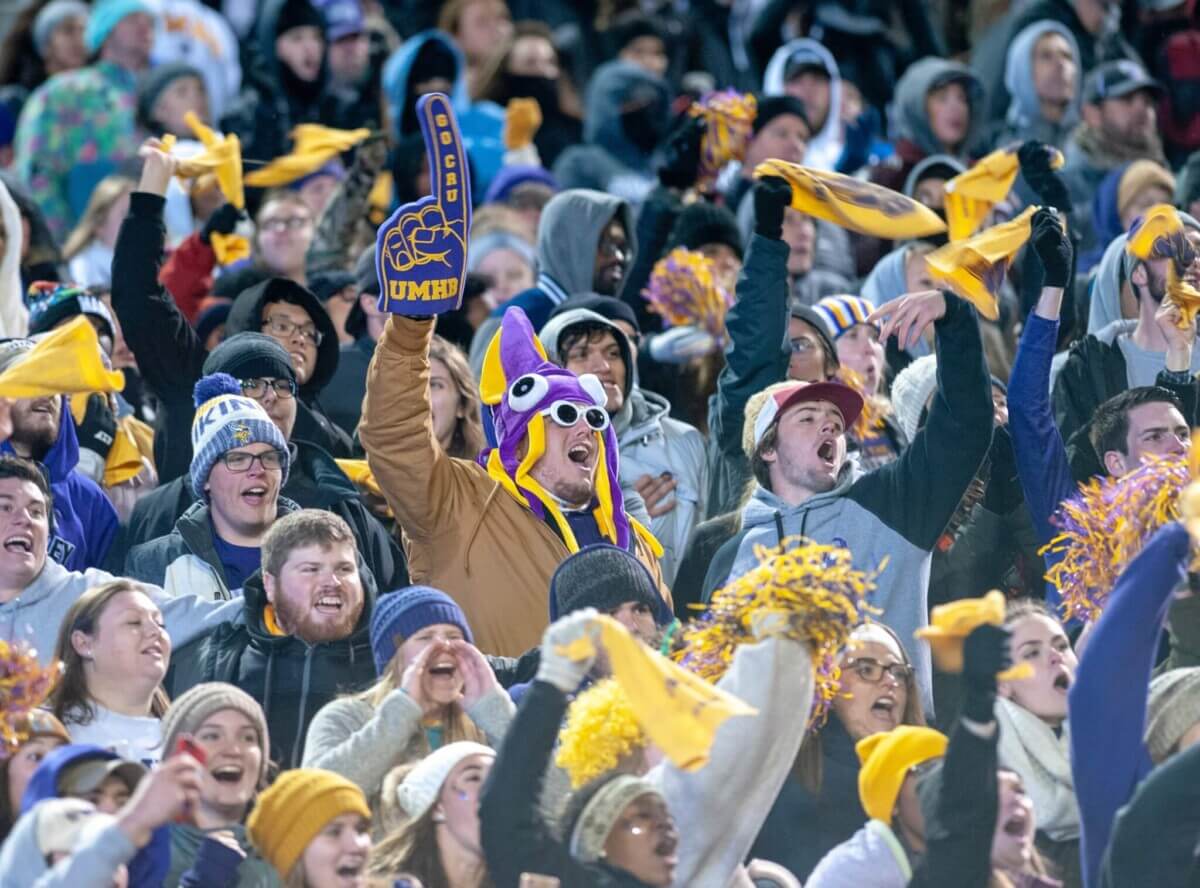
(Photo by David Morris / pexels.com)
NEW YORK — Whether it’s baseball or football, soccer or tennis, there’s no question that Americans love their sports. In fact, a new poll reveals that sports fans watch 120 games per year.
The poll of 2,000 American sports fanatics uncovered just how emotionally invested fans are, how much they pay to follow along and represent their favorite teams, and what kind of return on their emotional and financial investments they’ve received from their teams.
Conducted by Talker Research on behalf of SquadLocker, the survey also split sports fans into different categories depending on their level of commitment to their team or favorite player. A third of respondents (32%) said they’re “moderate” fans who watch a few sports games here and there, while half (48%) labeled themselves as “big” fans who watch most games. A fifth (20%) are all-in and self-identified as “raging” fans who watch every single game they can.
However, being a raging fan comes with a price tag. Raging fans say they spend, on average, $879.40 on tickets to live sports games, concessions, apparel, collectibles, memorabilia, and streaming services each year. Big sports fans say they’ll spend $593.80, and moderate sports fans spend $376.10 annually, on average. When it comes to being there in the stands live, fans said they usually see about three wins and two losses in person each year. Respondents estimated they’ve seen five one-of-a-kind, miracle live sports wins, with three-quarters (74%) citing watching their favorite team win a live game as a favorite memory.
Not only is there a financial commitment to sports fandom, there’s an emotional commitment as well. More than one in five fans (22%) have a pre-game ritual or tradition they do each time their favorite team or player competes, with raging fans being the most likely to participate in pre-game rituals (32%).

While 35% say their required pre-game traditions simply make them feel like a part of the team, one in three (31%) staunchly feel their pre-game ritual increases their favorite team or player’s chances of winning.
When asked about their pre-game habits, many cited traditions like cookouts, flaunting team gear, tailgating, chanting, dancing, and praying. A few noteworthy respondents take it a bit further and say they light candles for their team, obsessively wash their hands, and paint their bodies to ensure that their team wins.
“Many people follow along with pro athletes and partake in traditions because it’s a bonding experience and brings people together. Sports are rooted in community and often start when we’re young,” says Fletcher Jones, CEO of SquadLocker, in a statement. “It is clear just how much sports mean to people by the emotional high they feel after a win and the emotional low after a loss. I think a lot of this comes from so many of us having participated in team sports during our formative years.”
Thirty-nine percent say that if their team or player loses a match, they feel more sensitive than usual, and more than one in 10 (14%) believe their general enjoyment of life decreases. Looking at how playing a sport growing up influences sports fandom, 71% of sports fans played sports in their youth, and 28% played in college.
Of those who played sports growing up, almost half (45%) dreamed of playing sports as a professional. For a quarter of those, this is still their dream. It turns out that turning on the TV or attending a match has a real-life impact on fans: 30% of respondents say they’d like to pick a sport they used to play after watching the pros, and a fifth (19%) even want to try a new sport.
The most popular sports that fans are playing (either as an old hobby or a new skill) are basketball (41%), football (26%), baseball (22%), and tennis (16%).
“I think one of the most important results from this survey is how much passion sports fans have for their teams at every level. The support they give enhances their lives as well as the lives of the athletes,” says Kaycie Brown, an athlete at 575 Volleyball, a youth sports organization. “We love the family and friends that come and cheer us on and even the ones who watch online and cheer us on from their homes. All athletes need a support system, and the fans play a very large role. Fan support builds confidence and plants seeds for success.”
Survey methodology
This random double-opt-in survey of 2,000 American sports fans was commissioned by SquadLocker between May 24 and May 29, 2024. It was conducted by the market research company Talker Research, whose team members are members of the Market Research Society (MRS) and the European Society for Opinion and Marketing Research (ESOMAR).


