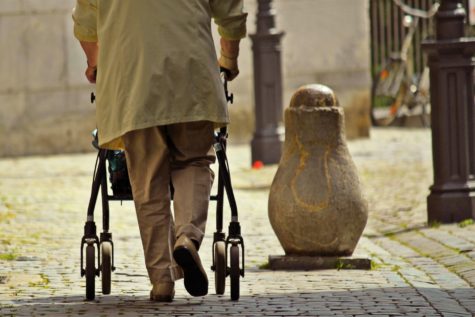
NEW YORK — Exercise may be the key to a healthier heart and mind as we age, but a new study finds it may also boost mobility in our elderly years.
Older adults often suffer from significant symptoms that restrict their abilities to live independently. Researchers theorized that exercise can be helpful for seniors in reducing the effects of these disorders and disabilities. The findings were published in the Journal of the American Geriatrics Society in early February.
A total of 1,635 adults were recruited to participate in the study. All of the participants were aged between 70 and 89, and were considered to be at high risk for becoming physically disabled. All of the adults were capable of walking about a quarter of a mile without needing aid from someone nearby.
Participants were split into two separate groups, according to a release from the American Geriatrics Society. One group was set to walk for 30 minutes daily. They were also put on balance and strength exercise routines. The other group was issued a workshop that they would attend for 26 weeks. The class provided information on safety and healthcare, as well as reliable sources for nutritional education. They were also led through 5 to 10 minute stretching sessions.
The team of researchers performed a thorough series of testing on the participants throughout the study. The participants were tested at the beginning of the study. They were then tested at 6, 12, 24, and 36 months after the date that the study first began.
After the study was finished, the researchers revealed that adults in both groups experienced about the same levels of disability. They concluded, however, that those which participated in the exercising and walking routine ended up with a lower level of mobility disadvantages than those who participated in the informational classes.
According to the American Geriatrics Society, nearly one in four seniors over 65 has trouble walking or climbing stairs. At least 3.4 million older adults have trouble taking care of their personal needs, such as dressing or bathing. Perhaps all it takes is a 30 minute walk daily to make such tasks easier.


Life has usually been a vicious battle against starvation.
Body structures that provide capability consume resources to maintain. Maintenance of unnecessary capabilities unnecessarily increases the risk of starvation. Unused capabilities are likely unnecessary. Therefore, our bodies have evolved to gradually lose unused capabilities. This tendency is all the stronger in old age.
Hence, dictums of heathy agers such as “Keep moving!” and “Use it or lose it!” This is especially true of people in our society who do not need to worry about the risk of starvation that their bodies were programmed to be concerned about.
And considering that in old age, abilities tend to decline eventually no matter what we do, it is important to develop reserve capacity (i.e. more ability than we currently need) while we still can — so that we will be able to get along even after losing some of it (e.g. while suffering a difficult illness or recovering from surgery).
Hence, stretching, aerobic exercise, balance exercise, and strength training. The hope is that we can delay disability until extreme old age (e.g. the late 90s, should we reach that), and not have to suffer from disability in early old age.