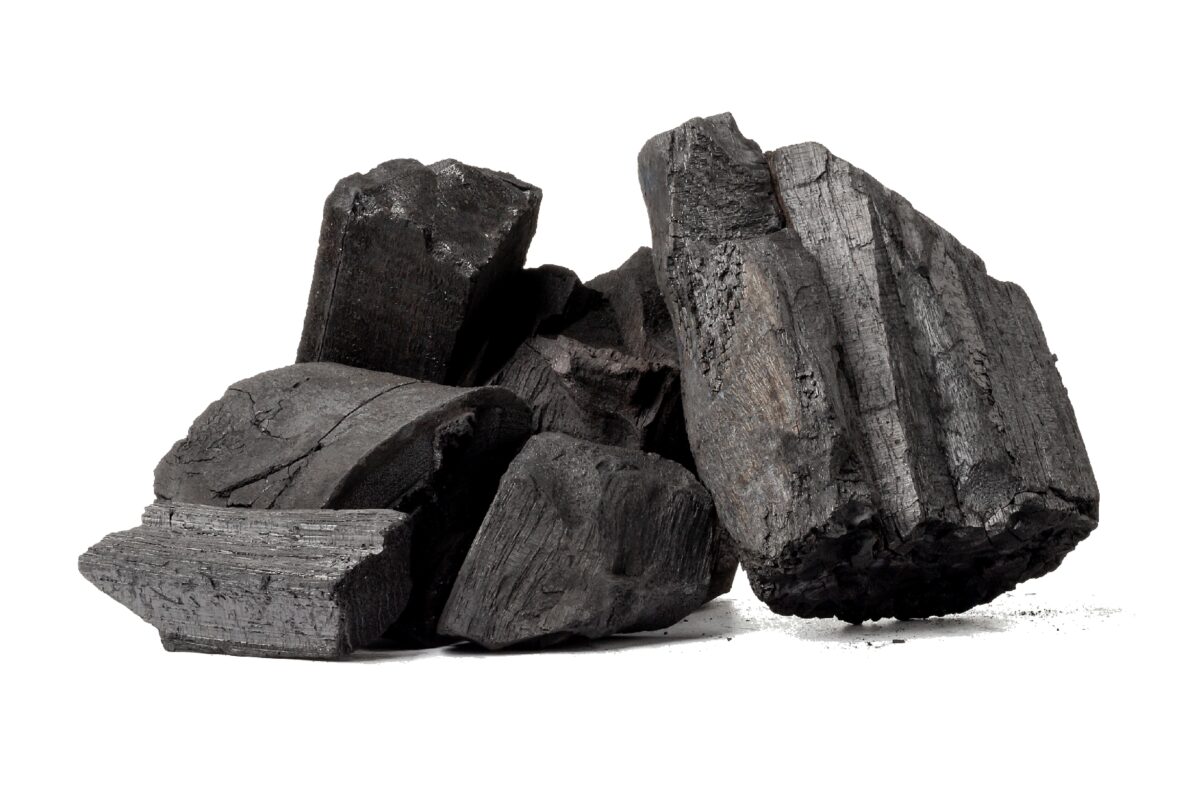
Natural wood charcoal. (Photo by Kunakorn Rassadornyindee on Shutterstock)
Investigation finds all tested lump charcoal brands contain mislabeled ingredients, false origin claims, or inaccurate weights, including ‘Made in USA’ products with wood not native to America
In A Nutshell
- Scientists analyzed 15 lump charcoal brands sold in the U.S. and examined over 18,000 charcoal fragments using microscopy.
- All 15 products contained labeling discrepancies, ranging from undeclared wood types to misleading “Made in USA” claims.
- Nearly half of the bags were underweight, with five violating federal packaging standards.
- The study found 45 genera and 29 botanical families, much greater wood diversity than labels suggested.
STARKVILLE, Miss. — Americans love their backyard barbecues, but a scientific investigation shows that what’s in your charcoal bag may not match what’s printed on the label. An eye-opening study reveals that every bag of lump charcoal tested from 15 major U.S. brands contained some form of misrepresentation. From bags labeled “100% mesquite” that also included unrelated woods, to “Made in USA” products with tropical species not native to American forests, the findings suggest widespread inconsistency in the charcoal market.
Researchers found that every brand tested — representing major charcoal companies in North America — had discrepancies between what was promised on the label and what was actually inside. Some bags listed specific types of wood but included others; others claimed U.S. origins despite containing species typically found only in Latin America.
The study, published in Forest Products Journal, found that half the bags were underweight, and most used broad or vague marketing terms like “100% Natural Hardwood” or “Renewable Natural Resources” with no third-party certification to back them up.

Worst Cases of Charcoal Mislabeling
The most extreme example came from a bag labeled “One ingredient. Oak hardwood,” which contained no oak at all. Instead, it held at least six different wood species, including Inga and Curatella, none of which matched the stated ingredient.
Another bag marketed as “100% mesquite charcoal” was about 97% mesquite, but included small amounts of other species such as Juglans (walnut) and Pistacia. While the dominant wood matched the claim, it wasn’t a pure product.
Perhaps most concerning were two bags labeled “Made in USA” that contained tropical wood species not typically found in the U.S., raising the possibility that the raw material was imported, potentially from Mexico, even if the final manufacturing step occurred domestically.
Weight claims also came under scrutiny. Seven of the 15 bags (47%) weighed less than advertised, and five fell so far below federal standards that they may violate guidelines from the National Institute of Standards and Technology (NIST).
Of the 15 bags, only one displayed a third-party certification seal, despite many using phrases like “Environmentally Friendly” or “100% Organic Hardwood.” The one bag claiming to be USDA Organic lacked the required seal to prove it.
How Scientists Verified the Claims
The study was led by researchers at Mississippi State University and the USDA Forest Service. Between February and November 2019, they purchased charcoal bags online from 15 major brands. Using light microscopy and anatomical analysis, they examined more than 18,000 individual charcoal fragments, a painstaking process since high temperatures often obscure key identifying features.
Each piece was classified as closely as possible to its genus or family, though some fragments remained unidentified. In total, researchers identified 45 different genera across 29 botanical families, a diversity far exceeding the handful of wood types listed on most packaging.
They also sifted each bag to remove rocks, bark, and dust-like particles, measuring how much was truly usable for grilling. While some bags were made almost entirely of usable charcoal, others contained as little as 72% usable product by weight.
Why It Matters for Home Grilling
Different woods burn differently. Oak, for example, burns slowly and evenly, making it great for long grilling sessions. Softer or tropical woods may burn quickly or at uneven temperatures, altering the heat quality and consistency. Dust and bark don’t contribute much usable heat and can produce excessive smoke or flare-ups.
The researchers found that every bag contained bark, and many had excessive fine particles (tiny bits too small to grill with) reducing the product’s overall value.
Global Environmental Concerns
Many of the tropical species found in supposedly American charcoal likely came from countries like Mexico, Paraguay, and Brazil, which have documented issues with deforestation, illegal logging, unsustainable practices, and labor exploitation.
Some of the species identified in the study include relatives of trees listed on the IUCN Red List as Near Threatened or Vulnerable, raising concerns about conservation.
In similar studies in Europe, researchers found that 46% of charcoal came from tropical regions, and more than half the product labeling was inaccurate. Reports by Interpol and the WWF have linked the charcoal trade to organized crime and illegal deforestation, highlighting the challenges of global oversight.
What ‘Made in USA’ Really Means
The Federal Trade Commission requires that “Made in USA” products have “all or virtually all” of their components sourced and processed domestically. However, the rule includes a loophole: if raw materials are substantially transformed in the U.S., they may still qualify for the label.
The researchers suggest that when it comes to charcoal, that transformation may be misleading: “Using a qualified claim such as ‘Made in USA from imported wood’ would provide a more accurate representation of the charcoal’s origin.”
As for which brands are at faultt, the researchers deliberately chose not to identify which specific brands contained which problems, instead assigning each bag a specimen number from 1 to 15. “Individual manufacturers are not named in this work, but manufacturer names were provided to the editors for review,” the study states.
The scientists said their “intention is not to ‘name and shame’ but rather to contribute scholarly data to the broader understanding of fraud and misrepresentation in the U.S. lump charcoal market.” While consumers can’t use this study to avoid specific bad brands, the findings suggest the problems are so widespread that virtually any major charcoal brand could have issues. The researchers focused on documenting industry-wide patterns rather than targeting individual companies.
Disclaimer: This article reports on a peer-reviewed scientific study that identified labeling and composition inconsistencies in tested charcoal products. While the word “fraud” appears in the context of global market concerns and previous research, this study does not allege intentional wrongdoing by specific brands, nor does it claim that all major U.S. charcoal brands were included in the analysis. The findings are representative of a sample from 2019 and may not reflect the current market.
Paper Summary
Methodology
To investigate the accuracy of product labeling in the U.S. lump charcoal market, researchers from Mississippi State University and the USDA Forest Service selected 15 brands representing major North American manufacturers. The charcoal bags were purchased online between February and November 2019. Scientists conducted a detailed analysis of each bag’s contents, using light microscopy to examine over 18,000 individual charcoal fragments and identify the wood species down to the genus or family level. Each bag was also weighed, screened using a custom sifting machine to separate fragments by size, and examined for non-wood materials such as bark, rocks, and fine particles. Claims on packaging—such as wood type, country of origin, and weight—were systematically compared against these physical findings.
Results
All 15 charcoal products tested exhibited inconsistencies between their packaging claims and actual contents. Many products that listed specific wood species included additional, undeclared types, while others made broad claims like “100% Natural Hardwood” without meaningful detail. Nearly half of the bags (47%) were underweight compared to their labeled net weight, and five exceeded the maximum allowable variation set by federal standards. Some bags labeled “Made in USA” contained tropical wood species not native to the United States, suggesting foreign sourcing. In total, the researchers identified 45 different genera from 29 botanical families across the samples. The proportion of usable charcoal—defined as wood pieces suitable for grilling—ranged from 72.2% to 96.1% of each bag’s measured weight.
Limitations
The authors note that this study offers a snapshot of the market as it existed in 2019 and may not reflect current conditions. Additionally, because the researchers used a sifting protocol to classify lump sizes and remove fines, their process may have increased the amount of dust-like material compared to what a typical consumer would encounter. Identification of tropical hardwoods was also more difficult due to the damage caused by high-temperature carbonization. While most fragments were classified to the genus level, 11.4% were only identified to the family level, and 2% remained unidentified.
Funding and Disclosures
The research was partially funded by the McIntire-Stennis Cooperative Forestry Research Program (project award no. 7004014) through the U.S. Department of Agriculture’s National Institute of Food and Agriculture. Additional support came from the USDA Research, Education, and Economics unit under agreement number 58-0204-9-164. The study was conducted by researchers affiliated with Mississippi State University’s Department of Sustainable Bioproducts and the USDA Forest Products Laboratory.
Publication Details
Title: Fraud and Misrepresentation in the Lump Charcoal Market in the United States: A Closer Look Inside the Bag
Authors: Adriana Costa, Frank C. Owens, Richard K. Soares, Alex C. Wiedenhoeft
Journal: Forest Products Journal, Volume 75, Number 2, 2025
DOI: 10.13073/FPJ-D-25-00012


Worthless article.
I love The Good Charcoal brand. Chemical free and burns well! I suggest that brand to everyone.
Would be nice to know the brands so we can stay away from them.
????. I read thru the linked paper and it does not name them either since focus is on deforestation. I really want to know which to avoid, honestly public shame thing. The 100 oak makes me think royal oak has no oak but without a name is no way to link it.
This is fine and dandy but unless they are held accountable and change their practices this was a waste of money.
Yeah well.. this doesn’t matter if you don’t inform the public who is lying. ????♂️
Well done! Oh, and Thanks for nothing.
Not identifyng the bad actors does nothing to serve the consumer.
You did all that work, and yet no action will be taken. The offenders will continue producing inferior products while the ill informed consumers will naively continue to support these fraudsters.
Seems like a tremendous waste of everyones time, including your readers.
No brands listed, why?
Researchers deliberately chose not to identify which specific brands contained which problems, instead assigning each bag a specimen number from 1 to 15. “Individual manufacturers are not named in this work, but manufacturer names were provided to the editors for review,” the study states.
The scientists said their “intention is not to ‘name and shame’ but rather to contribute scholarly data to the broader understanding of fraud and misrepresentation in the U.S. lump charcoal market.” While consumers can’t use this study to avoid specific bad brands, the findings suggest the problems are so widespread that virtually any major charcoal brand could have issues. The researchers focused on documenting industry-wide patterns rather than targeting individual companies.
I used to use cowboy brand lump charcoal for my smoker until I started finding chard pieces a particle board in the bags. Not cool.