
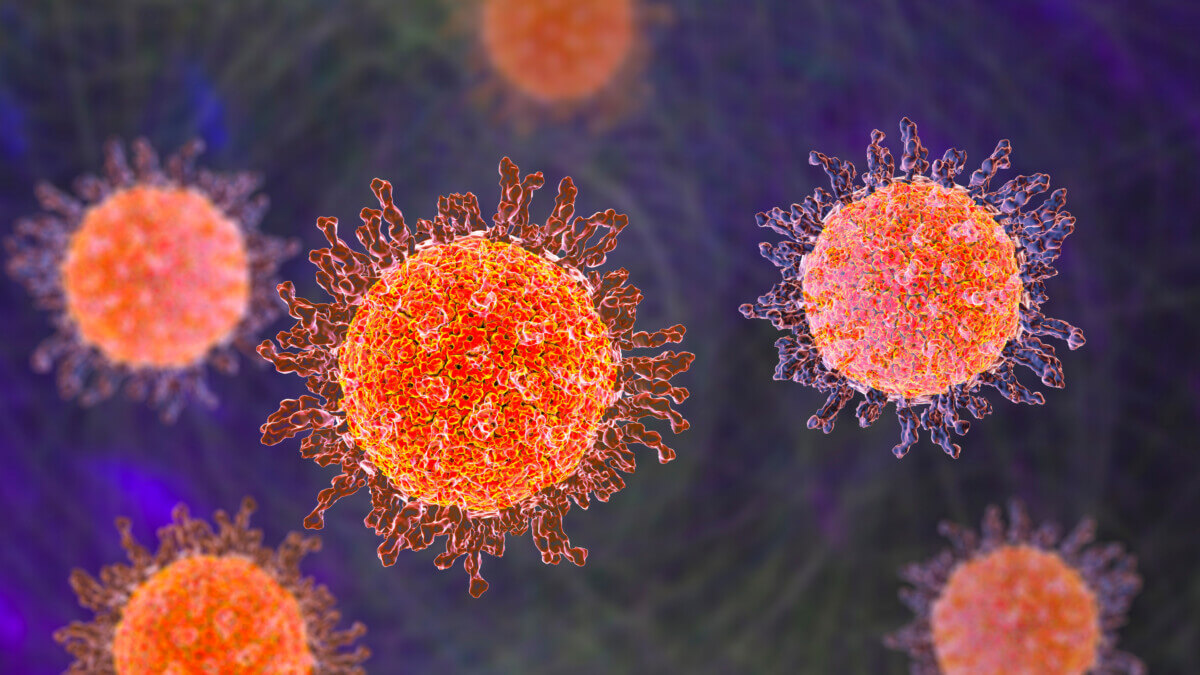
(© DOC RABE Media - stock.adobe.com)
In a nutshell
- Scientists discovered that the herpes virus protein UL12.5 hijacks the body’s own immune pathways to trigger reactivation from dormancy, challenging what we thought we knew about how viruses behave.
- This viral protein targets mitochondria, releasing their DNA and RNA to activate immune pathways that, surprisingly, help wake up the dormant virus instead of fighting it.
- The discovery could lead to new treatments targeting UL12.5 to prevent cold sore flare-ups, genital herpes, and potentially reduce long-term neurological damage linked to repeated HSV-1 reactivation.
CHARLOTTESVILLE, Va. — Scientists have discovered that the herpes simplex virus-1 (HSV-1) – responsible for cold sores – hijacks the very immune pathways designed to fight it, turning these defense mechanisms into accomplices for its reactivation. This research reveals a cunning viral strategy that could reshape our understanding of how persistent viruses interact with human hosts and lead to new preventive treatments.
More than 60% of people under 50 worldwide—over 3.8 billion individuals—carry HSV-1, which establishes lifelong infection in nerve cells, according to the World Health Organization. Once HSV-1 enters our bodies, it stays forever. Our immune systems can suppress it, allowing infected people to be symptom-free. But stress, other infections, and even sunburns are known to cause it to flare.
“Our findings identify the first viral protein required for herpes simplex virus to wake up from dormancy, and, surprisingly, this protein does so by triggering responses that should act against the virus,” said Dr. Anna Cliffe of UVA’s Department of Microbiology, Immunology and Cancer Biology, in a statement. “This is important because it gives us new ways to potentially prevent the virus from waking up and activating immune responses in the nervous system that could have negative consequences in the long term.”

Meet UL12.5: The Viral Double Agent
The new research, led by Dr. Cliffe and colleagues at the University of Virginia, has identified a viral protein called UL12.5 that plays a previously unknown but critical role in this reactivation process. The protein acts like a double agent, triggering the body’s own antiviral alarm systems and then exploiting that very alarm to wake the dormant virus.
Published in Proceedings of the National Academy of Sciences, the paper challenges what we thought we knew about how viruses and immune systems interact. Typically, viruses try to evade or suppress immune responses. HSV-1 does that too – but in this case, it’s actually benefiting from activating certain immune pathways.
“We were surprised to find that HSV-1 doesn’t just passively wait for the right conditions to reactivate – it actively senses danger and takes control of the process,” researcher Patryk Krakowiak said. “Our findings suggest that the virus may be using immune signals as a way to detect cellular stress – whether from neuron damage, infections or other threats – as a cue to escape its host and find a new one.”
How HSV Sounds the Alarm
The protein UL12.5 causes trouble by targeting mitochondria, the energy-producing structures within cells. When active, UL12.5 triggers the release of mitochondrial DNA and RNA into parts of the cell where they don’t belong. This misplaced genetic material sets off alarm bells in the cell’s defense systems – specifically pathways that detect foreign DNA and RNA.
In most cases, activating these pathways would be bad for a virus. They typically trigger antiviral responses that help clear infections. But HSV-1 has evolved to turn this defensive reaction to its advantage, using the activation of these pathways as a signal to exit dormancy and begin reproducing.
Interestingly, the researchers found that while the virus can make UL12.5 to reactivate, the protein was not needed in the presence of another infection. The scientists believe this is because the infections trigger certain “sensing pathways” that act as the home security system for neurons. Detection of a pathogen alone may be sufficient to trigger the herpes virus to begin replicating, even in instances where the immune system stops the new pathogen before it can multiply.

Links To Alzheimer’s, Genital Herpes
In addition to causing cold sores, HSV-1 can also cause genital herpes, a condition most often associated with HSV-2. However, there are now more new cases of genital herpes in the United States caused by HSV-1 than HSV-2. Notably, the UVA researchers found that herpes simplex virus 2 also makes this same protein and may use a similar mechanism to reactivate. This suggests that the discovery may also lead to new treatments for genital herpes.
HSV-1 can also cause brain inflammation and has been linked to the development of Alzheimer’s disease. The repeated activation of inflammatory pathways during reactivation could potentially contribute to neuronal damage over time.
The relationship between virus and host has likely been refined over millions of years of coevolution. HSV-1 has been infecting humans and our ancestors throughout evolutionary history, giving it ample time to develop sophisticated mechanisms for persistence.
“We are now following up on this work to investigate how the virus is hijacking this response and testing inhibitors of UL12.5 function,” Cliffe said. “Currently, there are no therapies that can prevent the virus from waking up from dormancy. Developing therapies that specifically target a viral protein could provide a more precise approach with fewer side effects than targeting our own cellular proteins.”
Paper Summary
Methodology
The researchers studied HSV-1 in nerve cells taken from newborn mice. They compared normal viruses with genetically modified versions lacking the UL12.5 protein. Using various techniques, they established dormant infections in these laboratory neurons and then triggered reactivation using chemicals that mimic stress conditions. Throughout their experiments, they measured viral activity and directly visualized the UL12.5 protein to track its role in the reactivation process.
Results
The study revealed several important insights. First, while UL12.5 limits HSV-1 replication in non-nerve cells, it doesn’t affect replication in neurons during initial infection. However, it proved crucial for reactivation from dormancy. Viruses lacking UL12.5 showed significantly reduced ability to reactivate.
When the researchers artificially provided UL12.5 to neurons infected with viruses lacking this protein, it restored their ability to reactivate, confirming that UL12.5 directly promotes reactivation. The study also showed that UL12.5 activates cellular immune-sensing pathways in neurons by causing the release of mitochondrial genetic material.
Limitations
While comprehensive, the study does have limitations. The experiments were conducted in laboratory cultures of mouse neurons, which may not perfectly replicate what happens in humans. The researchers primarily used artificial methods to trigger reactivation, which may not fully reflect the natural triggers that cause cold sores in people. Additionally, their analysis was complicated by the fact that only a small fraction of neurons undergo reactivation at any given time, making it difficult to capture the full dynamics of the process.
Publication Details
The study, titled “Co-option of mitochondrial nucleic acid–sensing pathways by HSV-1 UL12.5 for reactivation from latent infection,” was authored by Patryk A. Krakowiak, Matthew E. Flores, Sean R. Cuddy, and colleagues, with Anna R. Cliffe as the corresponding author. It was published in the Proceedings of the National Academy of Sciences (PNAS) on January 24, 2025, in Volume 122, Number 4, with the identifier e2413965122. The research was edited by Thomas Shenk from Princeton University and received on July 16, 2024, before being accepted on December 5, 2024.


