
Dried stevia leaves. (Photo by Take Photo on Shutterstock)
Researchers transform natural sweetener into dissolving microneedles that improve drug delivery in laboratory models.
In A Nutshell
- A common sweetener from the Stevia plant was turned into a tiny, dissolving patch with micro-needles.
- The patch helps more minoxidil reach the roots of the hair under the skin.
- In mouse tests, the patch led to fuller regrowth than the usual liquid version.
- This is early research. It still needs to be tested for safety and results in people.
SYDNEY — A natural sweetener found in the leaves of the Stevia plant may offer new hope for people struggling with hair loss. Scientists have developed a dissolving microneedle patch using stevioside, a compound derived from the Stevia plant that’s commonly used as a sugar substitute. The patch delivers minoxidil directly into the skin with far greater effectiveness than traditional topical solutions.
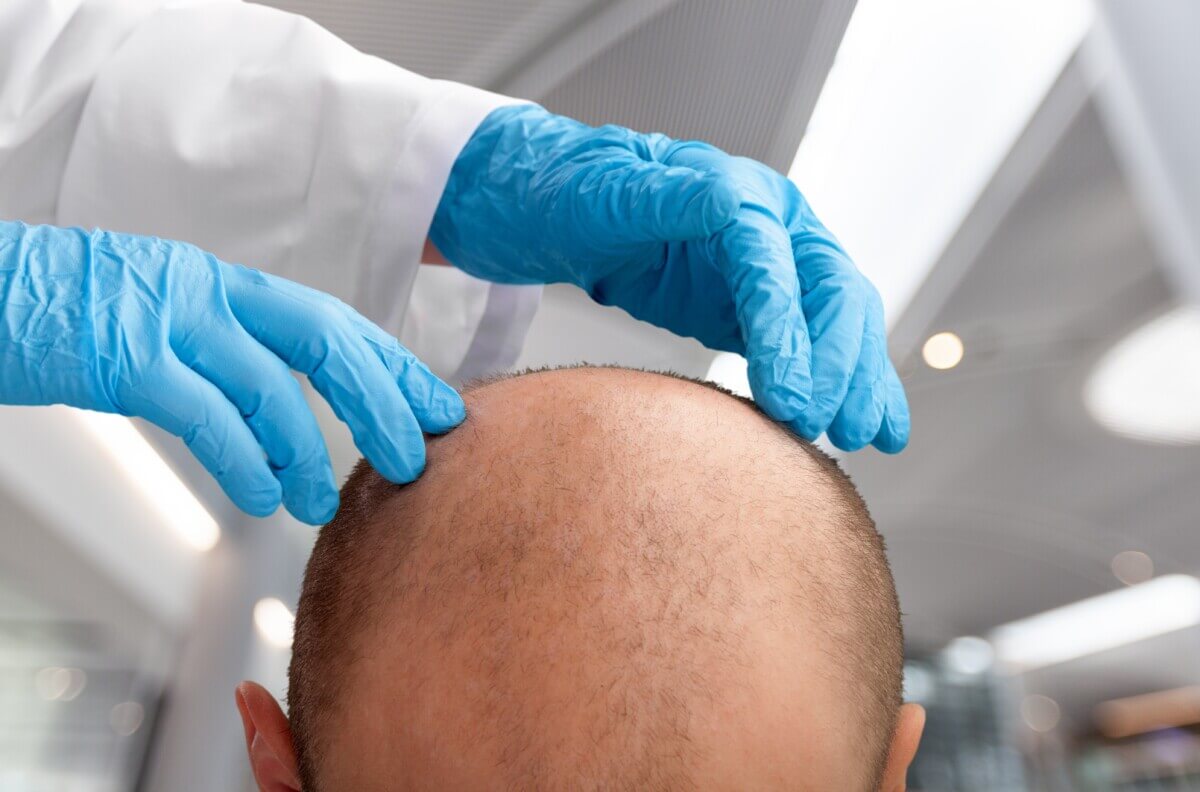
Androgenetic alopecia, the most common form of hair loss, affects millions of men and women worldwide. Current treatments include minoxidil, the only FDA-approved over-the-counter medication for male and female pattern baldness. But minoxidil has limitations. The drug barely dissolves in water and penetrates skin poorly, requiring frequent applications that many patients find difficult to maintain. When minoxidil crystallizes after the alcohol in topical solutions evaporates, it can cause itching, rashes, and allergic reactions.
A research team led by scientists at the University of Sydney and China Pharmaceutical University addressed these problems by turning to stevioside, which most people know as a popular sweetener. The researchers discovered that stevioside boosted minoxidil’s water solubility roughly 18 times compared to minoxidil alone.
How a Sweetener Solves a Drug Delivery Problem
Stevioside has a molecular structure that includes both water-attracting and water-repelling parts, similar to soap molecules. This dual nature allows stevioside to form tiny bubble-like structures called micelles in water, with the water-repelling sections clustering together in the center and the water-attracting sections facing outward.
When researchers mixed minoxidil with stevioside, the drug molecules tucked themselves into the water-repelling centers of these micelles. Advanced imaging techniques revealed that approximately six stevioside molecules surrounded each minoxidil molecule, effectively wrapping it in a water-soluble package. This process happened spontaneously when stevioside reached a certain concentration, the point where molecules begin forming these clusters.
The team then transformed the stevioside-minoxidil mixture into a solid form and molded it into an array of tiny dissolvable needles, each barely longer than half a millimeter. These microneedles could pierce through the outermost layer of skin and deliver the drug directly to hair follicles in deeper layers.
Microneedles Outperform Standard Treatment in Mice
Laboratory tests using pig ear skin, which closely resembles human skin structure, showed the stevioside microneedle patches delivered about 85% of their drug into or through the skin within 24 hours. Roughly 18% of the minoxidil stayed in the skin where hair follicles live. Traditional 2% minoxidil alcoholic solution achieved only 68% drug penetration and left just 8% in the skin tissue.
In mouse studies, the differences were even more pronounced. Researchers created a mouse model of androgenetic alopecia by injecting testosterone, which mimics the hormonal changes that trigger pattern baldness in humans. Mice treated with the stevioside microneedle patch showed new hair growth by day 14, with hair eventually covering about 68% of the treatment area by day 35. Mice treated with standard 2% minoxidil alcoholic solution showed only 26% coverage after the same time period.
Microscopic examination of skin samples revealed why the microneedle treatment worked so well. Hair follicles exist in three phases: a growth phase, a regression phase, and a resting phase. Androgenetic alopecia keeps follicles stuck in the resting phase, producing progressively thinner and shorter hairs until they stop growing entirely.
The microneedle patches successfully nudged hair follicles to shift from the resting phase into the growth phase. Hair follicles in the deeper skin layers appeared darker, showing increased pigment and active growth. Follicles in untreated animals remained scattered in upper skin layers with light coloring, showing they stayed in the resting phase.
Multiple Advantages Over Existing Hair Loss Treatments
The microneedle delivery system offers several advantages over existing treatments. The needles create microscopic channels through the skin’s outermost protective layer, which normally blocks most drugs from entering. This mechanical penetration, combined with stevioside’s ability to keep minoxidil dissolved, ensures the drug reaches hair follicles efficiently. When tested on pig ear skin, more than 94% of the microneedles successfully penetrated the tissue.
The dissolving nature of the needles means they don’t leave sharp waste behind or require removal after application. Once inserted into skin, the needles gradually dissolve and release their drug payload over time. This controlled release approach aims to reduce how often patients need to apply treatment, addressing one of the biggest obstacles to successful therapy: sticking with daily regimens.
Stevioside’s known ability to widen blood vessels may also boost scalp circulation, though this wasn’t directly tested in the study. Enhanced blood flow could bring more nutrients and oxygen to hair follicles, potentially strengthening the therapeutic effect.
Stevioside also comes with an established safety profile. Studies have shown the compound doesn’t cause birth defects, cancer, or genetic mutations. The human body breaks it down minimally and eliminates it without buildup. These characteristics made regulatory approval for food use relatively straightforward, and the same safety data supports its potential use in medical applications.
Broader Applications Beyond Hair Loss
The researchers tested stevioside’s solubilizing ability on six different water-resistant drugs beyond minoxidil, including paclitaxel (a chemotherapy agent), cannabidiol, and silybin (an herbal extract). Solubility improvements ranged from roughly 10 times better for betamethasone acetate to more than 4,000 times better for cannabidiol, showing stevioside’s potential as a solubilizing agent for poorly water-soluble compounds.
Current treatment options for androgenetic alopecia remain limited. Besides minoxidil, only oral finasteride has FDA approval for male pattern baldness. Finasteride works by blocking the conversion of testosterone to dihydrotestosterone, the hormone responsible for shrinking hair follicles, but it carries risks of sexual side effects and can’t be used by women of childbearing age. Some dermatologists combine minoxidil with microneedling procedures, using fine needles to create puncture holes that boost drug penetration. Clinical trials have shown this combination approach produces better hair growth than minoxidil alone, supporting the rationale behind dissolving microneedle technology.
Questions That Remain
The research demonstrates proof of concept rather than offering an immediately available treatment. The mouse model used in the study, while scientifically valuable, has limitations. Testosterone injections create temporary hair follicle suppression that differs from the genetic and lifestyle factors involved in human androgenetic alopecia. Hair growth cycles also differ between mice and humans, making it difficult to predict exactly how the treatment would perform in clinical use.
The study didn’t determine the best dosing schedules. How long do the treatment effects last after stopping? Researchers also need to assess whether the approach works equally well across different types of pattern baldness and various stages of hair loss progression. Safety studies in humans will need to confirm that the microneedles don’t cause infection, inflammation, or other adverse reactions beyond those seen in animal models.
For the millions of people experiencing hair loss, particularly those who stop using minoxidil due to side effects or inconvenience, a patch application that delivers the drug more effectively could make a meaningful difference. The same technology might eventually help address other conditions where getting drugs through skin remains a challenge, from wrinkles to localized pain. Using a sugar substitute compound as both a solubilizing agent and a needle material could simplify regulatory pathways compared to approaches using synthetic polymers or new chemical compounds.
Disclaimer: This article shares early scientific findings for general information. It is not medical advice. Do not start, stop, or change any treatment based on this content. Talk with a qualified clinician about your situation.
Paper Summary
Methodology
Researchers prepared solid dispersions by dissolving stevioside and minoxidil together in ethanol at various ratios (5:1 to 20:1), then evaporating the solvent to create a thin film. They used differential scanning calorimetry and powder X-ray diffraction to confirm minoxidil existed in an amorphous state within the stevioside matrix, which enhances solubility. Nuclear magnetic resonance spectroscopy revealed how stevioside molecules self-assembled into micelles at concentrations above 14.7 mg/mL, with approximately six stevioside molecules encapsulating each minoxidil molecule. The team fabricated microneedle arrays by centrifuging the stevioside-minoxidil solid dispersion into polydimethylsiloxane molds, creating 11×11 arrays with needles measuring approximately 592 micrometers in length. Mechanical testing confirmed the needles could withstand forces needed to penetrate skin (1.66 N per needle). The study used 8-9 week old male C57BL/6 mice, divided into four groups of six animals each: stevioside microneedle patch, 2% minoxidil alcoholic solution, blank microneedles without drug, and no treatment.
Results
Stevioside increased minoxidil solubility from 2.6 mg/mL to 47.4 mg/mL at a 15:1 ratio (approximately 18.4-fold improvement). In vitro skin permeation studies using pig ear skin showed microneedle patches achieved 85.2% cumulative drug permeation over 24 hours with 18.0% skin retention, compared to 68.1% cumulative permeation and 8.4% skin retention for 2% minoxidil alcoholic solution. In mouse studies using a testosterone-induced androgenetic alopecia model, microneedle patches produced 67.5% hair coverage by day 35, compared to 25.7% for standard treatment and minimal growth in control groups. Histological analysis revealed microneedle treatment promoted hair follicles to transition from resting to growth phase, with hair follicles in the deep layer appearing darker. Control groups showed minimal hair regrowth, with follicles remaining in resting phase. The microneedle patches demonstrated a penetration rate of more than 94% when applied to porcine ear skin.
Limitations
The study used a testosterone-induced mouse model that creates temporary follicle inhibition rather than permanent genetic changes seen in human androgenetic alopecia, limiting direct translation to clinical outcomes. Hair follicle growth cycles differ between mice and humans. The research didn’t establish optimal dosing frequency, treatment duration, or long-term safety in mammals. Efficacy across different stages of hair loss severity remains unknown. While pig skin shares structural similarities with human skin for permeation studies, actual human skin penetration and retention rates may differ. The study didn’t compare the microneedle patch against other emerging treatments or combination therapies. The sample size for animal studies was limited to six mice per group. The follow-up period of 35 days may not capture long-term treatment effects or potential adverse reactions.
Funding and Disclosures
This research was supported by the Yunnan Chunyong Wu Expert Workstation Project (202305AF150034), The National Natural Science Foundation of China (Nos. 82473889 and 81473357), The China Pharmaceutical University Global Partnership Program (HBJH202308), the Double First-Class Initiative (CPU2022QZ16), and the Jin Peiying Fund Project of Jiangsu Pharmaceutical Association (J2024030). The authors declared no conflicts of interest. Open access publishing was facilitated by The University of Sydney as part of the Wiley-University of Sydney agreement via the Council of Australian University Librarians.
Publication Details
Zhang, J., Shao, T., Li, H., Zhu, L., Albakr, L., Wheate, N. J., Kang, L., & Wu, C. (2025). Natural Sweetener Stevioside-Based Dissolving Microneedles Solubilize Minoxidil for the Treatment of Androgenic Alopecia. Advanced Healthcare Materials, e03575. DOI: 10.1002/adhm.202503575


