
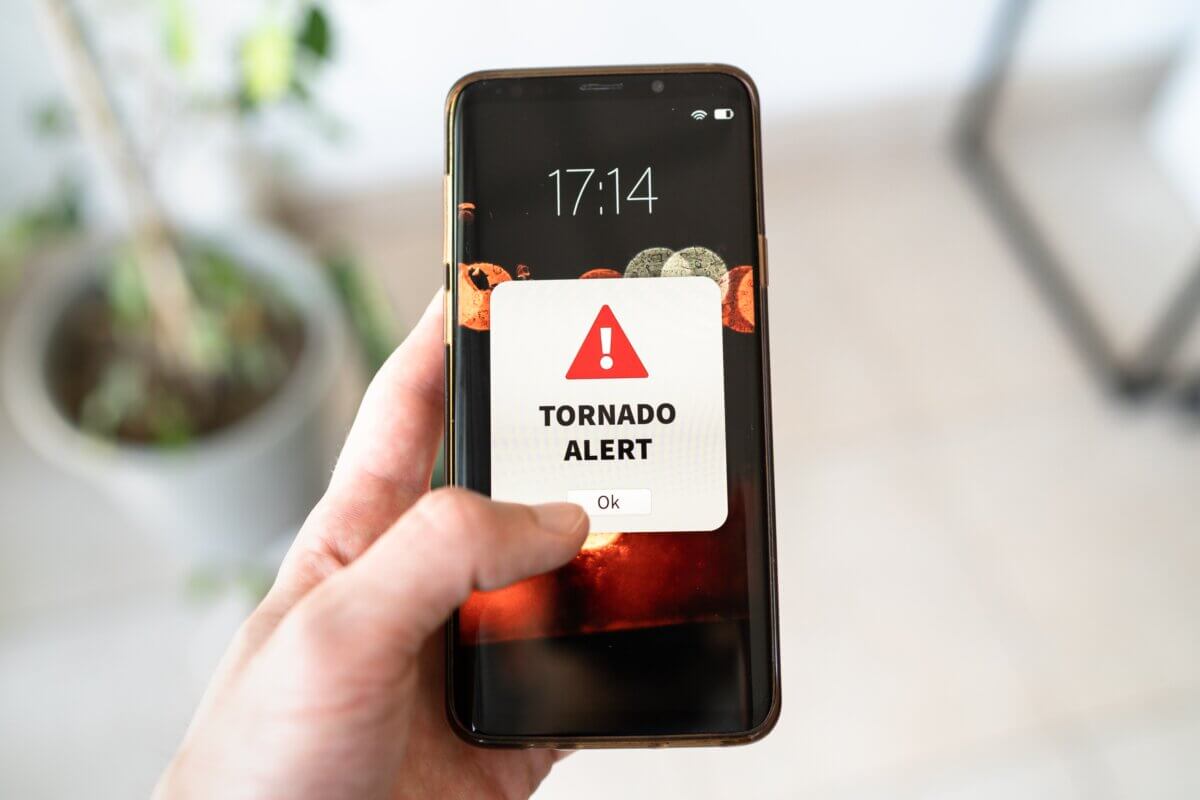
(Credit: KGBR/Shutterstock)
LINCOLN, Neb. — In the heart of America’s tornado alley, a startling revelation has emerged: many residents don’t fully grasp the difference between a tornado “watch” and a tornado “warning.” This confusion, exposed by researchers from the University of Nebraska-Lincoln, could put lives at risk.
Dr. Cory Armstrong, a journalism professor at UNL’s College of Journalism and Mass Communications, has been delving into the world of weather alerts and how people respond to them. Her findings, published in the Journal of Extreme Events, paint a sobering picture of public understanding when it comes to severe weather warnings.
“As a professional communicator, I am fascinated by how individuals receive and respond to various messaging,” Armstrong says in a statement. “It is especially interesting with severe weather alerts, because there is a general assumption that everyone knows exactly what they mean and how you should respond. Through this research, we’ve found that is not necessarily true.”
Perhaps the most alarming finding: only about half of the study participants correctly understood what a “tornado warning” means. For those of us who don’t live in tornado-prone areas, the distinction might seem trivial. However, for residents of states like Tennessee, Kentucky, Arkansas, and Missouri, understanding the difference between a watch and a warning can be a matter of life and death.
A tornado watch means conditions are right for a tornado to form. It’s time to be alert and ready to act. A tornado warning, on the other hand, means a tornado has been spotted or indicated by weather radar. It’s time to take immediate action to protect yourself.
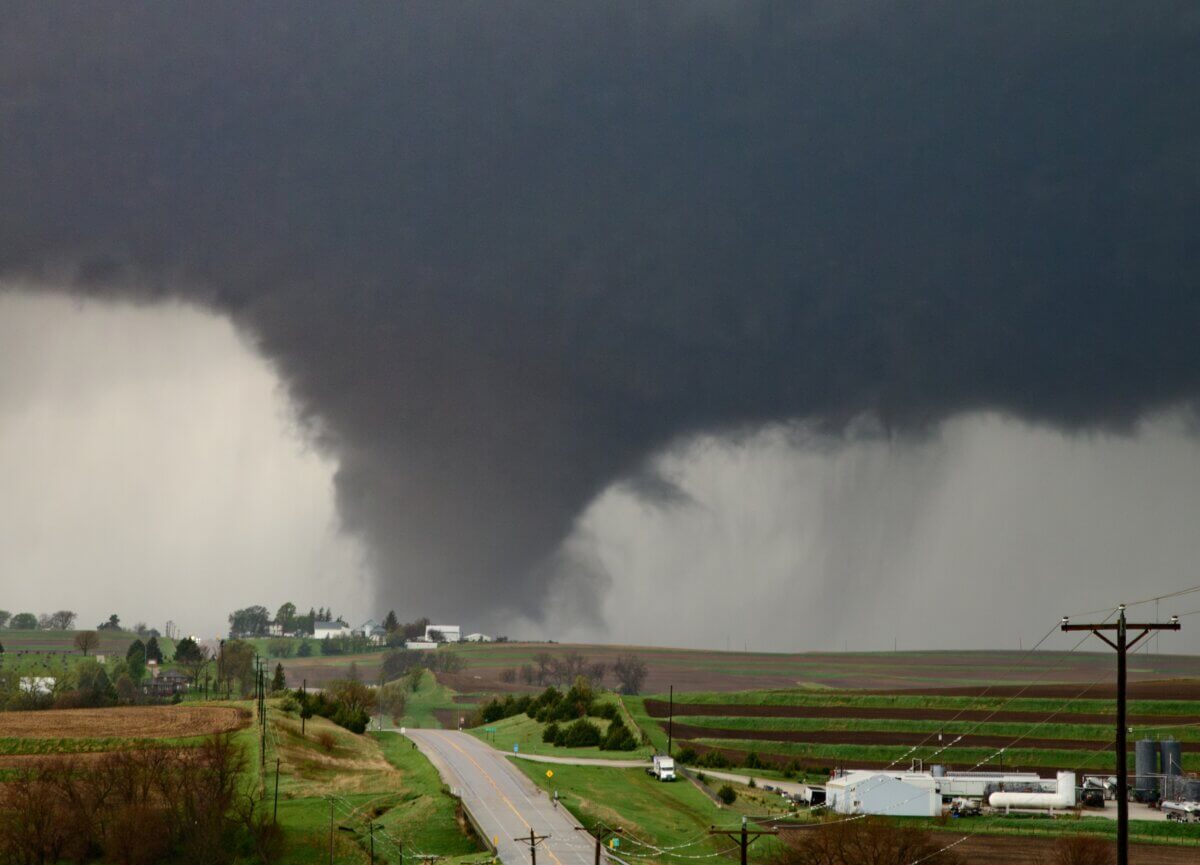
Armstrong’s study, conducted with support from the National Weather Service in Memphis, Tennessee, found that just 11% of respondents could properly identify a tornado warning as indicating a tornado had been sighted or detected on radar. Another 35% got part of the definition right. Perhaps most concerning, many respondents confused warnings with watches.
“We’ve found that many respondents misidentify a warning as a watch, which means conditions are favorable for a tornado,” Armstrong explains. “The findings indicate that, to reduce overall risk to the public, emergency personnel and disaster communication need to improve their overall messaging.”
This confusion is particularly alarming given the short warning times typically associated with tornadoes. Unlike hurricanes, which can be tracked for days, tornadoes often give little advance notice. The average lead time for a tornado warning is just 13 minutes. That’s barely enough time to gather your family and get to a safe location, let alone try to figure out what the warning actually means.
The study also uncovered some surprising insights about who is most likely to take protective action when a tornado threatens. Contrary to what you might expect, it’s not city dwellers with their advanced infrastructure and emergency services who are most prepared. Instead, rural residents reported higher levels of preparedness for severe weather.
Even more intriguing is the role of previous experience with tornadoes in preparedness. Those who have lived through tornadoes before reported needing less time to prepare when a new threat emerges. They’re ready to spring into action at a moment’s notice.
“Those who have past experiences with tornados reported that they needed fewer than 15 minutes to prepare when a warning was issued, but those without that experience wanted more lead time to prepare,” Armstrong notes. “It indicates that those who have been in a tornado warning know how to prepare and have a plan to take shelter. Those who have not, as is often the case, are less prepared.”
This “experience factor” creates a challenging dilemma for emergency managers and meteorologists. How do you craft warnings that are effective for both the tornado veterans and the newbies? It’s a balancing act between providing enough information for the inexperienced while not causing the experienced to delay taking action.
The study also highlighted the importance of clear, concise messaging in weather warnings. With only minutes to act, every second counts. Confusion over terminology or unclear instructions can waste precious time.
The takeaway is clear for residents of tornado-prone areas: don’t wait for a warning to start preparing. Have a plan in place, know where your safe space is, and be ready to move quickly. For those new to tornado country, take the time to educate yourself about the risks and the correct protective actions to take.
The challenge for meteorologists and emergency managers is to continue refining warning systems and public education efforts. How can we bridge the gap between the experienced and the novice? How can we ensure that everyone understands the urgency of a tornado warning?
As climate change potentially alters tornado patterns, bringing these deadly storms to new areas, the need for clear, effective warnings becomes even more crucial. This study serves as a wake-up call: when it comes to tornado preparedness, we can’t assume that everyone understands the basics. Lives may depend on our ability to communicate clearly and effectively in the face of nature’s most violent storms.
Paper Summary
Methodology
The researchers surveyed 679 adults living in the coverage area of the National Weather Service in Memphis, Tennessee. This area includes parts of Tennessee, Mississippi, Arkansas, and Missouri.
Participants answered questions about their tornado experiences, preparedness activities, and understanding of weather terms. They were also asked how much warning time they would need to prepare for a tornado and to define a “tornado warning” in their own words.
Key Results
The study found that people living in rural areas and those with more experience with tornadoes were more likely to engage in preparatory behaviors. Interestingly, those with more tornado experience reported needing less warning time to prepare, while those with less experience wanted more time.
Only about 47% of participants correctly understood what a tornado warning means. About 14% confused warnings with watches, and some provided dangerously incorrect information.
Study Limitations
The study was conducted in a specific region of the United States and may not be generalizable to all areas prone to tornadoes. The sample skewed heavily towards female and white participants. The survey was conducted outside of tornado season, which may have affected participants’ responses. Additionally, the study relied on self-reported data, which can be subject to bias.
Discussion & Takeaways
This study highlights the need for clearer communication about tornado warnings and the importance of tailoring messages to different audiences. It suggests that experience with tornadoes can lead to quicker preparation times, but also raises concerns about complacency among experienced individuals.
The confusion between watches and warnings underscores the ongoing need for public education about severe weather terms. The study also points to the potential benefits of targeting rural residents for preparedness education, as they reported higher levels of preparatory behaviors.
Funding & Disclosures
The study was supported by a $15,000 grant from the University Corporation for Atmospheric Research. Armstrong is now moving forward with a study of drought alert responses in FEMA Region 7, supported by a $15,000 grant from the University of Nebraska Medical Center’s College of Public Health.


