
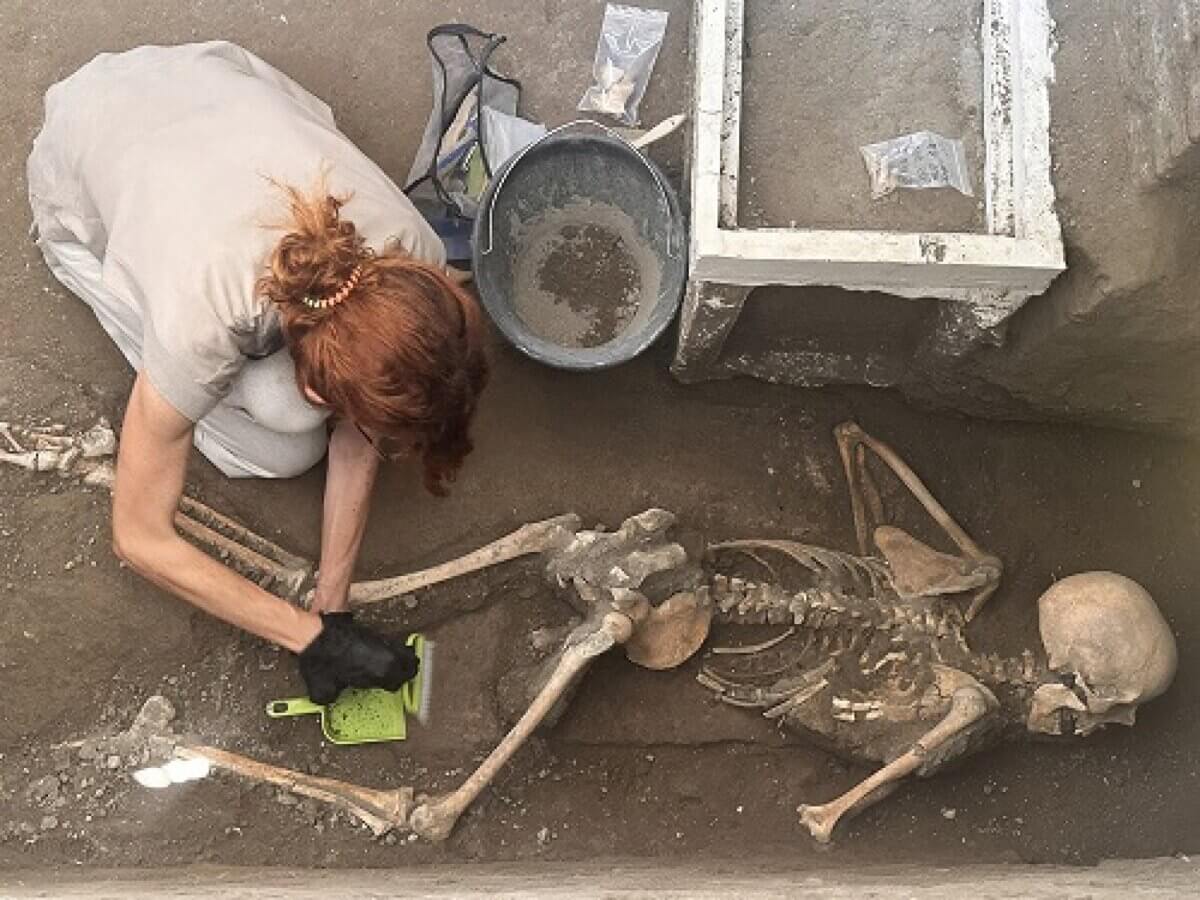
Researchers examine a new victim unearthed in the ancient city of Pompeii (credit: pompeiisites.org)
NAPLES, Italy — Gold, silver, and death intertwine in the latest archaeological revelation from Pompeii. Researchers have unearthed the remains of two victims of the catastrophic 79 AD eruption of Mount Vesuvius, along with a treasure trove that speaks volumes about life and loss in the ancient Roman world.
The discovery, made in a small room within a grand house, tells a tale of desperation, wealth, and the sudden, violent end that befell Pompeii’s inhabitants.
The find, detailed in the E-Journal of the Excavations of Pompeii., centers on two individuals – a young man and an older woman – found in different positions within the same modest room. This chamber, measuring just 2.80 by 3.50 meters, was nestled between more lavishly decorated spaces in a wealthy home. The contrast between the room’s simplicity and the valuable items found with the victims paints a complex picture of life and death in the doomed Roman city.
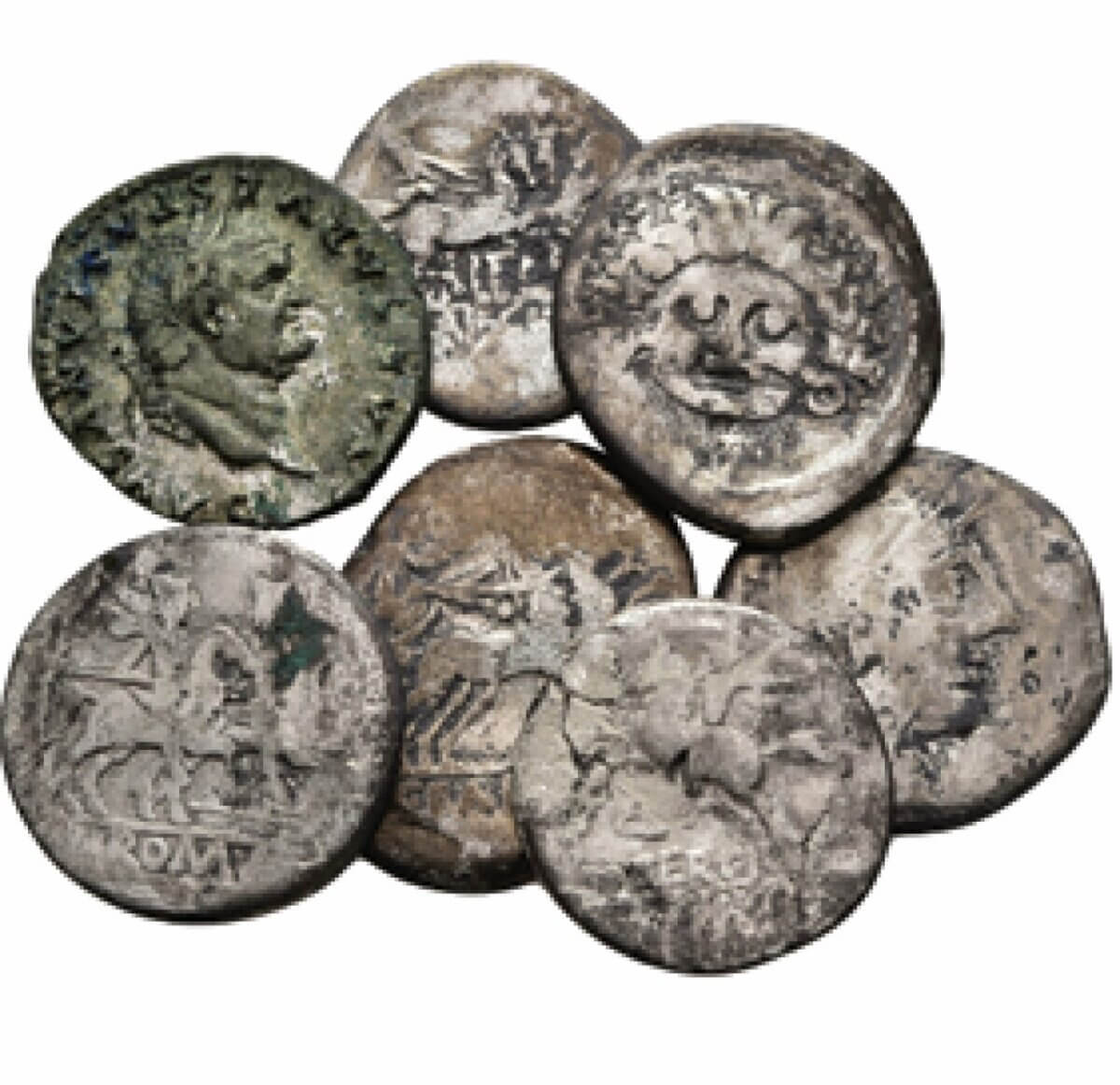
The woman, estimated to be between 35 and 45 years of age, was found near a wooden bed, her body contorted in what researchers describe as a fetal position. Nearby, archaeologists discovered a small treasure trove: golden earrings adorned with pearls, a silver pendant shaped like a crescent moon, and a collection of coins, including gold, silver, and bronze pieces. The total value of these coins amounts to about 696 sesterces – a significant amount during that period in history — equivalent to several months of wages for a skilled worker.
The man, believed to be between 15 and 20 years-old, was found in a different part of the room. His remains were discovered face-down on the floor, partially crushed by falling debris. Unlike the woman, he had no valuables with him except for a set of iron keys found near his pelvis.
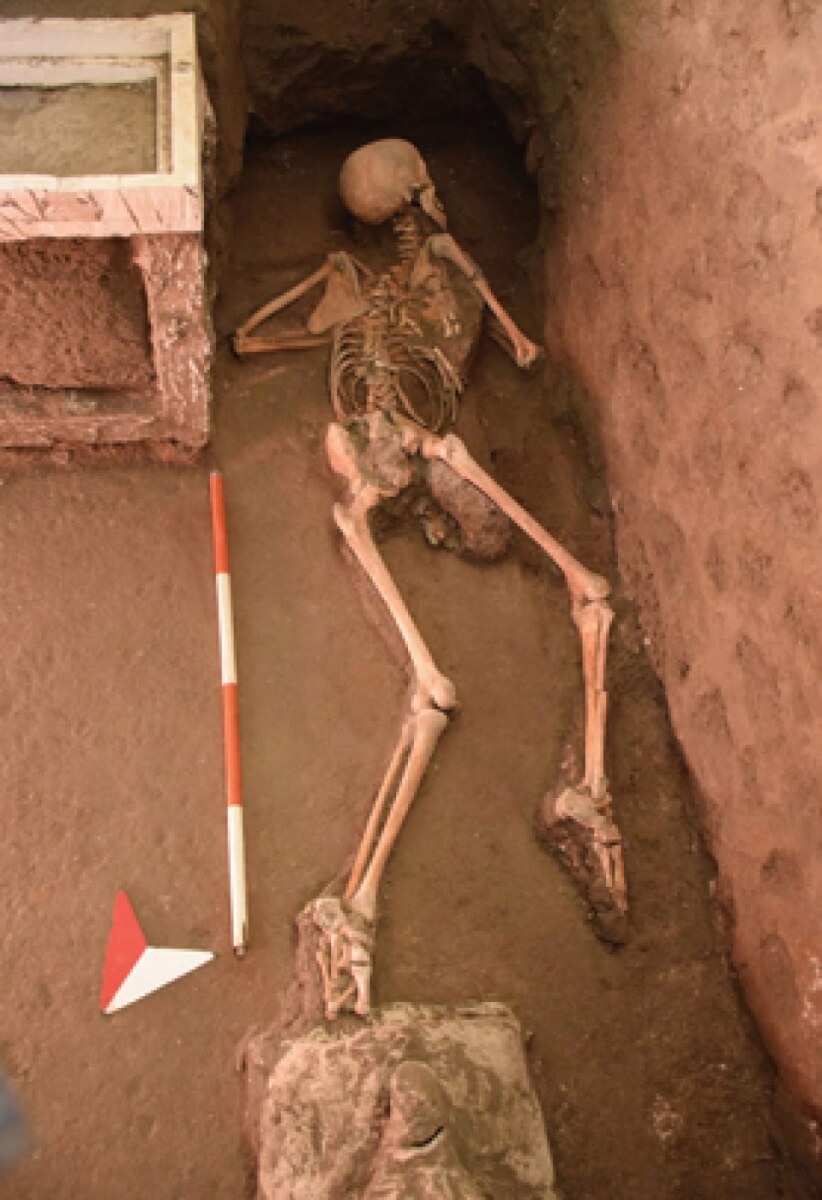
The room itself tells a story of its final moments. Researchers found evidence of furniture, including the wooden bed, a small table with a marble top, and a chest. These items were not directly preserved but left impressions in the volcanic ash that filled the room, allowing archaeologists to create plaster casts revealing their forms.
The discovery provides new insights into the final moments of Pompeii’s destruction. The volcanic material that entombed the victims suggests they died during a later phase of the eruption, likely on the morning of the second day. This phase was characterized by fast-moving, superheated clouds of volcanic gas and debris known as pyroclastic flows.
What makes this find particularly intriguing is the evidence it provides about how people reacted to the unfolding disaster. The woman’s possession of valuable items suggests she had gathered her most precious belongings, perhaps in preparation for an escape that never materialized. The young man’s position near a partially collapsed wall indicates he may have been trying to flee when he was struck down.
The contrast between the two victims – one with significant wealth, the other apparently without – raises questions about their relationship and their roles within the household. Were they family members, or was one a servant to the other? The answers remain elusive, but the discovery opens new avenues for understanding the social dynamics of ancient Roman society.
“The opportunity to analyze the invaluable anthropological data relating to the two victims found within the archaeological context that marked their tragic end, allows us to recover a considerable amount of information about the daily life of the ancient Pompeiians and the micro-histories of some of them, with precise and timely documentation, confirming the uniqueness of the Vesuvian territory,” says Park Director Gabriel Zuchtriegel in a media release.
“Pompeii remains an important site for research and conservation, but in the coming years we expect significant developments in the archaeological excavations and in the accessibility and understanding of the local territory as well, thanks to The Interministerial Committee for Economic Planning and Sustainable Development (CIPESS) investments recently announced by the Minister of Culture, Gennaro Sangiuliano.”


