(© Татьяна Макарова - stock.adobe.com)
LAUSANNE, Switzerland — When it comes to learning new motor skills, like playing the piano or mastering a golf swing, conventional wisdom suggests that older adults might have a harder time than their younger counterparts. But new research reveals that age may not be the deciding factor in who benefits from brain stimulation techniques designed to enhance learning. Instead, it’s your natural learning ability that determines whether such interventions will help or potentially hinder your progress.
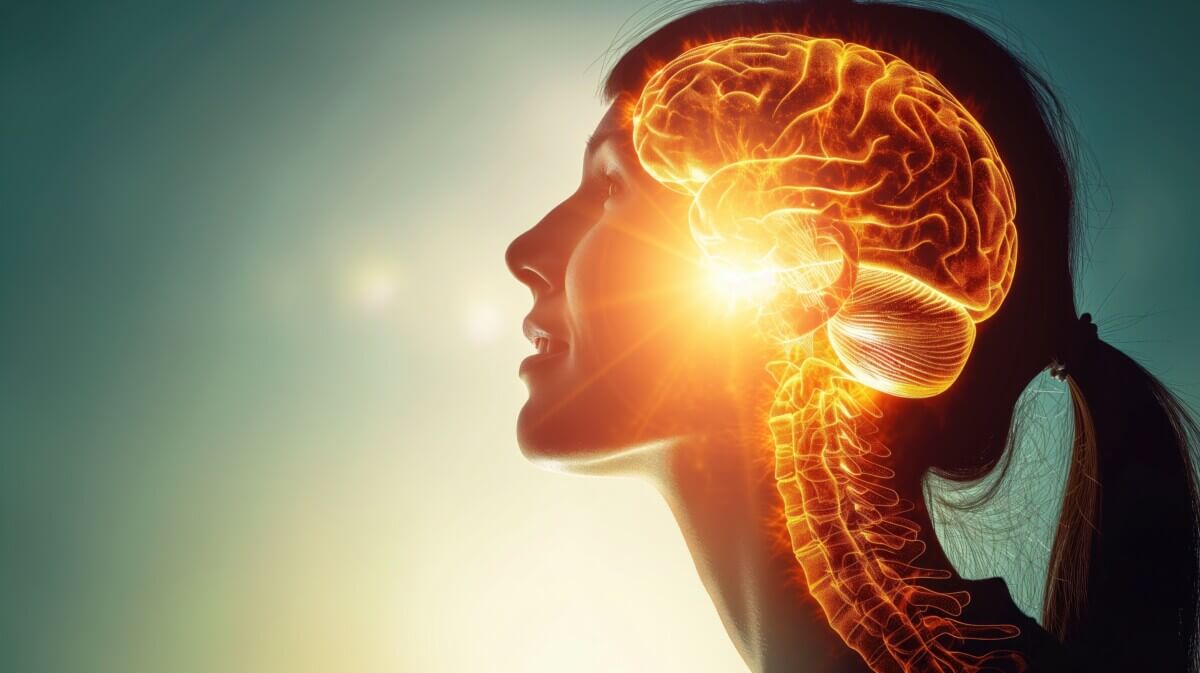
The study, conducted by researchers at École Polytechnique Fédérale de Lausanne and other institutions, challenges our assumptions about aging and learning while offering a potential pathway to more personalized brain stimulation treatments. The research team investigated how a technique called anodal transcranial direct current stimulation (atDCS) – which involves passing a weak electrical current through specific areas of the brain – affects people’s ability to learn a new motor skill.
Think of atDCS as a gentle dimmer switch for your brain cells. By applying a mild electrical current to specific areas of the brain, researchers can make neurons more or less likely to fire. This technique has shown promise in improving various cognitive and motor functions, particularly in older adults who may be experiencing age-related decline. However, the results of such interventions have been notably inconsistent across different studies and individuals.
They discovered that electrical brain stimulation works dramatically differently depending on a person’s learning capacity. Contrary to expectations, age was not the determining factor in how individuals responded to treatment.
The researchers studied a total of 153 healthy volunteers across three age groups. For the main modeling portion of the study, they included 41 young adults aged 18-30, 34 middle-aged adults aged 50-65, and 38 older adults aged over 65. They then validated their findings with an additional group of 40 participants (20 middle-aged and 20 older adults). All participants were right-handed and were tasked with performing a sequential finger-tapping task using their left (non-dominant) hand. The task involved replicating a shown nine-digit numerical sequence as quickly and accurately as possible using four buttons, similar to learning a simple melody on a piano.
Natural learners don’t benefit from brain stimulation?
What makes this study particularly interesting is that the researchers developed a machine learning model to predict who would benefit from brain stimulation based on their initial performance. They discovered that individuals who struggled more with learning the sequence initially showed the greatest improvements with atDCS, regardless of their age. Conversely, those who were naturally efficient learners either saw no benefit or, in some cases, actually performed worse with the stimulation.
“By leveraging different methods in machine learning, we were able to untangle the influence of different factors on the individual effects of brain stimulation,” says study author Pablo Maceira in a media release.
Researchers compare the brain stimulation effect to turning up the volume on a stereo system. For someone with a less efficient learning system (like trying to hear music through interference), amplifying the signal helps clarify the message. However, for someone with an already optimal system (like listening to perfectly clear music), adding more amplification might actually distort the sound.
The study also revealed something unexpected about older adults: some performed just as well as their middle-aged counterparts, challenging stereotypes about age-related decline in motor learning. This finding suggests that maintaining cognitive and motor abilities into older age might be more common than previously thought.
The research, published in the journal npj Science of Learning, promises a paradigm shift in neurorehabilitation, suggesting that tailored interventions based on individual learning mechanisms — not age — could help people recover lost skills more effectively.
“Clinicians could apply a more advanced version of our algorithm to determine whether a patient will benefit from a brain stimulation-based therapy,” envisions study leader Friedhelm Hummel.
The message is clear: in the world of brain enhancement, being a natural prodigy might actually be a handicap. Sometimes, having room for improvement is the best improvement of all.
Paper Summary
Methodology
This study explored how brain stimulation affects motor skill learning across different learner categories. Researchers conducted a randomized, placebo-controlled, double-blind experiment involving middle-aged and older adults. Participants practiced a finger-tapping task requiring precision and speed, with daily 20-minute sessions over ten days.
During training, some received anodal transcranial direct current stimulation (atDCS) over their motor cortex, while others received a placebo. Baseline performance data were used to classify participants into “optimal” and “suboptimal” learners using a machine-learning model. The study aimed to determine how individuals’ initial learning capabilities influenced their response to brain stimulation.
Key Results
The study found that atDCS had varying effects depending on the learner’s baseline abilities. Suboptimal learners, characterized by delayed accuracy improvements during training, showed significant benefits from stimulation. They achieved faster accuracy optimization compared to those receiving placebo.
In contrast, optimal learners, who demonstrated rapid accuracy improvements without stimulation, experienced minimal or even detrimental effects from atDCS. These findings suggest that atDCS has a restorative effect, aiding those with less efficient learning mechanisms rather than enhancing already optimal systems.
Study Limitations
First, the sample size within specific learner categories was small, particularly among older adults, leading to variability in results. Additionally, the study focused exclusively on motor skill acquisition using a finger-tapping task, limiting generalizability to other types of learning.
The long-term effects of atDCS and its applicability to broader populations, such as younger adults or clinical groups, remain uncertain. Finally, the algorithm’s predictions were based on a specific dataset, which may not perfectly translate to diverse settings or tasks.
Discussion & Takeaways
The study highlights the importance of tailoring brain stimulation interventions to individual learning profiles. The differential effects of atDCS underline the need for personalized approaches in neurorehabilitation and skill acquisition training. Suboptimal learners benefited the most, reinforcing the idea that brain stimulation can act as a compensatory tool rather than a universal enhancer.
However, the potential for harm in optimal learners cautions against indiscriminate use of such technologies. Future research should explore broader applications and refine predictive models to maximize the benefits of brain stimulation while minimizing risks.
Funding & Disclosures
This research was funded by the Defitech Foundation, the Bertarelli Foundation’s Catalyst Program, and the Swiss National Science Foundation. All authors declared no competing interests. The study adhered to ethical guidelines, with participants providing informed consent under protocols approved by the Cantonal Ethics Committee Vaud, Switzerland.


