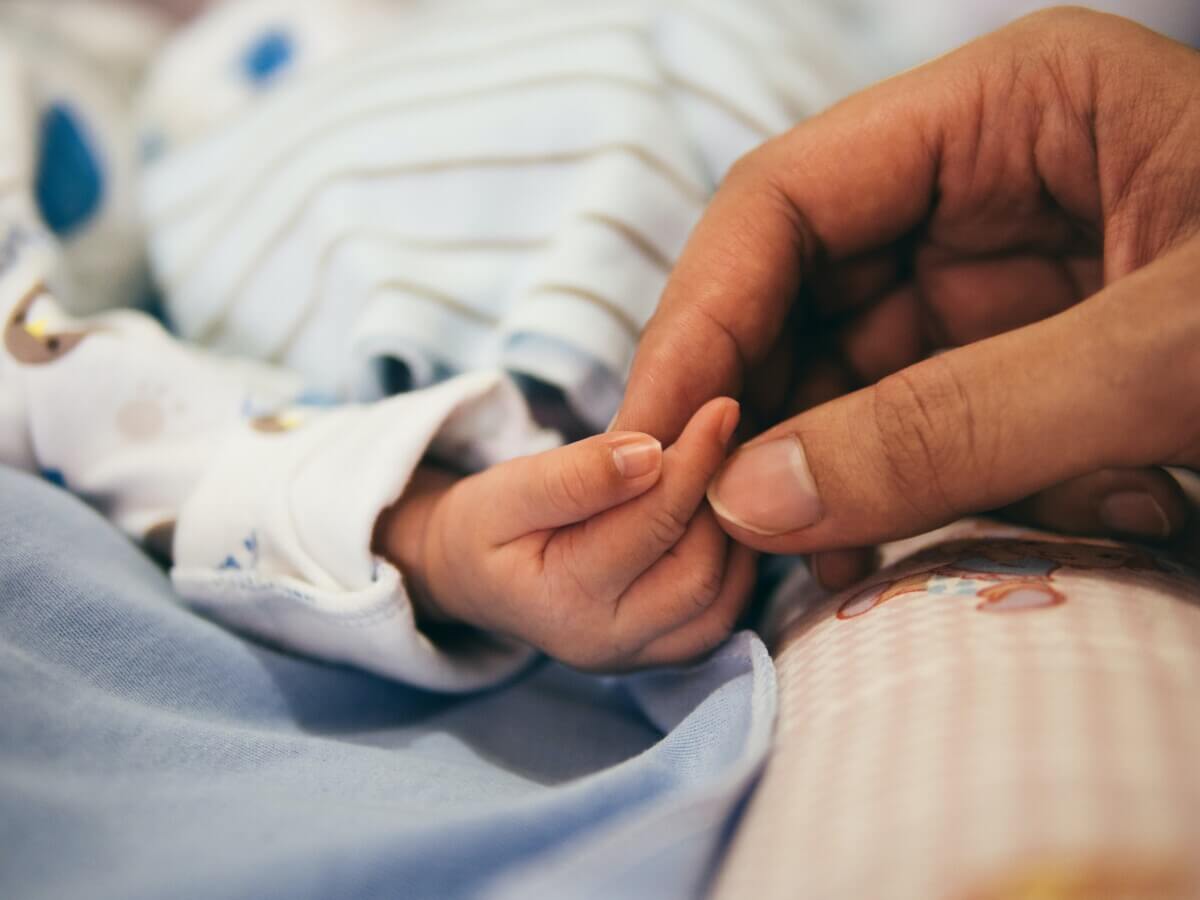
Photo by Aditya Romansa on Unsplash
In A Nutshell
- Baby names are becoming more uncommon globally: All seven countries studied (from the U.S. to Japan to Indonesia) show the same trend over the past 100+ years
- Common names are losing ground fast: The share of babies receiving top 10 names has plummeted since the 1800s in Western nations and since the 1950s in Asian countries
- This reflects a shift toward individualism: Parents increasingly value standing out over fitting in, making name choice a window into broader cultural change
- The irony: everyone’s trying to be unique: When distinctiveness becomes the norm, picking a traditional name might be the most countercultural choice of all
If you’re planning to name your baby Emma or Liam, you’re actually making a pretty bold choice. Not because those names are particularly unusual, but because choosing any name that thousands of other parents also pick is becoming increasingly rare.
A new review of baby naming data from seven countries reveals parents everywhere, from Tokyo to Paris to New York, are abandoning traditional popular names at a dramatic rate. The Marys and Johns of the world are disappearing, and in their place is an explosion of names that would have seemed unthinkable to previous generations.
Yuji Ogihara, a researcher at Aoyama Gakuin University in Tokyo, examined over a century of naming records and found that every single country studied showed the same pattern. Between 1880 and 2019, depending on location, the share of babies receiving common names plummeted while unusual and uncommon names soared. What makes this startling is that it happened across cultures (Western Europe, North America, East Asia, and Southeast Asia) all at roughly the same time. Some data came from entire nations while other studies focused on specific regions or cities, but the pattern held across different scales.
What’s Really Driving the Shift Away from Common Names
Names reveal how we see ourselves and what we value as a society. When parents name their child after a respected elder or pick from a short list of traditional options, they’re signaling that belonging and tradition matter. But when millions of parents independently decide their child needs a name no one else has, something bigger is happening.
Ogihara sees this as evidence of a global shift toward individualism: the idea that standing out matters more than fitting in. “Giving uncommon names to babies is one of the valid indicators of individualism,” he notes. In other words, the baby name explosion isn’t just about creativity. Parents today want their children to have distinct identities from day one.
What’s actually causing this shift remains an open question, but several forces might be at play. Social media could be making it easier than ever to discover unusual names and harder to avoid seeing how many other kids share your child’s name. Economic changes may have made personal branding more important: having a distinct identity can feel like a professional advantage. And in an increasingly connected world where your child will compete globally, not just locally, standing out might feel more necessary than ever. These are plausible explanations, though researchers haven’t yet proven which factors matter most.

How Different Cultures Are Making Names More Uncommon
The specifics of how this plays out vary by culture, and that’s where things get interesting.
In Japan, parents found a clever workaround. Japanese names use Chinese characters that can be pronounced multiple ways, so parents started using common characters but reading them in highly unusual ways. A name might look traditional on paper but sound completely unexpected when spoken aloud. Between 2004 and 2018, the rate of common Chinese characters actually increased while common pronunciations decreased. The written form variations in common pronunciations decreased, but pronunciation variations in common character combinations increased. Parents essentially hacked the naming system to create distinctiveness within tradition.
France offers one of the longest views of this change. Across 220 years of data, from 1800 to 2019, the percentage of babies receiving the single most popular name or one of the top 10 steadily declined. This happened through wars, revolutions, periods of prosperity and hardship, suggesting the forces driving it run deeper than any single historical moment.
In the U.S., the numbers are striking. During the 1880s, the top 10 boys’ names accounted for a massive share of all babies born. By 2015, even names that ranked in the top 10 were given to far fewer babies than top names received more than a century earlier. The same pattern held at the state level, meaning this wasn’t just a big-city phenomenon. One caveat: older data has limitations. Social Security number holders represented only 20% of babies in 1909, though this increased to 80% by 1919 and approached 100% after 1952.
China took a different approach. Between 1950 and 2009, parents began selecting rarer characters from the thousands available in the Chinese writing system. After 1960, they also broke from convention in another way. While the majority of Chinese given names consist of two characters, name lengths became more deviant from this typical practice as one-character and three-character names increased.
What This Means for Parents Today
If you’ve agonized over your child’s name, worried it’s either too common or too unusual, you’re not alone. Parents today face a naming landscape their own parents couldn’t have imagined. Previous generations could consult a relatively short list of acceptable options. Now, the pressure to be original competes with the fear of going too far.
This study, published in Humanities and Social Sciences Communications, may explain why baby name websites and apps have become such big business. Parents aren’t just looking for a name they like, they’re trying to gauge how uncommon it is, how it will age, whether other kids will have it. The stakes feel higher when distinctiveness itself has become a value.
There’s an irony here, too. When everyone tries to stand out, being different becomes the norm. Parents who pick uncommon names are actually following the crowd, just in a different direction. The most countercultural choice might now be to pick a traditional, popular name.
Where Name Trends Go From Here
Researchers don’t yet know if this pattern extends beyond the seven countries studied. The data comes from Europe, North America, and Asia, but what about Africa, the Middle East, or South America? Different cultures could show different patterns, or the trend could be even more universal than current evidence suggests.
There’s also a practical limit to how far this can go. At some point, parents run out of pronounceable combinations or start recycling “unusual” names from previous generations. Some older names already feel fresh again precisely because they’ve been absent for so long.
But for now, the trend shows no signs of slowing. Every country studied showed the same pattern across different time periods and political systems. Millions of parents making independent decisions have created a measurable global shift in how we name our children, and by extension, how we think about identity, individuality, and what it means to stand out.
Whatever you name your child, you’re making a statement about these values whether you realize it or not. And if recent history is any guide, the odds are good you’re leaning toward something a little different from what your parents would have chosen.
Paper Notes
Study Limitations
The research has several limitations. First, sample representativeness varies. Some studies analyzed entire national datasets with millions of names, while others examined only specific cities or regions. Germany’s study focused on one small city (Gerolstein), making it unclear whether the pattern applies across the entire country. Indonesian research covered only parts of Java, not other Indonesian regions. U.K. studies examined England and Wales but not Scotland or Northern Ireland.
Second, older historical data often has lower representativeness. U.S. studies drew from Social Security Administration records. Rates of Social Security number holders were only 20% in 1909, though this increased to 80% by 1919 and approached 100% after 1952.
Third, research has concentrated on European, American, and Asian nations. Whether uncommon names are also increasing in African, Middle Eastern, or other cultural regions remains unknown.
Funding and Disclosures
This work was supported by Japan Society for the Promotion of Science (JSPS KAKENHI; Grant Number: 19K14368). Ogihara declares no competing interests.
Publication Details
Author: Yuji Ogihara, Aoyama Gakuin University, Tokyo, Japan | Journal: Humanities and Social Sciences Communications | Title: Uncommon names are increasing globally: a review of empirical evidence on naming trends | Volume/Issue: (2025) 12:1826 | DOI: https://doi.org/10.1057/s41599-025-06156-1 | Article Type: Review | Published: November 25, 2025 | License: Creative Commons Attribution-NonCommercial-NoDerivatives 4.0 International License
This review article synthesized findings from multiple published studies examining naming trends across seven nations: Germany (Gerhards & Hackenbroch, 2000), United States (Twenge et al., 2010, 2016), United Kingdom (Bush et al., 2018; Bush, 2020), France (Mignot, 2022), Japan (Ogihara et al., 2015; Ogihara, 2021a, 2022; Ogihara & Ito, 2022), China (Cai et al., 2018; Bao et al., 2021), and Indonesia (Kuipers & Askuri, 2017).


