
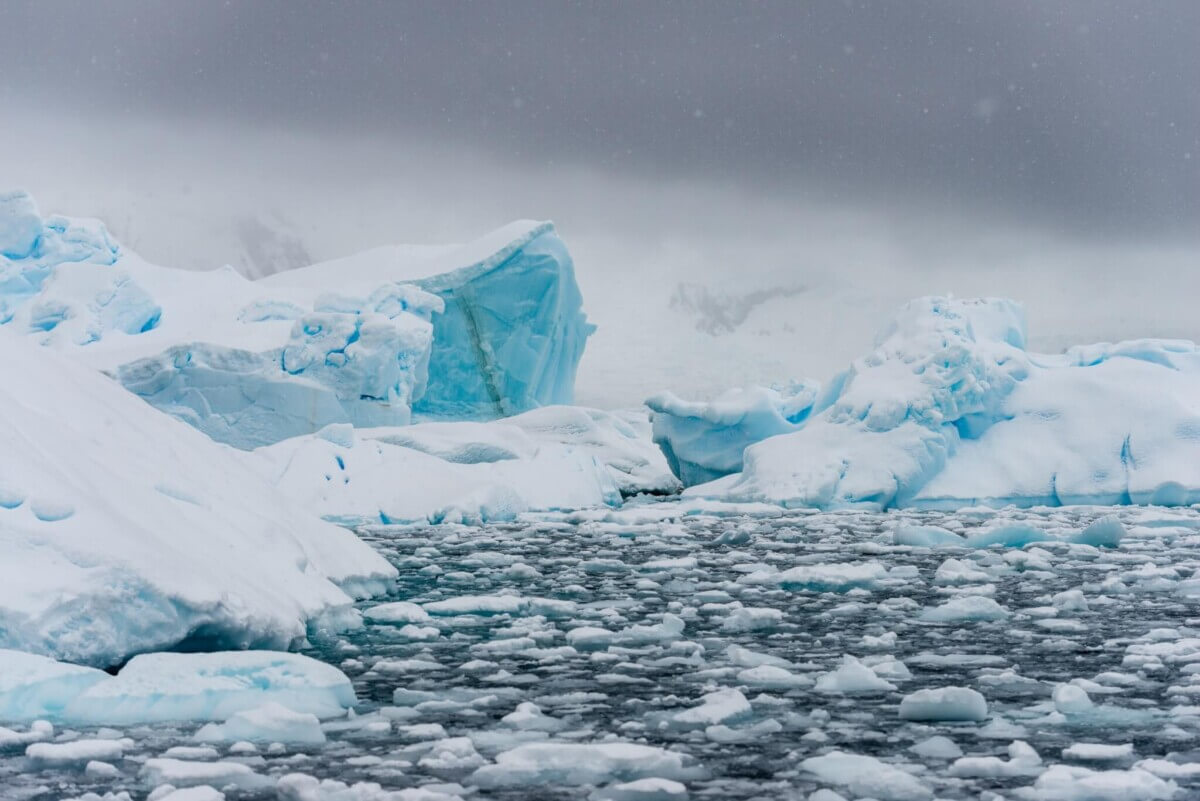
(Credit: Paul Carroll on Unsplash)
SOUTHAMPTON, United Kingdom — Deep beneath Antarctica’s icy surface, a new study warns there is a hidden danger lurking that threatens the stability of this mysterious continent. Warm ocean currents are steadily carving away at the underside of massive ice shelves, potentially accelerating the melting of the continent’s vast ice sheets. This process could have far-reaching consequences for global sea levels in the coming decades and centuries.
The study published in Nature Communications sheds light on how these warm currents reach Antarctica’s vulnerable ice shelves. The research, led by scientists from Italy’s National Institute of Oceanography and Applied Geophysics, reveals that submarine canyons play a crucial role in funneling warm water toward the Antarctic coast.
These findings are particularly relevant for two key areas of East Antarctica: the Sabrina Coast, home to the rapidly melting Totten Glacier, and George V Land, where the Ninnis Glacier resides. Both glaciers are part of enormous ice drainage systems that, if fully melted, could raise global sea levels by several meters.
The culprit behind this melting is a water mass known as Circumpolar Deep Water (CDW). This relatively warm water, typically found in the Southern Ocean surrounding Antarctica, has been increasingly making its way onto the continental shelf – the underwater extension of the Antarctic landmass. As CDW reaches the ice shelves (the floating extensions of glaciers), it accelerates melting from below.
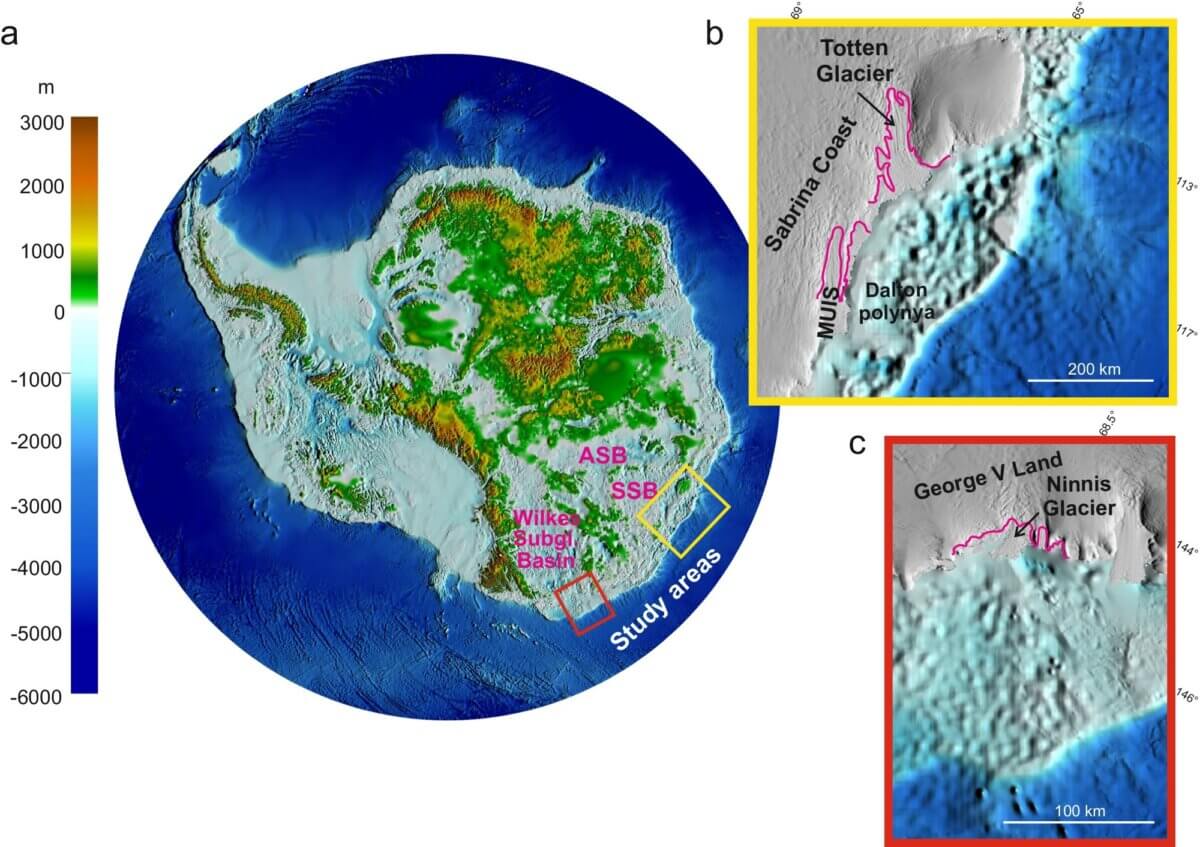
Until now, scientists have struggled to understand exactly how CDW travels from the deep ocean onto the shallower continental shelf. This new research highlights the important role played by submarine canyons — massive underwater valleys carved into the seafloor.
Using advanced sonar technology, the research team mapped the seafloor off the coast of East Antarctica in unprecedented detail. They discovered a series of submarine canyons cutting across the continental slope — the area where the seafloor transitions from the deep ocean to the shallower continental shelf.
The scientists were drawn to unique sediment deposits found on the eastern sides of these canyons. These deposits, known as sediment drifts, are telltale signs of sustained ocean currents flowing southward — exactly the direction needed to transport warm CDW toward the ice shelves.
“The intrusion of relatively warm water onto the continental shelf is widely recognized as a threat to the Antarctic ice sheet,” says lead author Federica Donda, a marine geologist in the OGS Geophysics Department, in a media release. “Constraining the extent and long-term persistence of this phenomenon is fundamental to analyze the potential responses of the ice sheet to global warming.”
“The analysis of geophysical and oceanographic data collected during an Italian-Australian multidisciplinary cruise led to the discovery of dome-shaped sedimentary bodies (sediment drifts) several thousand meters wide and 40 to 80 meters thick, whose internal and external characteristics indicate that they were formed by bottom currents directed towards the continental shelf,” Donda continues.
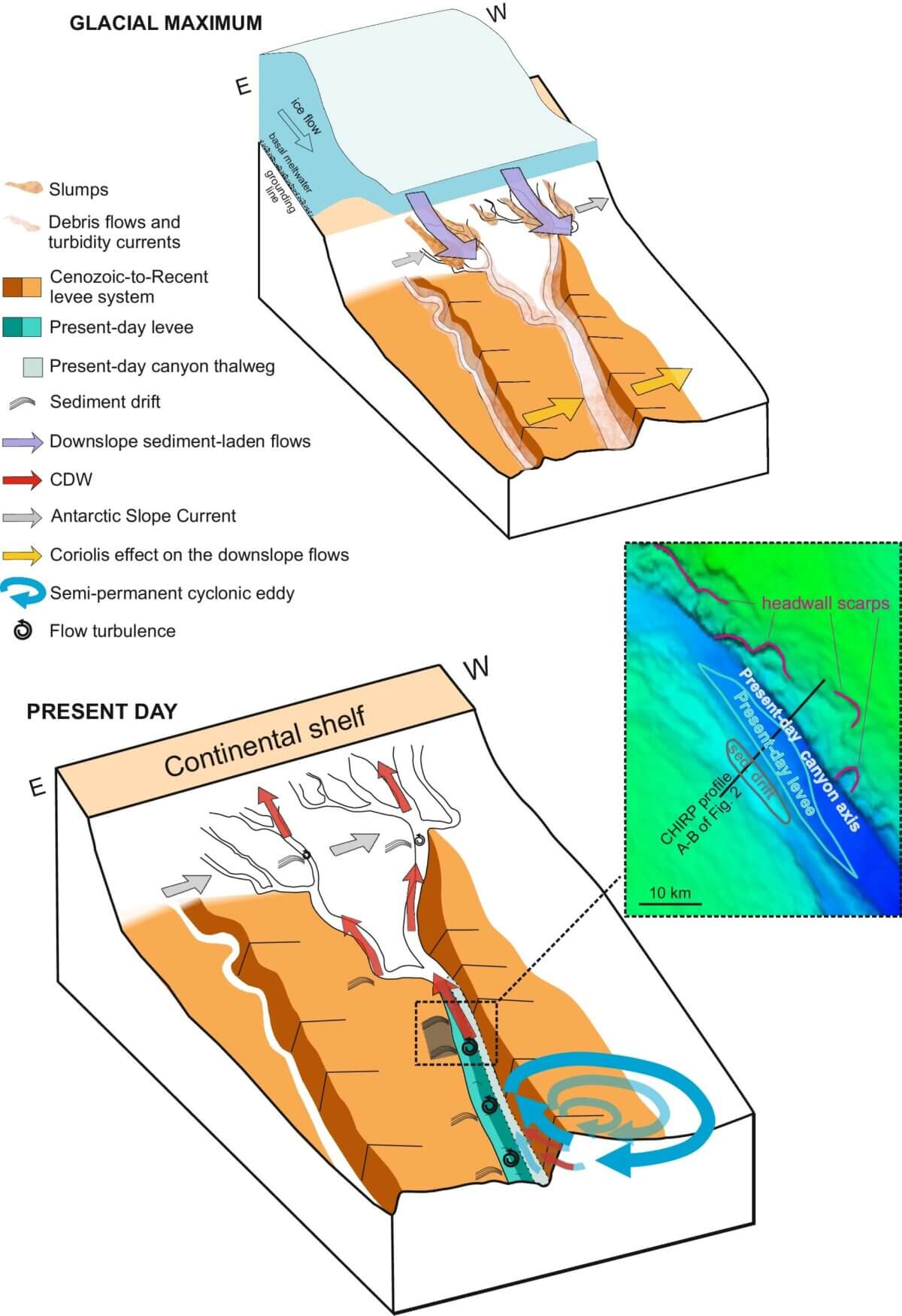
This long-term perspective is crucial for understanding how Antarctic ice sheets might respond to future climate change. If warm water intrusion has been a persistent feature over geologic timescales, it suggests that certain areas of the East Antarctic Ice Sheet may be more vulnerable to melting than previously thought.
The implications of this research extend far beyond the realm of academic interest. The Totten and Ninnis Glaciers, which drain vast areas of the East Antarctic Ice Sheet, have the potential to significantly impact global sea levels if they continue to melt at accelerated rates.
“Until a few years ago we thought that the East Antarctic Ice Sheet was stable,” adds Dr. Alessandro Silvano from the University of Southampton. “Today we know not only that some East Antarctic glaciers are melting, but thanks to this work, we have also discovered that there are preferential ways for warm waters to reach persistently two of the largest glaciers on Earth and melt them from below.”
While the study focuses on two specific areas of East Antarctica, the researchers believe their findings likely apply to other regions around the continent. Submarine canyons are common features along the Antarctic margin, suggesting that this mechanism for warm water transport could be widespread.
The research also highlights the complex interplay between ocean currents, seafloor topography, and ice sheet dynamics. As climate change continues to alter ocean temperatures and circulation patterns, these interactions may become even more critical in determining the fate of Antarctic ice.
Looking ahead, the scientists stress the need for continued monitoring and research in these remote polar regions. As global temperatures continue to rise, the race is on to better understand and predict the future of Earth’s frozen continent.
Paper Summary
Methodology
The researchers used several techniques to investigate the seafloor and ocean currents off East Antarctica:
- Sonar mapping: Ships equipped with special sonar devices sent out sound waves to the seafloor. By measuring how long it took for the echoes to return, they created detailed 3D maps of the underwater landscape, revealing canyons and other features.
- Sediment analysis: They used devices to take “cores” or samples of seafloor sediment. By examining the layers in these cores, they could determine how sediments were deposited over time.
- Ocean measurements: Instruments called CTDs (Conductivity, Temperature, Depth sensors) were lowered into the water to measure properties like temperature and salinity at different depths. This helped identify different water masses, including the warm Circumpolar Deep Water.
Key Results
The main findings of the study were:
- Submarine canyons exist along the East Antarctic continental slope.
- Sediment drifts were found on the eastern sides of these canyons, indicating long-term southward water flow.
- Warm Circumpolar Deep Water was detected in these canyons and on parts of the continental shelf.
- The canyons appear to act as pathways for warm water to move toward the ice shelves.
Study Limitations
Some limitations of the study include:
- Limited geographical coverage: The research focused on two specific areas of East Antarctica. More widespread sampling is needed to confirm if these findings apply to the entire continent.
- Lack of long-term observations: While sediment drifts suggest long-term patterns, the study doesn’t have direct measurements of ocean currents over extended periods.
- Uncertainty in future projections: While the study improves our understanding of warm water pathways, it doesn’t directly predict future melting rates or sea level rise.
Discussion & Takeaways
The key points from the study’s discussion are:
- Submarine canyons play a crucial role in transporting warm water toward Antarctic ice shelves.
- This mechanism may have been active for long periods, potentially making some areas of East Antarctica more vulnerable to melting than previously thought.
- The findings have implications for understanding past ice sheet behavior and predicting future sea level rise.
- More research is needed to fully understand how these processes might change under different climate scenarios.
- The study highlights the importance of detailed seafloor mapping and ocean monitoring around Antarctica to improve climate models and sea level rise predictions.


