(Credit: Talaj/Shutterstock)
READING, United Kingdom — For over a century, scientists have assumed that the relationship between brain size and body size in mammals followed a simple, linear pattern. The larger an animal’s body, the proportionally larger its brain was thought to be. However, new research published in the journal Nature Ecology and Evolution reveals that reality is far more complex.
The study, led by researchers from the University of Reading and Durham University, analyzed brain and body size data from an impressive 1,500 mammal species. Their findings overturn the conventional wisdom about brain-body size relationships and offer a fresh perspective on how brains have evolved across the mammalian family tree.
One of the most surprising discoveries is that the largest animals do not, in fact, have proportionally bigger brains as previously believed.
“For more than a century, scientists have assumed that this relationship was linear – meaning that brain size gets proportionally bigger, the larger an animal is. We now know this is not true,” explains Professor Chris Venditti, the study’s lead author from the University of Reading, in a statement. “The relationship between brain and body size is a curve, essentially meaning very large animals have smaller brains than expected.”
“Our results help resolve the puzzling complexity in the brain-body mass relationship,” adds Professor Rob Barton, co-author from Durham University. “Our model has a simplicity that means previously elaborate explanations are no longer necessary – relative brain size can be studied using a single underlying model.”
The implications of this discovery go beyond just correcting a mathematical model. It suggests that we may need to rethink how we interpret relative brain size in mammals, especially when comparing animals of vastly different sizes. For years, a larger relative brain size has often been associated with higher intelligence or cognitive abilities. However, this new understanding of the brain-body relationship indicates that such comparisons may not be as straightforward as previously thought.
The researchers didn’t stop at uncovering this curved relationship. They also used advanced statistical techniques to examine how brain size has evolved over time in different mammal groups. Their findings challenge another long-standing idea in evolutionary biology known as the “Marsh-Lartet rule,” which suggested that mammals have generally evolved larger relative brain sizes over time.
Contrary to this rule, the study found that only three mammal groups showed a clear trend toward increasing relative brain size: primates, carnivores, and rodents. The trend was strongest in primates, which include humans and our closest animal relatives.
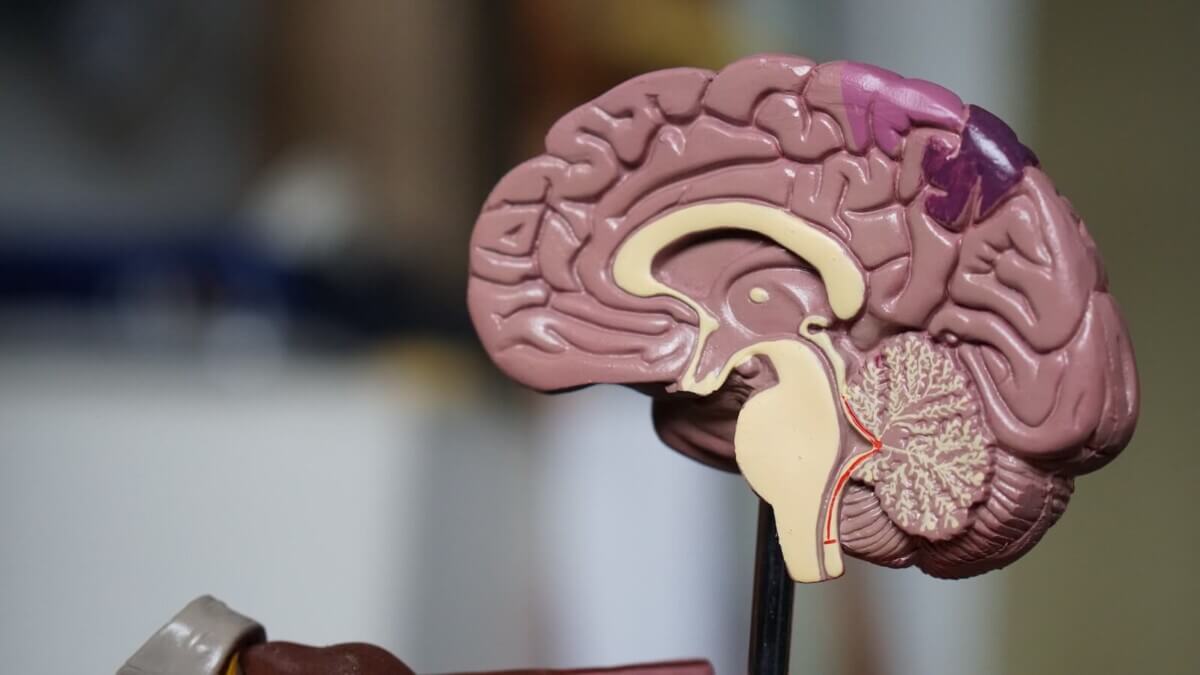
This primate-specific trend is particularly intriguing as it sets the stage for the eventual emergence of human-level cognitive abilities. The study reveals that our own species, Homo sapiens, has evolved more than 20 times faster than all other mammal species, resulting in the exceptionally large brains that characterize humanity today. The research also uncovered interesting patterns in how quickly brain size changed in different mammal groups.
“Our results reveal a mystery. In the largest animals, there is something preventing brains from getting too big. Whether this is because big brains beyond a certain size are simply too costly to maintain remains to be seen,” says co-author Dr. Joanna Baker from the University of Reading.
This “curious ceiling” on brain size isn’t limited to mammals. The researchers observed similar patterns in birds, suggesting that this phenomenon might be more universal across the animal kingdom. Understanding what causes this limit could provide valuable insights into the constraints and trade-offs involved in brain evolution.
The study also revealed that all groups of mammals demonstrated rapid bursts of change in brain size throughout their evolutionary history. For example, bats rapidly reduced their brain size when they first evolved but then showed very slow rates of change, possibly due to constraints related to the demands of flight.
These findings open up new avenues for research into the factors that drive brain evolution. They suggest that rather than following a universal trend towards bigger brains, different mammal groups have experienced distinct evolutionary pressures that shaped their brain size over time.
As with any groundbreaking study, this research raises as many questions as it answers. Why does the brain-body relationship follow this curved pattern? What specific factors drove the unique trend in primate brain evolution? And how might this new understanding change our interpretations of fossil evidence and our theories about the evolution of intelligence?
While much remains to be explored, one thing is clear: our understanding of brain evolution is far from complete. As we continue to refine our methods and challenge our assumptions, we’re likely to uncover even more surprises about how our brains, and those of our fellow mammals, came to be the way they are today.
Paper Summary
Methodology
The researchers analyzed brain and body mass data from 1,504 mammal species, using a comprehensive evolutionary tree to account for the relationships between species. They employed advanced statistical techniques, including Bayesian Markov chain Monte Carlo regression, to model the relationship between brain and body size while accounting for evolutionary history.
This allowed them to test different models of how brain size relates to body size and how this relationship might vary across different mammal groups. They also used methods to detect changes in the rate of brain size evolution across the mammalian family tree.
Key Results
The study found that the relationship between brain and body mass in mammals is best described by a curved (quadratic) line when plotted on a logarithmic scale rather than a straight line as previously assumed. This single-curved relationship fit the data better than models that assumed different linear relationships for different mammal groups.
The researchers also found significant variation in the rate of relative brain size evolution across mammals, with primates, rodents, and carnivores showing the most variation. Only these three groups showed a clear trend of increasing relative brain size over evolutionary time, with the trend being strongest in primates.
Study Limitations
While comprehensive, the study was limited to extant (living) mammal species, which may not fully represent historical diversity. The analysis also relied on species averages for brain and body size, which doesn’t account for individual variation within species. Additionally, while the study reveals patterns in brain size evolution, it doesn’t directly explain the mechanisms behind these patterns.
Discussion & Takeaways
This study challenges several long-held assumptions about mammalian brain evolution. The curved relationship between brain and body size explains several puzzling phenomena that previously required complex explanations. It suggests that comparisons of relative brain size across species, especially those of very different sizes, may need to be reevaluated.
The finding that only a few mammal groups show a trend towards increasing relative brain size contradicts the idea of a universal trend towards bigger brains in mammal evolution. The unique trend in primates hints at special factors in this group’s evolution that may have set the stage for human cognitive evolution. Overall, the study demonstrates the importance of continually questioning assumptions and refining methods in evolutionary biology, and it opens up new avenues for research into the factors driving brain evolution.


If the fact of the matter was considered ; that mankind was created along with the brain at the same time, it stands to reason that the brain would fit the size of the skull. The creator formed a perfect body out of the dust of the ground and then he made a female mate for procreation to continue the human species. The brain continued as the original brain had been made in original male.