
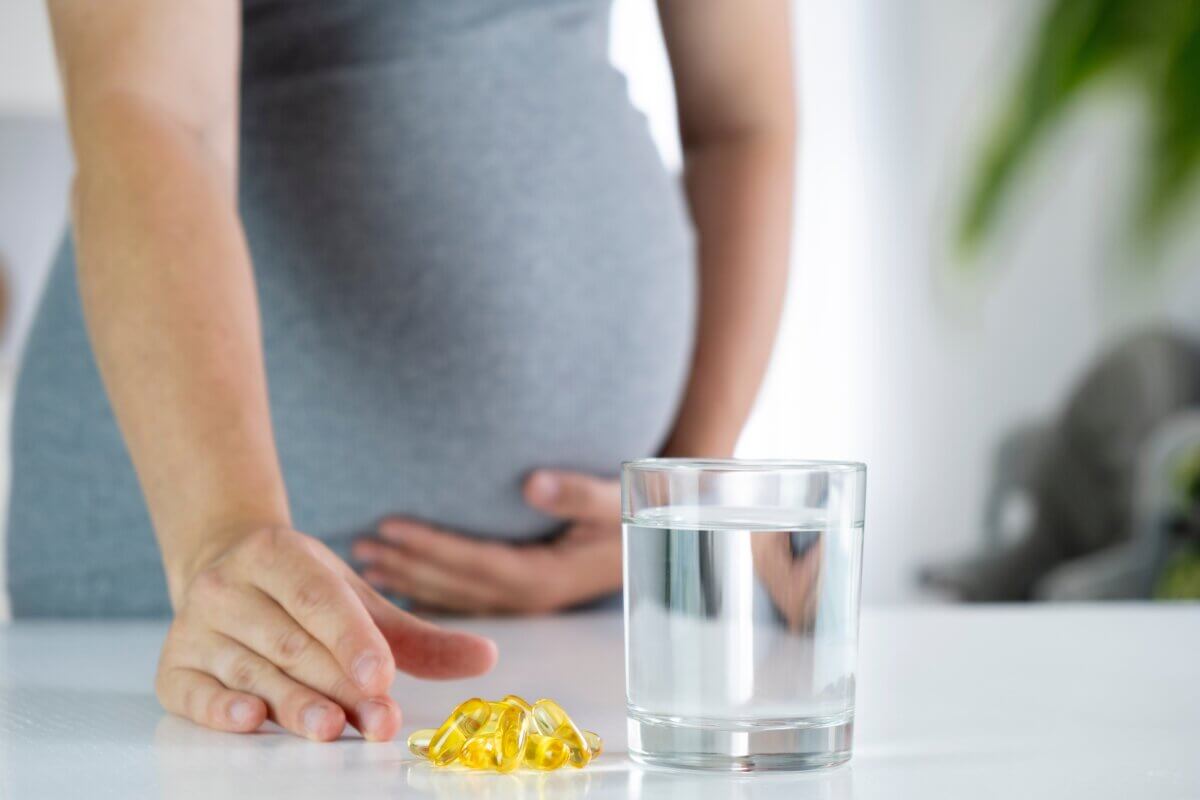
(Credit: Nemer-T/Shutterstock)
SOUTHAMPTON, United Kingdom — Forget milk — a recent study finds the key to building strong bones in children is for mothers to keep their vitamin D levels high during pregnancy. Bone density scans showed children had greater bone mineral density when their mothers-to-be took extra vitamin D supplements compared to mothers who did not.
The study published in The American Journal of Clinical Nutrition found that taking vitamin D supplements during pregnancy led to children developing bones with higher bone mineral density. These bones showed higher density, which suggests they may be stronger, and the effect persisted into mid-childhood. The findings stress the need for vitamin D supplementation during pregnancy.
Vitamin D plays an important role in regulating the amount of calcium and phosphate in the body. Both minerals help build strong bones, teeth, and muscles.
“This early intervention represents an important public health strategy,” says Dr. Rebecca Moon, a NIHR Clinical Lecturer in Child Health at the University of Southampton and lead study author, in a media release. “It strengthens children’s bones and reduces the risk of conditions like osteoporosis and fractures in later life.”
Researchers created the MAVIDOS study, recruiting over 1,000 women from several areas in the United Kingdom. The pregnant women were randomly assigned to two groups. One group took an additional 1,000 International Units per day of vitamin D, while the second group took a daily placebo tablet.
Prior research showed children’s bone mass was greater at four years-old when they were born to mothers taking vitamin D supplements than those who did not. The current study tracked the bone health of 454 children between the ages of six and seven to see whether this increased bone health persisted into mid-childhood.
So far, the MAVIDOS trial has helped researchers better understand how maternal vitamin D supplementation helps children’s future bone mass. In 2018, they found evidence of vitamin D supplements changing gene activity, forming part of the vitamin D pathway. Following up on those findings was a 2022 study where taking vitamin D supplements during pregnancy lowered the chances of babies developing atopic eczema for up to one year. Additionally, women were more likely to go through natural vaginal delivery when taking supplements.
The latest results paint a more complete picture of the relationship between vitamin D during pregnancy and children’s bone health, showing how extra supplementation helps bone mass for years to come.
“These findings add to the important knowledge generated through the MAVIDOS trial,” says project lead Nicholas Harvey, a professor at the University of Southampton. “We extend our heartfelt thanks to all the mothers and children involved. Their contributions have advanced our understanding of vitamin D supplementation and its role in supporting strong and healthy bones.”
Paper Summary
Methodology
In this study, researchers conducted a randomized, double-blind trial involving pregnant women in the United Kingdom. Eligible women, within their first trimester and meeting specific vitamin D levels, were divided into two groups: one received daily vitamin D supplements (cholecalciferol 1000 IU), and the other received a placebo.
This supplementation continued until birth. Following birth, these women’s children had follow-up appointments, where researchers measured the bone density and other related indicators at ages 4 and 6-7. This approach allowed the researchers to see if early vitamin D supplementation during pregnancy had a lasting effect on children’s bone health.
Key Results
The study found that children whose mothers took vitamin D supplements during pregnancy had stronger bones at age 6-7 than those whose mothers took a placebo. Specifically, the children had higher bone density in the main body areas measured. This means that vitamin D during pregnancy could help build stronger bones in children, which might benefit them as they grow older.
Study Limitations
It mainly included women with medium vitamin D levels at the start, which means we don’t know how effective it would be for women with very low vitamin D. Additionally, most participants were white, well-educated, and from the same region, which may limit how well the results apply to different populations. Also, due to voluntary dropouts, only about half of the original participants remained in the follow-up.
Discussion & Takeaways
This study suggests that taking vitamin D during pregnancy could support bone health in children. Although the effect observed is small, stronger bones in childhood may help reduce fractures. If further studies confirm these benefits, vitamin D could be recommended as a low-cost way to improve public health. However, researchers emphasize that the study needs replication in more diverse groups and that future follow-ups could show if these benefits last into adolescence.
Funding & Disclosures
The research was funded by Versus Arthritis UK, the Medical Research Council, Bupa Foundation, and other health research organizations. Some authors reported receiving unrelated speaking fees or consulting payments from companies, but these did not influence the study’s design, data, or findings. The vitamin D supplement was provided by Merck GmbH, although they had no role in the trial’s conduct or reporting.


