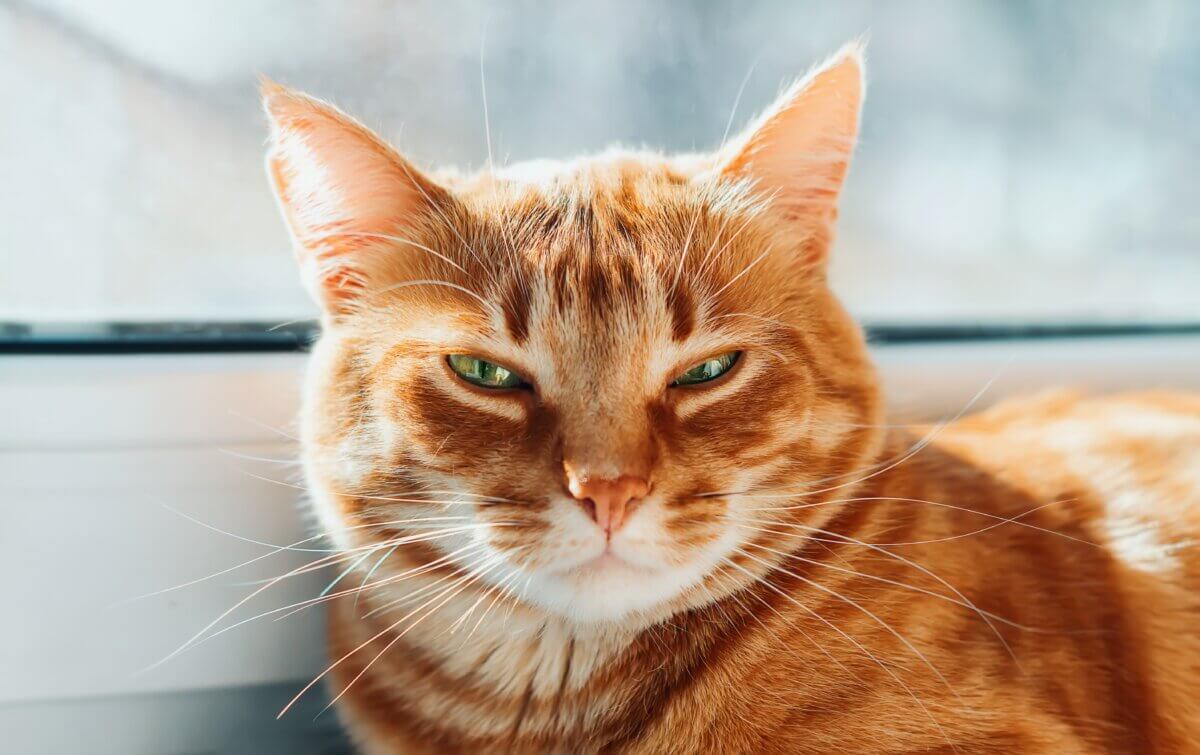
Why are orange cats orange? (Natallia Mikulich/Shutterstock)
STANFORD, Calif. — From Garfield to Puss in Boots, it’s safe to say that orange cats have a special place in the hearts of feline lovers everywhere. So, what exactly gives our furry friends their signature orange fur? Geneticists say it’s actually been a mystery for more than 60 years — until now.
Researchers have finally found an answer to this puzzle — and it all started with understanding why your favorite orange tabby is most likely a male.
Scientists have long been puzzled by the quirky genetics behind cat coat colors, particularly the vibrant orange fur that adorns many felines, like the gingers, calicos, and tortoiseshells. Now, two independent research teams have cracked a genetic code that explains not just why orange cats are typically male but how fur color is determined in these charismatic creatures.
The story begins with a seemingly simple observation: most orange cats are boys, while calico and tortoiseshell cats are almost always female. This isn’t just a random coincidence; it’s a result of complex genetic mechanisms involving the X chromosome.
Researchers Greg Barsh from Stanford University and Hiroyuki Sasaki from Kyushu University independently discovered a remarkable genetic mutation that influences cat fur color. By examining skin samples from cat fetuses, they found that a gene called Arhgap36 — located on the X chromosome — plays a crucial role in producing that distinctive orange coat.
“It’s been a genetic mystery, a conundrum,” Barsh explains in a media release.
Traditionally, scientists believed that a protein called Mc1r determined hair color in mammals. However, this gene didn’t explain the unique color patterns in cats.
The breakthrough came when researchers noticed that orange cats produced 13 times more RNA from the Arhgap36 gene compared to non-orange cats. Surprisingly, this wasn’t due to a mutation in the gene itself but because of a small deletion in a nearby DNA segment that regulates the gene’s activity.
The researchers examined an impressive 188 cat genomes and found that every single orange, calico, and tortoiseshell cat shared this exact genetic mutation. Even more fascinating, in female cats, this gene follows a process called X inactivation — where cells randomly choose which X chromosome to express, resulting in the stunning patchwork of colors seen in calico and tortoiseshell cats.
Leslie Lyons, a feline geneticist at the University of Missouri, was particularly excited about the discovery.
“No gene ever stands by itself,” she notes, highlighting the complex interactions within genetic systems.
Perhaps most intriguingly, this research reveals more than just a fun fact about cat colors.
“Everything you need to know about genetics you can learn from your cat,” Lyons suggests.
The studies, currently published on the preprint server bioRxiv, not only solve a long-standing genetic mystery but also demonstrate how a tiny genetic variation can create the beautiful diversity we see in our feline companions. So, the next time you see an orange tabby lounging in the sun, remember — there’s a fascinating genetic story behind that vibrant coat.
Paper Summary
Methodology
The researchers examined the genetic basis of the orange coat color in domestic cats by mapping the genetic interval linked to the “Sex-linked Orange” mutation. They used genetic analysis on male cats, comparing orange and non-orange phenotypes. A critical 1.28-megabase interval on the X chromosome was identified, containing a 5-kilobase deletion. This deletion affects the Arhgap36 gene, which is typically expressed in neuroendocrine organs.
The team used techniques like RNA sequencing, single-cell RNA sequencing, and in situ hybridization to compare gene expression in orange and non-orange cats. By analyzing the skin tissues and isolating melanoblasts (pigment-producing cells), they confirmed that the deletion causes ectopic expression of Arhgap36 in melanocytes (pigment cells), altering pigmentation pathways.
Key Results
The study found that the orange coat color is caused by the overexpression of the Arhgap36 gene in melanocytes due to a 5-kilobase deletion. This overexpression disrupts the protein kinase A (PKA) pathway, which typically regulates pigment production. Instead of producing darker eumelanin pigments, the affected cats produce yellowish-red pheomelanin pigments. The team observed that Arhgap36 expression was exclusive to melanocytes in orange cats and not found in non-orange cats.
Furthermore, they identified 286 genes with altered expression, with critical reductions in genes necessary for eumelanin production. This provides a genetic explanation for the unique orange coat color in domestic cats.
Study Limitations
While the study provides a strong genetic link between the Arhgap36 deletion and orange coat color, there are limitations to consider. The analysis was specific to domestic cats and cannot be generalized to other species, even those with similar pigmentation traits.
The findings also rely heavily on controlled genetic and environmental conditions, which may not fully reflect the variability in natural populations. Additionally, the impact of the Arhgap36 deletion was not tested in functional models beyond the scope of pigmentation, leaving potential broader biological implications unexplored.
Discussion & Takeaways
This research offers significant insight into the molecular mechanisms driving coat color variation in cats. The ectopic expression of Arhgap36 provides a rare example of a mutation affecting pigmentation through downstream regulation of the PKA pathway. This discovery solves a long-standing genetic mystery and illustrates the broader principle of how genetic mutations can drive phenotypic diversity.
Importantly, the study also highlights the evolutionary uniqueness of this mutation, as no homologous traits or genetic mechanisms are found in other mammals. For cat breeders and geneticists, understanding this mutation could enhance breeding programs or inform studies on related genetic pathways.
Funding & Disclosures
The research was supported by grants from the National Institutes of Health (R01AR067925) and the HudsonAlpha Institute for Biotechnology. The authors disclosed no competing interests, ensuring that the study was conducted without conflicts of interest. All work adhered to ethical guidelines, with animal samples collected under approved institutional protocols.


This is very exciting but I don’t believe we should be thinking about cat breeding especially with an overpopulation of cats. Feral cat populations come to mind. This is one of the sickliest populations of cats. They are inundated with skin problems, parasites– internal and external, diseases–viral and bacterial and injuries. Adding more to the population isn’t what’s needed or wanted. So, I say stop making money with or having a hobby of producing cats.