
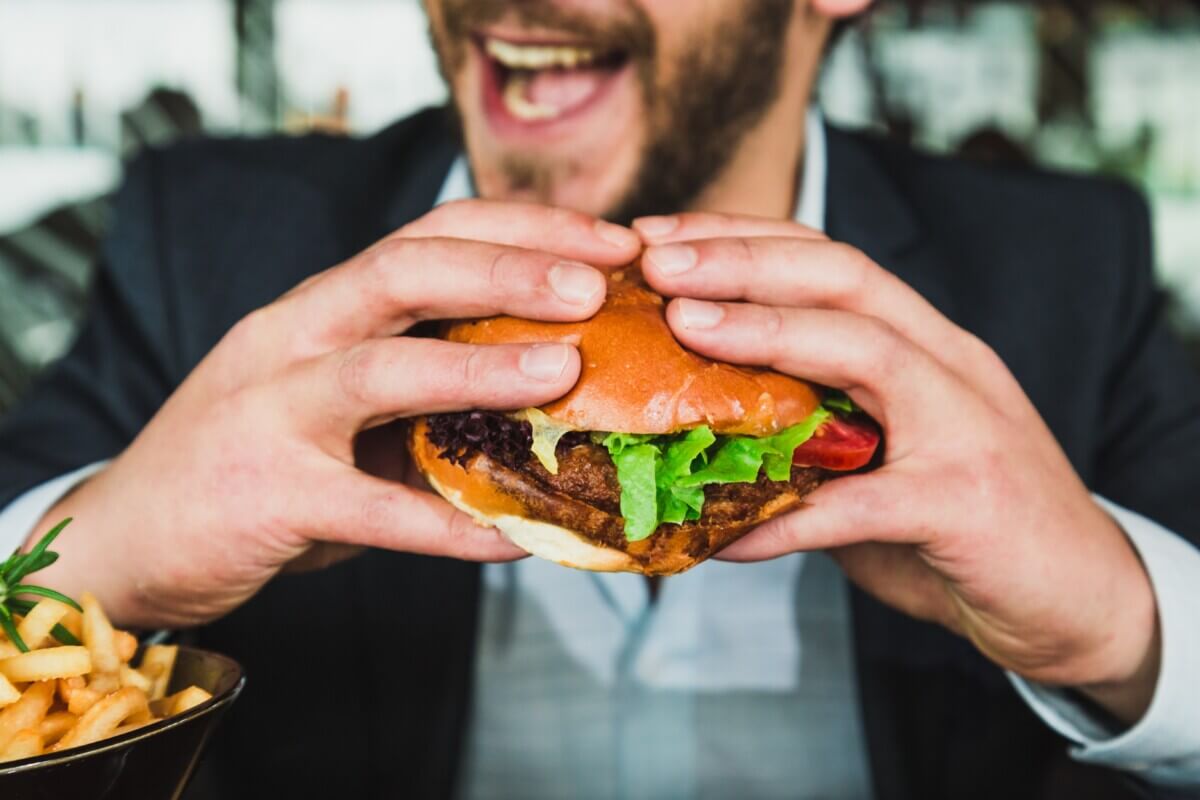
(Photo by Gleb Usovich on Shutterstock)
In A Nutshell
- A single high-fat meal impaired both blood vessel function and brain blood flow regulation in healthy men within just 4 hours.
- Older adults showed more pronounced declines, suggesting age-related vulnerability.
- Triglyceride levels more than doubled after the meal, and brain vessels became stiffer.
- These short-term changes may elevate stroke and cardiovascular risk, even in physically fit individuals.
CARDIFF, Wales — You’ve probably heard that greasy meals aren’t great for your heart, but new research suggests they might be just as bad for your brain, and the effects show up fast. Just four hours after eating a high-fat meal, healthy men showed clear signs that their blood vessels, and even their brain’s ability to control blood flow, weren’t working as well as they should.
The study, published in The Journal of Nutritional Physiology, found that both younger and older men experienced declines in blood vessel function and brain blood flow regulation after eating a single high-fat meal. The effects were more pronounced in older participants, suggesting age may increase vulnerability to the immediate impact of fatty foods.
Putting Healthy Men To The Test
Scientists from the University of South Wales recruited 41 healthy men, 20 in their twenties and 21 in their sixties. All were non-smokers, free from cardiovascular disease, and not taking any medications that could affect the study’s results.
Each participant consumed a specially formulated high-fat drink made from heavy cream, chocolate syrup, sugar, and powdered milk. Study authors referred to it as “the brain bomb” because it totaled 1,362 calories and 130 grams of fat, a hefty load by any standard, and one comparable to a fast-food meal. The researchers chose this mixture because it reliably creates a temporary spike in blood fats, a condition called post-prandial hyperlipidaemia.

To track the effects, the scientists measured participants’ blood vessel health and brain blood flow control both before and four hours after the meal. They used ultrasound to check how well arteries expanded during increased blood flow, a marker called flow-mediated dilation (FMD). They also looked at how effectively the brain maintained steady circulation during changes in blood pressure, a process known as dynamic cerebral autoregulation.
One High-Fat Meal Sends Blood Fats Soaring and Weakens Blood Vessels
After just four hours, participants’ blood fats, particularly triglycerides, rose sharply in both age groups. In younger men, levels went from 0.88 to 2.26 mmol/L. In older men, they jumped from 1.39 to 2.92 mmol/L.
At the same time, blood vessel function took a hit. Flow-mediated dilation dropped slightly: by about 0.7 percentage points in young men and 1.2 percentage points in older men. While these numbers may seem small, they reflect a measurable decline in how flexible and responsive the arteries were just hours after eating.
But the brain also showed signs of trouble. Researchers found an increase in the brain’s “pulsatility index,” a measurement that indicates how stiff the brain’s blood vessels have become. More stiffness means the vessels are less able to cushion changes in pressure, something that can raise the risk for stroke and other brain problems.
Worse still, the brain’s ability to keep blood flow steady, a job it usually handles effortlessly, was impaired, particularly in the older participants. These findings suggest that fatty meals may momentarily compromise a crucial brain-protective system, and that the aging brain might be more susceptible.
While both younger and older participants were affected by the high-fat meal, the older men showed stronger links between their rise in blood fats and declines in brain blood flow control. Even before eating, their baseline brain circulation was lower and their vessels stiffer, meaning they had less room to compensate when things went off-balance.
These findings add to a growing body of evidence suggesting that our vascular systems, especially in the brain, may become more fragile with age, and that seemingly small dietary choices can have an immediate impact.
Should You Avoid Fatty Meals? Here’s What the Science Says
The implications are particularly important for stroke survivors or people at risk of cardiovascular disease. The researchers noted that “careful consideration should also be given to the dietary prescription for stroke patients,” since the brain’s blood flow regulation system is already compromised after a stroke and plays a role in recovery.
It’s also worth noting that the men in this study were relatively fit. Most had above-average cardiorespiratory fitness for their age. That means the negative effects might be even greater in sedentary individuals or those with existing health conditions.
The researchers didn’t study long-term effects or how the body recovers after such a meal. But their takeaway is clear: Even a single high-fat meal can temporarily impair blood flow to your brain. While the occasional indulgence is part of life, this study is a reminder that what you eat matters—sometimes more quickly than you think.
Disclaimer: This article is for informational purposes only and is not intended as medical advice. The study summarized here involved short-term effects in a small group of healthy male participants under controlled conditions. Results may not apply to all individuals, including women, people with chronic health conditions, or those consuming different types of meals. Always consult a healthcare provider before making changes to your diet, especially if you have underlying medical concerns.
Paper Summary
Methodology
Researchers recruited 41 healthy men (average ages 24 and 67) who consumed a high-fat liquid meal containing 1,362 calories and 130 grams of fat. The team measured blood vessel function using ultrasound and assessed brain blood flow control (dynamic cerebral autoregulation) before and four hours after the meal. Triglyceride, glucose, and insulin levels were also tracked.
Results
After eating, triglyceride levels more than doubled in both age groups. Blood vessel function, measured by flow-mediated dilation, declined slightly. In the brain, the pulsatility index increased (indicating stiffer arteries), and cerebral autoregulation worsened—especially in older participants. These effects occurred even though all participants were in good physical shape.
Limitations
The study only included men and examined immediate, short-term effects. The meal was a liquid formulation, not solid food, so it’s unclear if results would differ with typical meals. Long-term consequences of repeated high-fat meals were not evaluated.
Funding and Disclosures
The study was funded by a Royal Society Wolfson Research Fellowship, Royal Society International Exchanges Award, Japan Society for the Promotion of Science Research Fellowship, and JPR Williams Trust Fellowship. Senior author Damian Bailey disclosed affiliations with research committees and a biotech company focused on brain health.
Publication Info
Title: Post-prandial hyperlipidaemia impairs systemic vascular function and dynamic cerebral autoregulation in young and old male adults
Authors: Christopher J. Marley, et al.
Journal: The Journal of Nutritional Physiology, Vol. 2 (2025)
DOI: 10.1016/j.jnphys.2025.100005


