
Bottlenose dolphins in the Atlantic Ocean. (Credit: Tory Kallman on Shutterstock)
In A Nutshell
- Every dolphin studied from Florida’s Indian River Lagoon had a brain toxin called 2,4-DAB.
- Toxin levels were roughly 3,000 times higher during summer algal bloom months.
- Dolphins’ brains showed the same Alzheimer’s-related proteins and gene activity seen in humans.
- Scientists say these animals may be warning us about neurotoxin risks in warming coastal waters.
MIAMI — Less than 200 miles from Miami-Dade County, the place with the highest number of Alzheimer’s patients in America, dolphins are washing up dead with brains full of toxins and riddled with the same disease signatures. Scientists say these marine mammals may be sounding an alarm about coastal waters that millions of people depend on for food and recreation.
Florida’s bottlenose dolphins have long been considered sentinels for environmental dangers that could affect people. As long-lived mammals at the top of the food chain, they accumulate toxins the same way humans do when eating seafood. Now, research published in Communications Biology reveals that 20 dolphins stranded along Florida’s Indian River Lagoon between 2010 and 2019 all tested positive for a brain toxin called 2,4-diaminobutyric acid (2,4-DAB). Their brains showed the genetic and physical hallmarks of Alzheimer’s disease.
The proximity raises questions. Miami-Dade County recorded the highest prevalence of people living with Alzheimer’s disease in the United States in 2024. Whether there’s any connection between human cases and what’s happening to dolphins in nearby waters remains unknown, but the parallels are unsettling enough that researchers are calling for investigation into how harmful algal bloom toxins might be impacting human brain health.
Dolphins are particularly valuable for understanding Alzheimer’s risk because they naturally develop the disease’s two main brain changes as they age: amyloid-beta plaques and tau tangles. When researchers examined dolphin brain tissue under a microscope, they found these same abnormalities. Amyloid-beta deposits scattered through the cortex. Neurons filled with abnormal tau protein. TDP-43 inclusions inside cells and around blood vessels. The physical evidence matched what pathologists see in human Alzheimer’s brains.

Summer Blooms Bring Thousandfold Toxin Spike
Researchers from Hubbs-SeaWorld Research Institute, the University of Miami, and Brain Chemistry Labs examined dolphins that stranded along a 155-kilometer stretch of Florida’s east coast. When they measured brain concentrations of 2,4-DAB, the pattern was stark: during summer bloom months (June through November, when water is warmest), toxin levels were roughly three thousand times higher than during winter months when blooms are minimal.
This neurotoxin comes from microscopic organisms that create harmful algal blooms, those thick mats of cyanobacteria that have plagued the Indian River Lagoon for 15 years. As climate change heats coastal waters, these blooms start earlier and last longer. Florida has recorded some of its warmest surface temperatures in modern history over the past decade.
Toxins move up the food chain, concentrating in small fish that larger predators eat. A dolphin consuming many fish per day accumulates substantial amounts over time, and the toxins end up in brain tissue. Similar processes happen when people regularly eat seafood from bloom-affected waters.
Genetic Changes Mirror Human Alzheimer’s Disease
When scientists analyzed the complete set of active genes in these dolphin brains, they identified 536 genes with significantly different expression levels between bloom and non-bloom seasons. Many were the same genes disrupted in human Alzheimer’s disease.
Dolphins showed decreased activity in genes that produce glutamate decarboxylase, an enzyme responsible for making GABA (a neurotransmitter that helps calm brain activity). Meanwhile, 2,4-DAB appears to block the enzyme that breaks GABA down, creating a chemical imbalance. In human Alzheimer’s patients, this same enzyme shows reduced function.
Researchers also found increased activity in genes related to laminin-3, a protein that helps maintain the blood-brain barrier. Elevated levels could signal that this protective shield (which keeps toxins out of neural tissue) is compromised. In human Alzheimer’s patients, the same protein shows up in disease-related plaques.
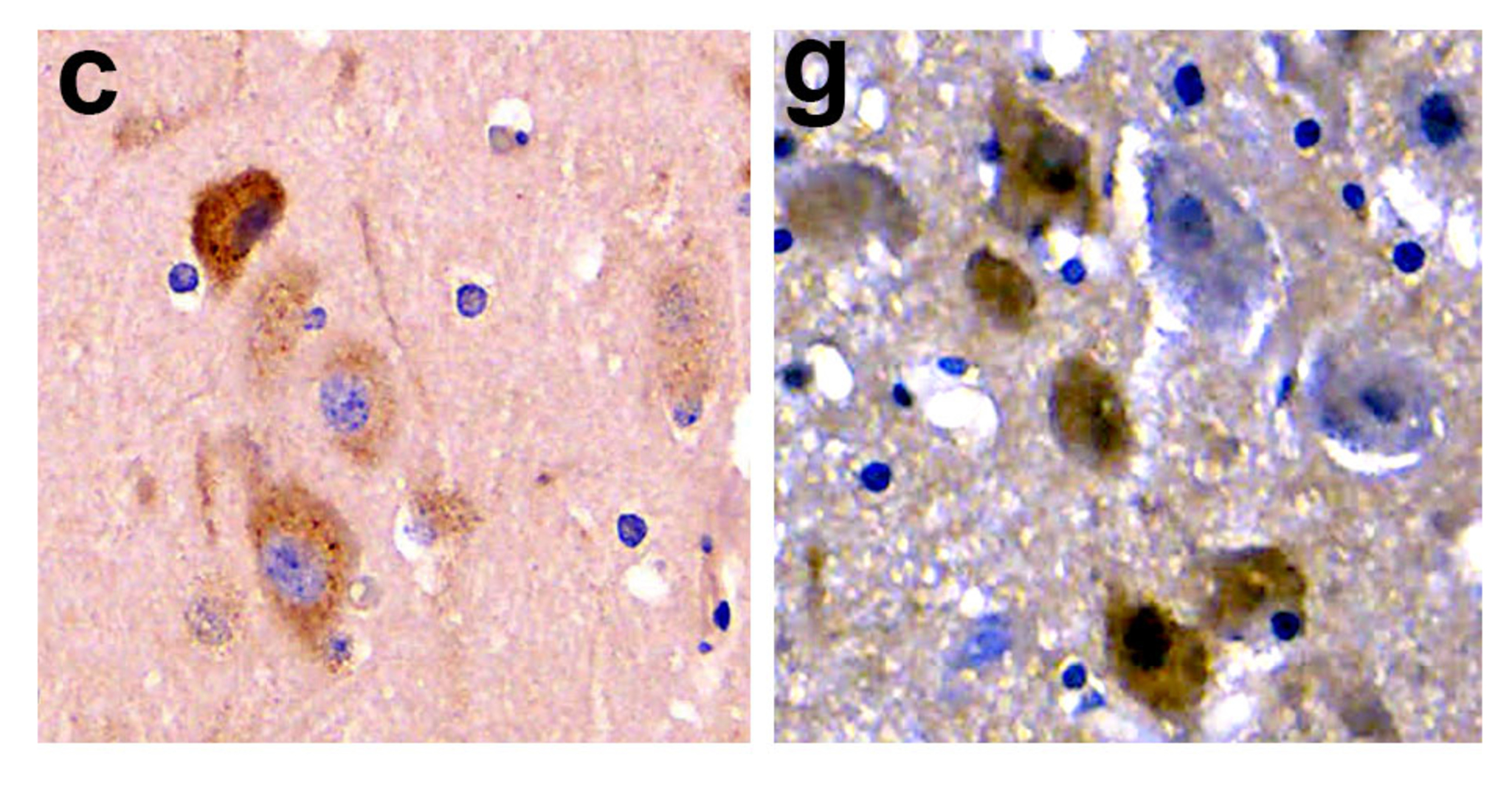
Three genes particularly stood out. APP produces amyloid precursor protein, which breaks down into toxic peptides that form plaques. MAPT makes tau protein, which tangles in the neurons of dementia patients. TARDBP creates TDP-43, a protein that clumps abnormally in more than half of Alzheimer’s cases with rapid progression. All three showed increased expression in dolphins exposed to higher toxin levels.
Perhaps most concerning was the temporal pattern. Researchers identified 15 genes whose expression correlated with both the amount of toxin in the brain and the year the dolphin stranded. Effects appeared to intensify with each subsequent bloom season, as if brains were accumulating damage over time. Among these genes were AGER (which encodes a receptor involved in Alzheimer’s disease) and ARHGEF19 (linked to neurological disorders).
Dolphins also showed increased expression of the APOE gene, up to 6.5-fold in some animals. In humans, certain versions of APOE are the strongest genetic risk factor for late-onset Alzheimer’s disease.
Why This Neurotoxin Matters
Originally described decades ago, 2,4-DAB provokes tremors, convulsions, and hyperirritability within hours in animal studies. It’s a structural cousin of BMAA (beta-N-methylamino-L-alanine), another algal toxin detected in the brains of human Alzheimer’s patients. Scientists believe 2,4-DAB may be even more toxic than BMAA.
When researchers compared dolphin gene expression data with databases of genes affected by shellfish poisoning (caused by other algal toxins), they found that 98% of the dolphin genes overlapped with Alzheimer’s disease, while only 42% overlapped with both conditions. None overlapped exclusively with shellfish poisoning, which means the changes observed were more closely related to neurodegeneration than to acute toxic illness.
Harmful algal blooms are not unique to Florida. As the planet warms, they’re increasing worldwide in both frequency and intensity. Coastal communities from California to the Great Lakes to the Gulf Coast are dealing with blooms that once were rare or nonexistent.
People who live near affected waters, who fish recreationally or commercially, or who eat seafood from bloom-affected areas could face exposures similar to what dolphins experience. Toxins accumulate in fish tissue. They can become aerosolized in sea spray. They persist in the environment.
Questions naturally follow. Could repeated exposure to algal neurotoxins over years or decades increase Alzheimer’s risk in people? Are certain populations at higher risk based on where they live and what they eat? Should public health officials be monitoring neurotoxin levels in seafood more closely?
Miami-Dade County’s high Alzheimer’s prevalence could reflect many factors: an aging population, genetic backgrounds, healthcare access, environmental exposures. But the county sits on the coast, near waters experiencing repeated harmful algal blooms and hosting dolphins with toxin-damaged brains showing Alzheimer’s signatures.
Sentinel species exist for a reason. Canaries in coal mines died from carbon monoxide before miners felt the effects, providing a warning. Dolphins accumulating brain toxins and developing Alzheimer’s signatures in waters near major population centers may be offering a similar alert. As bloom seasons lengthen and intensify with climate change, these marine mammals are delivering a message from the warming water that coastal communities and public health officials need to hear.
Disclaimer: This article is for general informational purposes only and does not provide medical or environmental health advice. Always consult qualified professionals for guidance related to neurological or ecological health.
Paper Summary
Methodology
Researchers examined 20 common bottlenose dolphins that stranded along Florida’s Indian River Lagoon between 2010 and 2019, classifying them by stranding date into non-bloom season (December–May, 11 dolphins) and bloom season (June–November, 9 dolphins). From each dolphin, they extracted brain tissue and tested it for neurotoxins using ultra-high-performance liquid chromatography tandem mass spectrometry, performed whole transcriptome sequencing to analyze gene expression differences, used quantitative PCR to measure seven Alzheimer’s-related genes, and prepared tissue slides to visualize Alzheimer’s-like protein changes under a microscope.
Results
Every dolphin tested positive for 2,4-DAB, with bloom-season dolphins showing median brain concentrations approximately 2,900 times higher than non-bloom dolphins. Transcriptome analysis identified 536 differentially expressed genes, with decreased glutamate decarboxylase activity (GABA production) and increased laminin-3 complex expression (blood-brain barrier components). Three key Alzheimer’s genes—APP, MAPT, and TARDBP—showed increased expression correlating with toxin levels, and microscopic examination revealed Alzheimer’s-like changes in all dolphins including amyloid-beta deposits, phosphorylated tau, and TDP-43 inclusions. Fifteen genes showed expression patterns correlating with both toxin concentration and stranding year, intensifying with each bloom season, while APOE gene expression increased up to 6.5-fold in some bloom-season dolphins.
Limitations
The small sample size of 20 dolphins collected opportunistically over nine years limited statistical power, and researchers could not control for all variables affecting brain health or assess neurological function in living animals. The study could not establish direct cause-and-effect relationships between toxin exposure and brain changes, only correlations, and not all samples included tissue from both brain regions. While dolphins serve as sentinel species for environmental health, differences between dolphin and human biology mean findings cannot be directly extrapolated to human health risks without additional research.
Funding and Disclosures
This work was funded in part by the Herbert W. Hoover Foundation, the John H. Prescott Marine Mammal Rescue Assistance Grant, the SeaWorld Busch Gardens Conservation Fund, Discover Florida Ocean’s License Plate, and the Brevard County Tourism and Development Council.
The authors declared no competing interests. The study was conducted under a Stranding Agreement between Hubbs-SeaWorld Research Institute and NOAA Fisheries. The University of Miami Institutional Animal Care and Use Committee reviewed and authorized the study. Handling of dolphin specimens complied with the Marine Mammal Protection Act.
Publication Details
Durden, W.N., Stolen, M.K., Garamszegi, S.P., Banack, S.A., Brzostowicki, D.J., Vontell, R.T., Brand, L.E., Cox, P.A. & Davis, D.A. (2025). Alzheimer’s disease signatures in the brain transcriptome of Estuarine Dolphins. Communications Biology, 8, 1400. DOI: 10.1038/s42003-025-08796-0


I feel soooo bad for the football team. The year just keeps getting worse.
Indian River Lagoon is not exactly Miami-Dade. Why are you conflating the two locations?
Thanks for this info. Did they also Test the dolphins for the level of PFAs possibly related to the application of BioSolids spread on agricultural fields?
“As climate change heats coastal waters, these blooms start earlier and last longer. Florida has recorded some of its warmest surface temperatures in modern history over the past decade.” Nope. Not happening. Read the IPCC reports, not the press summaries.
“Harmful algal blooms are not unique to Florida. As the planet warms, they’re increasing worldwide in both frequency and intensity.” Again, not happening. It is a press and education/activist meme. As the reports say, there are no noticeable effects of warming expected in this century! Storms have not increased. Droughts have not increased. Heat waves have not increased. Hurricanes and cyclones and typhoons have not increased in frequency or strength. They have decreased most recently. Fires have not increased.
Journalists and government agencies and “experts” have been attaching the attribution to climate change to ever single story. Stop it!