
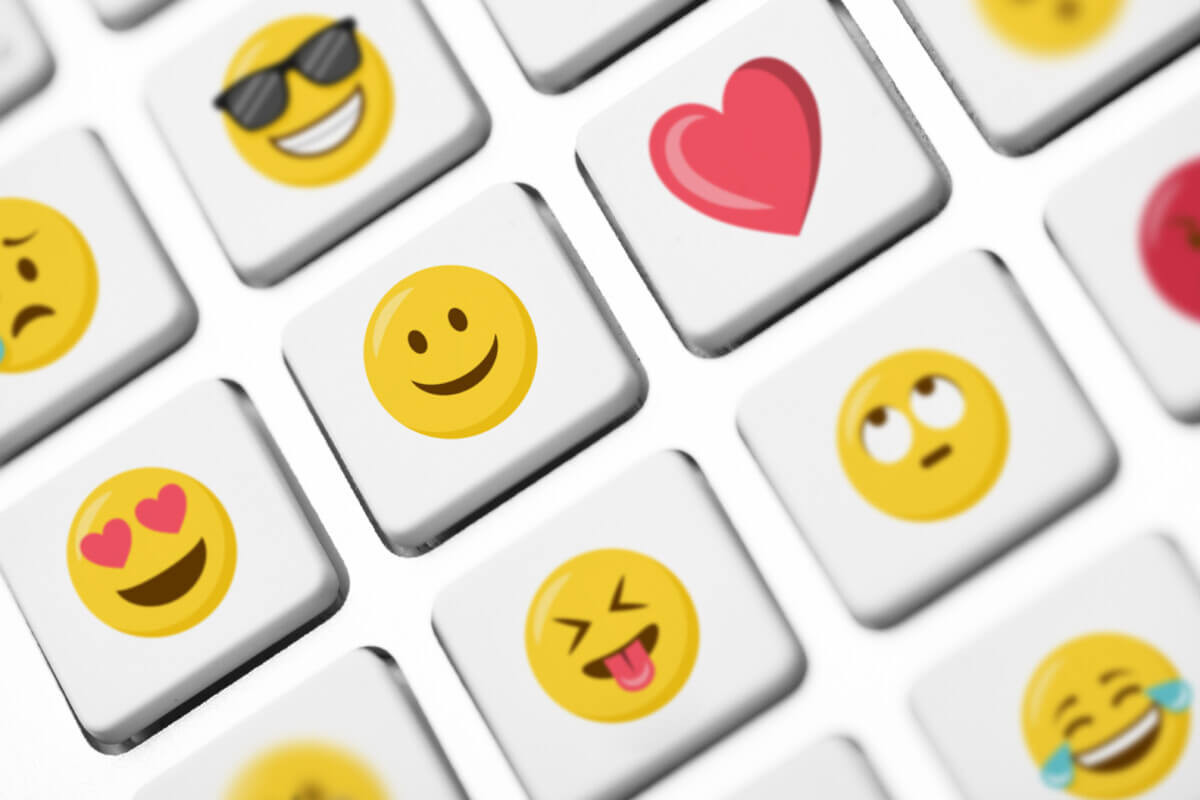
(Image credit Tada Images / Shutterstock.com)
New research shows that adding those tiny digital images to your texts can make you look more attentive and caring.
In a nutshell
- People who use emojis in text messages are seen as significantly more responsive and caring by their friends
- This perceived responsiveness leads to stronger feelings of closeness and higher relationship satisfaction
- The type of emoji doesn’t matter—both face emojis (????) and non-face emojis (❤️) work equally well
AUSTIN, Texas — Next time you’re tempted to skip the smiley face or heart emoji in a text to your friend, think twice. New research suggests those tiny digital symbols could be doing serious work to strengthen your relationships, and it has nothing to do with being trendy or cute.
The study, published in the journal PLOS One, found that people who use emojis in their text messages are perceived as significantly more responsive and caring by their friends. More surprising? This boost in perceived responsiveness translates directly into stronger feelings of closeness and relationship satisfaction.
Emojis Work Like Digital Body Language
Instead of serving as frivolous add-ons to our digital conversations, emojis appear to function as powerful relationship tools that help bridge the emotional gap created by text-only communication. For a generation that conducts much of their social lives through screens, this research offers both reassurance and practical guidance.
The study notes that emojis help clarify messages by “intensifying, negating, or clarifying the emotional intent of a written message.” Essentially, they work like a digital tone of voice, helping prevent the miscommunications that can easily arise when we can’t see someone’s facial expressions or hear their inflection.
Dr. Eun Huh from the University of Texas at Austin designed an experiment to test whether emojis actually shape how we perceive our friends’ responsiveness. She recruited 260 adults and had them read 15 different text message conversations. Each participant was randomly shown either text-only responses or responses that included both text and emojis.
The conversations mimicked real-life exchanges between close friends—someone sharing news about getting promoted, making weekend plans, or expressing that they’d had a tough week. Eight conversations included face emojis like smiley faces, while seven featured non-face emojis like hearts or thumbs up symbols.


Simple Symbols, Big Results
After reading each conversation, participants rated how responsive, likable, and close they felt to the person sending the messages. They also indicated how satisfied they would be with that relationship.
Messages containing emojis were consistently rated as more responsive than identical text-only messages. Participants rated emoji users as more responsive (average score of 4.43 out of 5) compared to non-emoji users (average score of 3.57 out of 5). People perceived emoji users as more attentive and emotionally engaged, regardless of whether they used a smiley face or a simple thumbs-up symbol.
But the real revelation came when researchers examined how this perceived responsiveness affected relationship outcomes. Those who seemed more responsive through their emoji use were also rated as significantly closer friends and generated higher relationship satisfaction scores. Perceived responsiveness essentially acted as a bridge: emoji use boosted responsiveness perceptions, which in turn strengthened relationship bonds.
Surprisingly, the type of emoji didn’t matter much. Face emojis performed just as well as non-face emojis in boosting perceived responsiveness. Researchers initially expected facial emojis to have a stronger effect since they more closely mimic the facial expressions we rely on in face-to-face conversations.
Why This Matters in Our Digital Age
Digital communication dominates the social lives of individuals young and old, but it’s especially rooted in younger generations. According to the study, 100% of people aged 18-29 use smartphones for texting, and emojis are used over 10 billion times daily worldwide.
These results also align with broader research on responsiveness in relationships. Feeling heard, understood, and cared for by friends and romantic partners has long been linked to relationship satisfaction and even physical health outcomes. What’s new is the discovery that something as simple as adding an emoji to a text message can signal this kind of emotional attentiveness.
Of course, the study had limitations. Participants imagined themselves in hypothetical text conversations rather than engaging in real-time exchanges with actual friends. The sample was also predominantly white (93.5%), middle-aged Americans (average age 37), so results might not apply universally across different cultures or age groups.
Real-world relationships are also more complex than laboratory scenarios. While a heart emoji might boost perceptions of responsiveness in a research setting, sustaining close friendships requires ongoing emotional investment, quality time, and genuine care that extends far beyond digital symbols.
For anyone looking to strengthen their friendships through the small gestures of daily life, this research offers a remarkably simple suggestion. Adding emojis to your texts appears to signal emotional engagement and investment in ways that plain text cannot. Who would have thought that these tiny symbols would serve as crucial emotional cues that help maintain the human connection we all crave?
Frequently Asked Questions
Do emojis really help my relationships?
Yes. This study found that people using emojis in texts are perceived as more responsive—making friends feel closer and more satisfied.
Does the type of emoji matter?
Surprisingly, no. Both face emojis (????) and non-face ones (❤️????) improved perceptions of responsiveness equally.
Is this true for everyone?
The experiment used imagined texts with mostly white, U.S.-based adults, so results might vary by culture or age group.
Can emojis fix a bad friendship?
No emoji alone can replace real care and effort, but they can help signal warmth and attentiveness in daily conversations.
Paper Summary
Methodology
Researchers recruited 260 adults through Amazon Mechanical Turk to participate in an online experiment. Participants read 15 text message conversations designed to simulate exchanges between close friends, with topics ranging from making plans to sharing personal news. Each person was randomly assigned to see either text-only responses or responses that included both text and emojis for each conversation. After reading each exchange, participants rated the message sender on perceived responsiveness, likability, closeness, and relationship satisfaction using established psychological scales.
Results
Messages containing emojis were rated as significantly more responsive than identical text-only messages, regardless of whether they used face or non-face emojis. This perceived responsiveness then predicted higher ratings of closeness and relationship satisfaction. Statistical analysis revealed that perceived responsiveness acted as a mediator—emoji use boosted perceptions of responsiveness, which in turn strengthened relationship outcomes.
Limitations
Several factors limit the study’s real-world applicability. Participants responded to hypothetical scenarios rather than actual conversations with friends, which may not capture the full complexity of genuine relationships. The sample was predominantly white, middle-aged Americans, potentially limiting generalizability across cultures and age groups. All emoji-text combinations were designed to be emotionally congruent, so the effects of mismatched or sarcastic emoji use remain unknown.
Funding and Disclosures
The authors reported no specific funding for this research and declared no competing interests that could affect the study’s conduct or interpretation.
Publication Information
This study, titled “The impact of emojis on perceived responsiveness and relationship satisfaction in text messaging,” was published in PLOS One on July 2, 2025, by author Eun Huh from the Department of Communication Studies at The University of Texas at Austin. The research is available as an open-access article under the Creative Commons Attribution License.


