
Primary aldosteronism often goes undiagnosed. (Photo by Thirdman from Pexels)
BALTIMORE — Have you ever wondered if the way you hold your arm during a blood pressure check could affect the results? A new study suggests it absolutely can – and the difference could mean the difference between a clean bill of health and a hypertension diagnosis.
Researchers at Johns Hopkins University have found that there are common arm positions that can significantly throw off blood pressure measurements. The study, published in JAMA Internal Medicine, reveals that simply resting your arm on your lap or letting it hang by your side during a blood pressure check could inflate your reading by up to 10 points.
The implications are staggering. Based on the researchers’ calculations, the wrong arm position could result in misdiagnosing up to 54 million Americans with hypertension. That’s more than the entire population of California being told they have high blood pressure when they might not.

What’s the right way to position your arm?
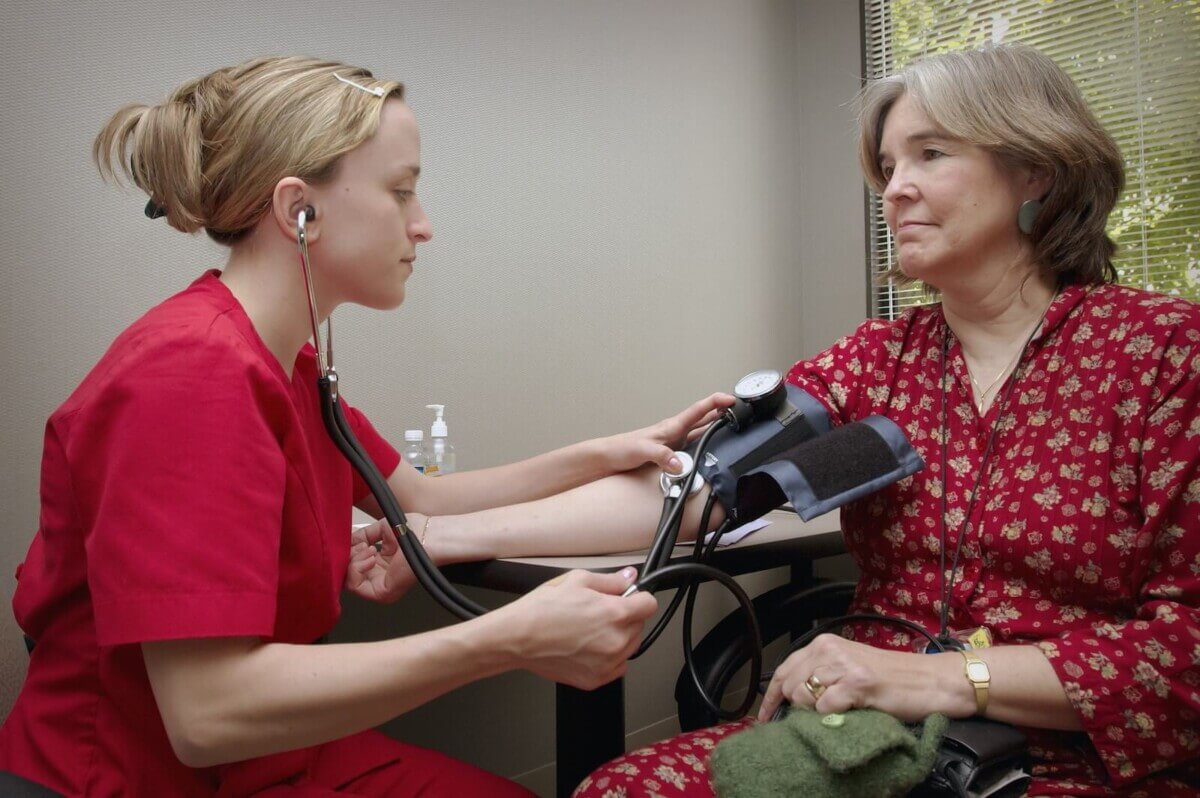
According to guidelines, your arm should be supported on a desk or table with the middle of the cuff at heart level. In many doctor’s offices, clinics, and even some hospitals, however, this ideal setup isn’t always available or followed.
The study, led by Dr. Tammy M. Brady and her team, involved 133 adults between the ages of 18 and 80 in Baltimore. Participants had their blood pressure measured multiple times in different arm positions: supported on a desk (the recommended method), resting on their lap, and hanging unsupported at their side.
When participants had their arm resting on their lap, systolic blood pressure (the top number) was overestimated by about four points, and diastolic (the bottom number) by four points as well. The unsupported arm hanging at the side led to even larger discrepancies: systolic was overestimated by about seven points and diastolic by 4.4 points.
For people already dealing with high blood pressure, the effect was even more pronounced. Among those with hypertensive levels, having the arm at the side led to a whopping nine-point overestimation in systolic blood pressure.
These findings underscore the importance of proper technique in blood pressure measurement. It’s not just about getting a number – it’s about getting an accurate number that can guide appropriate medical decisions.
The researchers point out several reasons why arm position affects blood pressure readings. When your arm drops below heart level, as it is when it’s resting on your lap or hanging at your side, gravity increases the pressure in your arteries. Additionally, these positions can lead to muscle tension and changes in blood flow that can temporarily boost your blood pressure.
This study serves as a wake-up call for both healthcare providers and patients. It highlights the need for standardized blood pressure measurement techniques and the importance of proper arm positioning. The next time you’re getting your blood pressure checked, don’t be shy about asking for a desk or table to rest your arm on – it could make a significant difference in your reading and, potentially, your diagnosis.
Paper Summary
Methodology
The study used a crossover design, meaning each participant had their blood pressure measured in all three arm positions. The order of the positions was randomized to avoid any bias. Participants had their blood pressure taken three times in each position, with a rest period and a short walk between each set of measurements. This design allowed the researchers to compare how different arm positions affected blood pressure readings within the same person, controlling for individual variations.
Key Results
The study found that both non-standard arm positions (lap and side) resulted in higher blood pressure readings compared to the recommended desk position. The side position led to the largest overestimations. These effects were consistent across different subgroups, including people of different ages, weights, and blood pressure levels. Notably, the effect was even more pronounced in people with higher blood pressure.
Study Limitations
The sample size for some subgroup analyses was relatively small, which means these results should be interpreted cautiously. Additionally, the study used one specific blood pressure device, so it’s uncertain if the results would be exactly the same with different devices. The researchers also noted that their randomization process resulted in unequal group sizes, although additional analyses showed this didn’t significantly affect the results.
Discussion & Takeaways
The researchers emphasize that these findings have significant implications for both clinical practice and research. Improper arm positioning during blood pressure measurements could lead to overdiagnosis of hypertension, unnecessary follow-ups, and overtreatment. They suggest that healthcare systems should focus on improving and maintaining the quality of blood pressure measurements, possibly even considering regulatory approaches to promote standardized techniques. The study also highlights the importance of proper technique in home blood pressure monitoring.
Funding & Disclosures
The study was supported by Resolve to Save Lives, an organization funded by Bloomberg Philanthropies, the Bill and Melinda Gates Foundation, and Gates Philanthropy Partners. Some of the researchers reported receiving grants or personal fees from various organizations outside of this study, including the National Institutes of Health and several pharmaceutical companies. However, these funders had no role in the design, conduct, analysis, or reporting of the study.


that and the white coat syndrome have made lots of money to big pharma.
Wow! Imagine all the unnecessary high blood pressure medication being prescribed. This is a huge expose of medical incompetence, that for decades people have been given excessively high reading, leading to unnecessary medication. What a scandal.
Of course, if they are listening with a stethoscope, their hearing could also be impaired, altering results. And the repeated use of tight blood pressure cuffs causes damage to the arteries and veins, which are compressed each time the reading is taken. Add to that the fact that many people have elevated pressure at the doctor’s office. Sounds like we need a better way of assessing blood pressure.