
Man holding his breath to stop hiccups (© Victor Koldunov - stock.adobe.com)
SAN ANTONIO, Texas — Hiccups can pop up when we least expect them and not all home remedies work for everyone. So if paper bags and holding our breath won’t work, does science have an answer? Researchers at The University of Texas Health Science Center at San Antonio have come up with a new invention which may finally cure the hiccups in one simple step.
The device which scientists call the “forced inspiratory suction and swallow tool” (or FISST) successfully treated over 90 percent of hiccup cases more efficiently than the traditional paper bag method.
“Hiccups are occasionally annoying for some people, but for others they significantly impact quality of life,” explains Ali Seifi, MD, associate professor of neurosurgery, in a university release. “This includes many patients with brain and stroke injury, and cancer patients. We had a couple of cancer patients in this study. Some chemotherapies cause hiccups.”
Combining suction and swallowing is the key
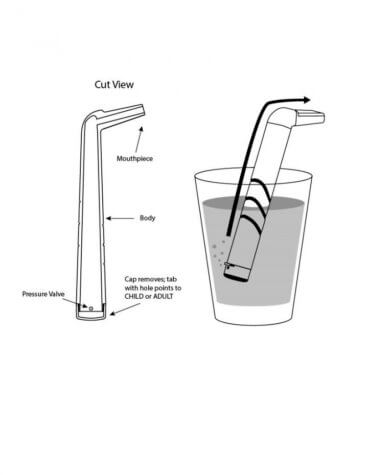
Researchers say FISST is a rigid drinking tube (a high-tech straw) that has an inlet valve the patient uses to suck up water from a cup. The action of suction and swallowing simultaneously stimulate two nerves, the phrenic and vagus nerves. Doing this, the team says, will stop the hiccups.
Specifically, the forceful suction of pulling in water prompts the user’s diaphragm — a muscle which inflates the lungs when you breath — to contract. The suction/swallowing combination also causes the epiglottis to close. This flap covers a person’s windpipe during swallowing.
Study authors started this project with 600 individuals complaining about having the hiccups. Two in three people reported having a case of the hiccups at least once a month. In most cases, these spasms lasted for about two hours.
From this group, 290 responded to a survey after using FISST to treat their condition, comparing the experience to other home remedies for hiccups. Researchers say 249 volunteers fully completed the survey about using FISST.
Results show FISST stopped the hiccups in almost 92 percent of cases, according to the self-reporting of the participants. Moreover, just under 91 percent call the new device easy to use.
Dr. Seifi’s device is now being marketed by a Colorado company partnering with UT Health San Antonio. At the same time, researchers are hoping to conduct a clinical trial in Europe and the U.S. which will test FISST’s success verses a placebo (non-working) version of the device.
The study appears in the journal JAMA Network Open.


